
Brazil: Conflicts Between Branches of Gov. Erode Democracy
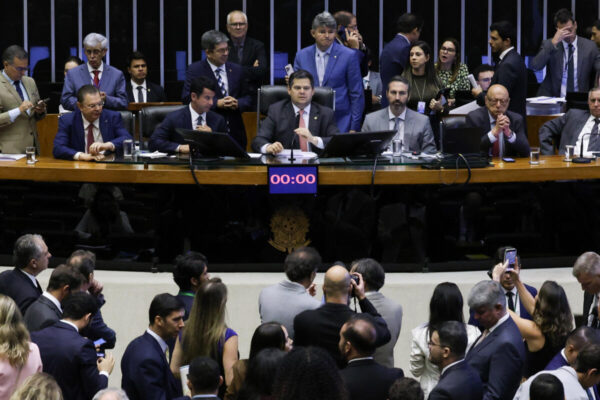
HAVANA TIMES – Brazil is living through the contradiction of a deterioration of its democracy, with its three branches of government in permanent conflict and losing legitimacy, precisely at the moment when it has just jailed those responsible for an attempted coup d’état—an act considered a reaffirmation of its democratic institutions.
The Chamber of Deputies refuses to comply with judicial rulings, the Supreme Federal Court seeks to shield its justices from the disqualification that the Senate could impose, and President Luiz Inacio Lula da Silva has multiplied his vetoes of decisions by the National Congress, where the opposition majority quickly overturns most of those vetoes.
The latest maneuver was the decision by deputies, on Wednesday the 10th, to approve a law reducing the sentences of those convicted for the attempted coup d’état in December 2022 and January 2023. Former president Jair Bolsonaro, considered the ringleader, would see his prison sentence reduced from 27 years and three months to 22 years and 11 months.
But he would spend only three years and three months in prison, then move to a semi-open regime, spending only nights behind bars. That sentence could be reduced even further, according to specialists. Unifying the crimes of attempted coup and violent abolition of the rule of law—which judges in September had established as separate offenses with distinct penalties—was the formula adopted by the deputies, still pending a vote in the Senate.
Another legislative uprising was represented by the new environmental licensing law, approved by Congress in July, intended to speed up the evaluation process for projects across various sectors and to relax the conditions for granting licenses.
Lula vetoed 63 of its provisions, but Congress overturned 56 of his vetoes, in one of the conflicts that have become frequent between the Executive and Legislative branches since Lula took office on the first day of 2023.
As it stands, that law violates at least nine articles of the Constitution, in addition to basic principles, according to an assessment by the Brazilian Association of Members of the Public Prosecutor’s Office for the Environment, in a forceful technical note released on Wednesday, December 10.
It is the most serious setback in environmental protection since 1988, when the current Constitution was approved; it dismantles environmental governance and generates legal uncertainty by expanding litigation, according to prosecutors. Moreover, its unconstitutionality will almost certainly be challenged before the Supreme Court, the guarantor of the fundamental law.
Another conflict with the Supreme Court was generated by the Senate when it approved, on Tuesday the 9th, a constitutional amendment establishing the so-called “temporal framework,” which limits indigenous lands to be demarcated to those occupied by Indigenous peoples on October 5, 1988, when the Constitution was promulgated.
The deputies had already approved a similar proposal in 2023, but as an ordinary law, which was vetoed by President Lula. The Senate is now attempting to elevate it to the status of a constitutional provision.
Indigenous Rights at Stake
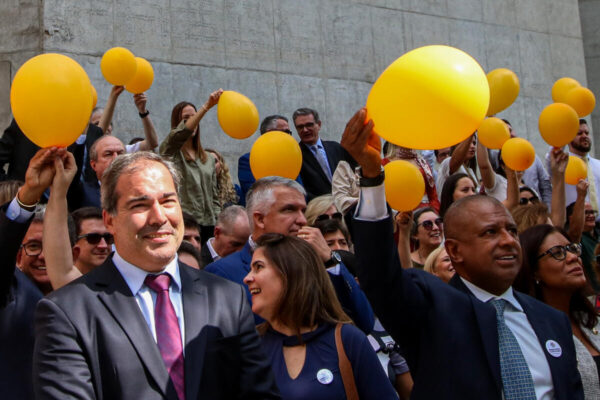
The Supreme Court already ruled in 2023 that the temporal framework was unconstitutional and is now judging the issue again, starting Wednesday the 10th, in response to the new legislative offensive, driven by the far right, and to lawsuits filed by Indigenous peoples and left-wing parties that object to fixing a date of occupation to define an Indigenous territory, which is an ancestral right.
“That institutional crisis was born out of the misgovernance of former president Jair Bolsonaro (2019–2022), who, lacking any inclination for public administration, handed power over to the so-called ‘centrão’ (great center) and thereby strengthened Congress,” assessed sociologist Elimar do Nascimento, a professor at the University of Brasília.
The “centrão” is a group of legislators from various parties without ideological commitments, guided instead by immediate economic and political interests. They generally align with the government of the day but are now being drawn by the electoral strength of the far right, consolidated since Bolsonaro’s election in 2018.
Brazil shifted to an “almost parliamentary or semi-presidential” regime under Bolsonaro’s government, Nascimento told IPS. Parliamentary amendments expanded, allowing lawmakers to control nearly half of the annual budget available to the government for investments of their choosing.
Legislator as Executive
Congress also “kidnapped the budget,” in a “serious historical mistake” that limits the capacity of the Executive Branch, Lula complained in a speech on December 4, which aggravated the animosity of “centrão” legislators toward the government.
It is an environment conducive to corruption: parliamentary amendments allow legislators to distribute resources to communities where they hope to win or secure votes, often without accountability.
The lack of transparency and criteria in allocating a significant portion of the equivalent of 10 billion dollars annually available to deputies and senators led Justice Flávio Dino—appointed to the Supreme Court by Lula in 2024—to unleash a campaign to “clean up” legislative amendments.
This is probably the main reason for the conflicts with Congress dominated by the “centrão,” since dozens of legislators are under police investigation, ordered by Dino, over apparent illegalities in the use of public funds.
“I recently heard the expression ‘political entrepreneur’ used to define legislators,” meaning their objective is to make money, not to legislate, Nascimento said, astonished.
But this chaotic situation, with branches of government confronting each other, “will be resolved gradually; a disaster is possible but unlikely,” the sociologist predicted as a keen observer of the political scene in Brasília.
Pacification Under a Right-Wing Government
“Congress is organizing to defend itself from the Supreme Court, and the Court is trying to shield itself against the possible disqualification of its justices by the Senate,” Nascimento summarized by phone from the Brazilian capital.
A reflection of this dynamic was the solitary decision by the dean of the Supreme Court, Justice Gilmar Mendes, who restricted exclusively to the Attorney General—the head of the federal prosecution service—the prerogative to request the removal of the 11 justices of the Supreme Court.
He argued that the law governing the matter is outdated, dating back to 1950. That still-valid legislation grants any citizen the power to request proceedings to disqualify a Supreme Court justice, through a trial in the Senate.
Faced with widespread protests and rejection by legal scholars and even colleagues on the Supreme Court, Mendes—the most political of the justices—decided to back down, but in doing so expanded the war.
In the Senate, proposals emerged to reduce the current power of the Supreme Court, almost consensually regarded as over-extended. Expanding the court from 11 to 13 justices, with one appointed by senators and another by deputies, is one such measure.
Others seek to set a 10-year term for justices who are currently lifetime appointees and to change the method of appointment. The president has always freely chosen new justices, subject to Senate approval, which has never rejected a nominee.
Many justify the Supreme Court’s current activism because it was the most effective branch of resistance to far-right coup attempts under Bolsonaro’s leadership.
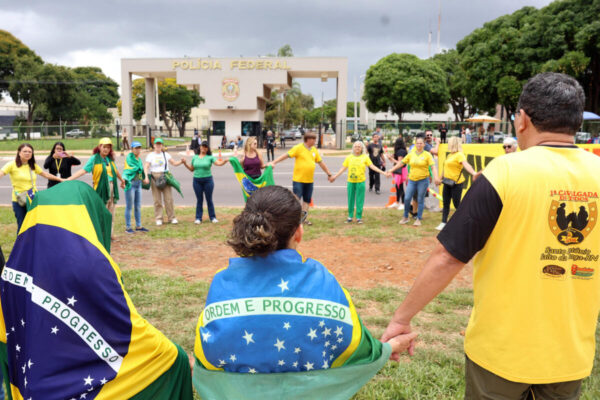
Ultraright groups consider it their worst enemy, responsible for the trials and imprisonment of their main leaders, headed by Bolsonaro, sentenced by to 27 years in prison, along with generals who received slightly lesser sentences in the trials that began in September.
“The tectonic plates of Brazilian politics are colliding, but they will gradually adjust. Congress will impose limits on the judiciary, which will negotiate its adaptation. Adjustments will accelerate if the right wins the general elections of October 2026,” Nascimento predicted.
Today’s fights are aggressive because the government is left-wing, led by Workers’ Party leader Lula, while Congress is right-wing and pressured by the far right, he recalled.
A government and Congress at odds naturally enlarge the power of the judiciary. When the legislative and executive branches are ideologically aligned, a key cause of conflicts and of an overly active judiciary disappears, he reasoned.
Unified branches are a feasible possibility, since Congress is already naturally right-wing and that current is strengthening in the presidential race amid President Lula’s low approval ratings, which complicate his hoped-for reelection.
Bolsonaro’s imprisonment and ineligibility open the way for other far-right candidacies, such as that of São Paulo governor Tarcísio Freitas, but without the high level of popular rejection associated with the former president’s radical image. That would give him better conditions to attract votes from non-extremist sectors.
Moreover, the left has been shrinking everywhere, especially in Latin America, amid the loss of working-class mobilization and without securing the support of the middle classes, which today are the force that sustains democracy, the university professor concluded.
First published in Spanish by IPS and translated and posted in English by Havana Times.