
Conclusions from Cuba’s National Assembly Session
HAVANA TIMES – The structural crisis Cuba is going through is becoming increasingly evident. In 2025, the tourism industry—one of the country’s main sources of income—recorded its worst performance in decades, while deficits in the energy sector continue to greatly affect the daily lives of Cubans. The critical situation is not limited to the economy: social problems (such as the growing housing deficit and higher infant mortality) reflect the shortcomings of a system incapable of offering sustainable long-term solutions.
Against this backdrop, the Cuban government is (once again) projecting an optimistic future for 2026.
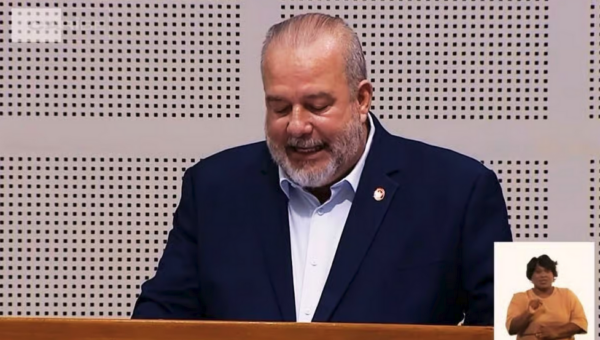
This text summarizes some of the main statements made by Cuban ministers during the National Assembly of People’s Power session held in Havana on December 18, 2025.
The Minister of Economy and Planning, Joaquín Alonso, announced that a “modest” macro-economic growth of 1% is forecast for 2026—the same rate projected for 2025 and ultimately unmet.
The minister also stated that the country continues to operate under a “war economy” and that existing “tensions” could worsen.
Since 2020, gross domestic product (GDP) has contracted by 11% and, as the government has acknowledged in line with other external forecasts, it will also decline this year.
Meanwhile, the Minister of Finance and Prices, Vladimir Regueiro Ale, said that during 2025 the fiscal deficit was lower than planned, although it remained high.
The fiscal deficit projected for 2026 will be similar to that of the previous year, estimated at 74.5 billion Cuban pesos (3.1 billion dollars at the official exchange rate for legal entities), close to 10% of GDP.
According to the head of the economy, total exports of goods and services projected for 2026 amount to 9.969 billion dollars, exceeding the estimate for the current year by 1.122 billion. This growth is based—he noted—on goods exports of 2.53 billion dollars and services exports of 7.438 billion dollars, figures higher than those estimated for 2025 by 765 million and 357 million dollars, respectively.
Regarding the main imports, Alonso said they are “concentrated in fuels and food.” “The latter category has a record figure exceeding this year’s estimate by 288 million dollars, destined for the main rationed products and other prioritized areas,” he added without further details, as food and basic goods shortages persist on the island.
According to what was presented at the Assembly for the 2026 economic plan, the regime of the Communist Party of Cuba will give “maximum priority” to:
• The recovery of tourism services and other traditional export sectors.
• Increasing income from professional services.
• Attracting a greater volume of foreign investment, remittances, and external financing.
Tourism, the “locomotive” of the Cuban economy derailed
Cuba will not meet its revenue and international visitor forecasts, falling short by about 25% in each case. Joaquín Alonso said revenues will reach 917.4 million dollars—75.8% of what was planned—and the number of visitors will be around 1.9 million people, 73.1% of the state estimate.
If confirmed, this number of travelers would be the worst annual figure for Cuba’s tourism industry since 2003, excluding the years of the coronavirus pandemic.
2025 and the ongoing collapse of the sugar industry
The sugar crisis is not new, but in 2025 it appears to have hit rock bottom. At the National Assembly, it was acknowledged that the sugar industry “has not achieved its recovery” and that raw sugar production reached only 42.5% of the planned target. The result? Widespread noncompliance not only in sugar production, but also in essential byproducts.
The 2024–2025 sugar harvest did not exceed 150,000 tons—a negative milestone not seen since the 19th century—and less than half the volume achieved the previous year.
Investments in the National Electric Power System
Prime Minister Manuel Marrero announced that in 2025, 1.15 billion USD were invested in the National Electric Power System (SEN). According to the senior official, this investment made it possible to recover 422 MW of distributed generation and 228 MW of thermal generation.
Marrero added that, as of December 18, 41 photovoltaic parks had been installed across the island. These parks would produce 30% of the country’s energy at some point during the day. However, he did not explain that this generation peak is usually short, variable, and unstable, and that solar panels will not be able to replace thermal energy in the short or medium term.
Despite the figures, in the final days of the year Cuba’s energy deficit has hovered around or exceeded 2,000 MW, meaning that more than two-thirds of the island is without power during peak hours. For now, the multimillion-dollar investments in the electrical system are not translating into improvements for the public. “It’s a complex issue,” Marrero acknowledged in a speech in July 2025, without explaining exactly what he meant.
Infant mortality figures worse than in 1993
Infant mortality in Cuba stands at 9.8 per 1,000 live births. This is the highest level in recent years and significantly higher than the 2024 rate, which was 7 per 1,000.
The infant mortality figures are approaching those of the 1990s. In 1992, 10.2 infants died on the island per 1,000 live births. In 1993, the figure was 9.4.
In an analysis of the state of public health on the island, Manuel Marrero acknowledged the impact of the rise in arboviral diseases, specifically dengue, Zika, and chikungunya. To date, health authorities have recognized 52 deaths associated with dengue and chikungunya. Most of the patients who died or are in critical condition were minors. Marrero did not clarify whether the infant mortality rate was affected by the spread of arboviruses among the population.
How many Cubans remain in Cuba?
According to figures provided by Prime Minister Manuel Marrero, the effective population on the island fell to 9.6 million people in 2025. Authorities expect low fertility rates to persist.
The working-age population declined from 5.9 million people in 2024 to 4.1 million in 2025—almost 2 million fewer people.
For the period 2025–2050, demographic trends project a decline in the Cuban population. By mid-century, the country is expected to have 7.7 million residents. Over the same period, the population aged 60 and over is projected to increase from 25.7% to 36.4%.
Housing in shipping containers
In 2026, the government will continue building housing units out of maritime shipping containers, a practice that has been widely criticized by the public. “[It is] a viable alternative to respond to this complex social problem [housing],” Marrero said in Parliament.
Manuel Marrero added that the government’s housing construction plan for 2025 was not fulfilled. Authorities estimate that this year 5,750 homes will be completed (53.3% of the plan). Of these, 1,810 correspond to the state plan.
Container homes have raised concern among citizens, especially due to the heat that prevails on the island for much of the year. If they lack proper insulation and efficient climate control, the risk of heat stroke increases, particularly for vulnerable people. It is unknown whether authorities have conducted habitability studies on these homes, although they claim they were refurbished with the Caribbean climate in mind.
Many of the people who lost their homes during Hurricane Melissa in late October 2025 are expected to be relocated to one of these new housing units.
In summary, the interventions by Cuban ministers at the National Assembly reflect the profound crisis the country is experiencing, both economically and socially. The projections for 2026, while optimistic in some respects, fail to conceal the reality of a system in constant crisis.