A Warning to Mexico to Halt Its Oil Shipments to Cuba?
US drones cited off the Yucatán coast
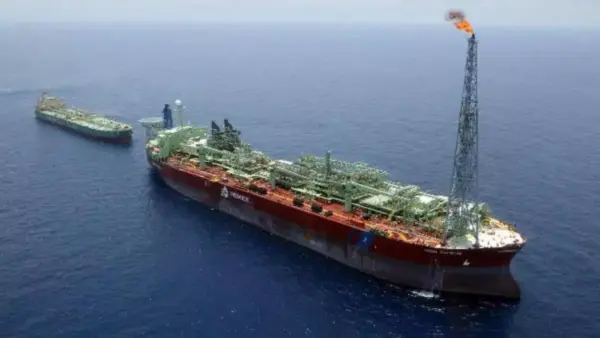
Reuters and Politico cite high-level sources on an imminent escalation of pressure from Washington to block any delivery of crude to the Island.
HAVANA TIMES – The possibility that Mexico may halt or reduce oil shipments to Cuba has ceased to be a diplomatic rumor and has become an internal debate within the government of Claudia Sheinbaum. According to a Reuters investigation, three high-level sources confirmed that the Mexican executive branch is assessing whether to maintain, reduce, or suspend crude supplies to the Island, amid fears of direct retaliation from the United States under President Donald Trump.
The US outlet Politico goes even further, citing “three sources familiar with the plan” and asserting that the White House is considering invoking the Helms-Burton Act to “impose a total blockade on oil imports by Cuba.” According to one of the sources quoted by the outlet, “energy is the key to killing the regime, and this will happen in 2026, with a 100% probability.”
The interruption of Venezuelan shipments, following the forced immobilization of oil tankers in December and the capture of Nicolas Maduro, has left Mexico as the main fuel supplier to a country mired in prolonged blackouts and a deepening energy crisis. “Mexico has become the last lifeline,” one of the Reuters sources acknowledged, describing the impact any change in that country’s oil policy would have.
Beyond geopolitical calculations, the impact is already being felt on the streets of Havana. A private transport operator consulted by 14ymedio describes a scene repeated across different parts of the capital: “Yesterday, of all the gas stations I saw, the only one with a line was on Vía Blanca, because it’s the one assigned by the government. None of the three in Guanabacoa had fuel.”
Although President Sheinbaum has publicly defended the shipments as “humanitarian aid” and part of long-term contracts, concern is growing within her cabinet about the political cost of that stance. “There is a real fear of antagonizing Trump just when Mexico needs room to negotiate with Washington,” another official told the agency.
That room is crucial. Mexico is seeking to renegotiate aspects of the USMCA trade agreement with the United States and Canada, while also trying to convince Washington that it is acting decisively against drug cartels. In that context, the oil reaching Cuba has become an uncomfortable issue. Trump has been explicit: in a message posted on his Truth Social network on January 11, he said there would be “no more oil or money for Cuba.” For several members of the Mexican cabinet, those words are a direct warning.
According to Reuters, the issue was even raised during a recent phone call between Trump and Sheinbaum. Two sources indicated that the US president asked directly about crude shipments and the presence of thousands of Cuban doctors in Mexico. Sheinbaum’s response was to insist on the humanitarian nature of the oil and the legality of the health agreement. Trump, the sources add, did not explicitly demand a suspension, but made his displeasure clear.
Officials consulted by Reuters expressed concern about the growing presence of US Navy drones over the Gulf of Mexico. Flight-tracking data, circulated by local media, show at least a dozen Northrop Grumman MQ-4C Triton drone missions over the Bay of Campeche, following routes similar to those of tankers carrying Mexican fuel to Cuba. “It’s impossible not to read that as a message,” one source admitted.
At the same time, Trump has intensified his rhetoric against Mexico, claiming the country is “run by the cartels” and suggesting the possibility of ground attacks. Sheinbaum has offered greater judicial cooperation, including the extradition of nearly a hundred kingpins, but has also drawn a red line against any unilateral military action. “The fear is that a decision about Cuba could get mixed up with the security and sovereignty issue,” another official explained to Reuters.
Within the Mexican government, the debate is far from settled. Some voices argue that maintaining the supply is a moral obligation and an investment in regional stability. “Cutting off oil could lead to a humanitarian catastrophe in Cuba and trigger mass migration toward Mexico,” one source warned. Others, by contrast, caution that the cost of defying Trump could be too high at a moment of maximum bilateral tension.
Data shows that the volume sent to Cuba does not affect Mexico’s industry. Between January and September of last year, Pemex exported to the Island about 17,200 barrels per day of crude and 2,000 barrels of refined products, worth roughly $400 million. “It’s little oil for Mexico, but vital for Cuba,” Sheinbaum summarized this week in defending that solidarity, adding that it “does not have to disappear.”
The fuel shortage not only paralyzes private transport but has also dried up the informal market, a traditional pressure valve in times of crisis. “My neighbor sells gasoline. I just asked him and he says he doesn’t have any. I ask how much it costs and where I can get it. He tells me it’s pointless; there isn’t any even on the street,” the driver tells 14ymedio, resigned to a scarcity that no longer allows shortcuts.
The lack of electricity has turned bakeries with generators into some of the few regular food supply points. “You should see what the bakeries are like at night. It’s the only thing there is to eat, and only because they have generators,” he explains. Bread, often stale and rationed, has become the last guarantee against blackouts and shortages.
In Cuban neighborhoods, waiting is not measured in barrels or millions of dollars, but in hours spent in lines, nights without light, and increasingly empty tables. The regime clings to its economic and political model while the White House insists that Cuba “is falling by its own choice” and maintains that the country should “reach an agreement before it’s too late.”
Translated by Regina Anavy for Translating Cuba.