
The Isolation of Nicaragua
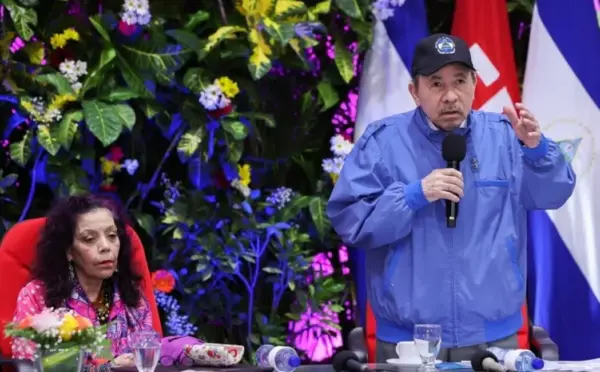
The expulsion of the Spanish ambassador is the latest episode in a progressive international shutdown by the Ortega-Murillo dictatorship.
Editorial from El País* (Confidencial)
HAVANA TIMES – The expulsion of the Spanish ambassador in Managua by the regime of Daniel Ortega and Rosario Murillo, and the appropriate reciprocal response of the Spanish Foreign Minister, Jose Manuel Albares, in expelling the Nicaraguan ambassador from Madrid, goes beyond a diplomatic dispute. It is the symptom of a dictatorship, that of the Ortega-Murillo couple, that has decided to break the few bridges that still remained with the international community, cementing an isolation that will carry greater political, economic, and human costs for Nicaragua and its people.
The action against Spain took place without a clear public justification from Managua. This type of arbitrary decision, which breaks with basic diplomatic practices, fits the pattern that Ortega and his inner circle have been consolidating for more than a decade: disdain for international norms, distrust of multilateral mechanisms, and an uncompromising defense of their own power.
Since 2018, the Nicaraguan regime has expelled representatives of the EU and the Vatican, among others, and has refused to recognize envoys from the United States. It has also expelled organizations such as the Office of the United Nations High Commissioner for Human Rights, the Organization of American States (OAS), and the International Committee of the Red Cross. This parade of forced exits illustrates a clear calculation: Ortega rejects submitting himself to external scrutiny that might discomfort or condemn him.
Ortega is the longest-serving ruler in the Americas in the 21st century, and he has built a regime that no longer tolerates dissent—neither internal nor external—and that perceives any criticism as a threat to its survival. This logic extends beyond relations with foreign governments and directly touches the lives of Nicaraguans.
The case of Bayardo Arce, a historic Sandinista who has become an internal critic, highlights this deterioration. Arce, 76 years old and a former prominent member of the Sandinista Front, was detained without formal charges in July 2025 and remains held incommunicado, in poor health and under conditions his family describes as abusive and dangerous. The message is clear: no one inside the country is safe if they dare to question the direction of power. This pattern of repression is not new, but it has accelerated and broadened since the massive repression of the 2018 protests.
The diplomatic isolation of Managua also has practical implications. By expelling international observers and closing channels of dialogue, the regime limits the entry of cooperation, investment, and support in critical areas such as health, education, and human rights. Nicaragua’s already fragile economy suffers the consequences of this isolation: less access to markets, to external financing, and to multilateral support initiatives. Solitude in the international arena does not tend to benefit economies with limited resources and deep social inequalities.
Nicaragua is shutting itself in step by step, into a world of its own, without clear friendships and with few solid allies. That world is not only smaller, but also more dangerous for those inside the country who dream of freedom, justice, and a dignified life. The international community, including Spain and the European Union, will face the challenge of finding a strategy that combines firmness with solidarity toward the Nicaraguans who suffer the consequences of this isolationist authoritarianism. The future of Nicaragua hangs on the possibility of opening closed doors. That is the work of diplomacy. But what is at stake is not only diplomacy, but the hope of an entire people.
*Editorial published in the newspaper El País of Spain.
——-
Published in Spanish by Confidencial and translated and posted in English by Havana Times.