
The Importance of Extra Income in These Times
HAVANA TIMES – I come from a culture where people tend to spend everything they have. In Cuba we illustrate it with the phrase “throw the house out the window,” which means having that party, buying that drink, going to the beach even if we only have 10 dollars left in our pocket and it’s still the middle of the month.
We do it, I believe, because we have a party-loving idiosyncrasy, and that was reinforced starting in the 1990s, when to compensate for the hardship of economic misfortune we got used to “stealing” every moment from life, as if there were no tomorrow.
Then my family and I arrived in Brazil, the country of cachaça and churrasco, where people not only spend their last 50 reais on a good piece of meat, but also take advantage of credit offered by banks and other institutions in order to party, and thus go into debt.
Although a large part of the Brazilian population acts this way, taking on commitments that in most cases they are unable or unwilling to fulfill, there are also many people with financial education.
I heard this term for the first time when I was still living in Cuba. A friend recommended a free course on WhatsApp.
Financial education is a field with a lot to unpack, but there are some principles that, if you have the necessary discipline, will improve your financial health.
I advise everyone who comes to me with a difficult financial situation to pay all their debts, not spend all the money they earn, and work to have some extra income.
I know it’s hard to resist temptations, ads full of colors, foods with those delicious textures, the nine-hundred-inch TV, brand-name sneakers, the dream weekend in that hotel, etc.
You have to understand that the system is designed so that you spend even what you don’t have and remain forever trapped at the bottom, where the majority is, because for it to function it needs large masses of alienated people fulfilling an operational role.
I am poor. We arrived in this country with a tremendous debt that took us a couple of years to pay off. I work as a butcher and, in order to grow, I’ve chosen to work a couple extra hours to generate income beyond my salary.
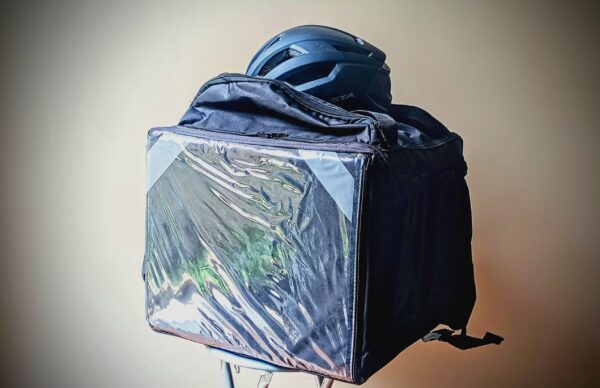
With part of the salary we manage to save, plus that income I make thanks to an electric bicycle I bought to get to work, we intend to create an emergency reserve for the family and set aside some money to start a small business.
One’s discipline to maximize income and not spend more than necessary makes a radical difference.
Doing deliveries can be a relaxing job after eight hours of working at something else. The air hitting your face and the city scenery do you a lot of good, and besides, even if it doesn’t seem like it, you are fulfilling a social function, helping people rest at home while they wait for their orders.
When I only used my electric bicycle to get to work, I had a liability I had invested 3,000 reais in. Now it has become an asset that generates income.
These are the things a Cuban learns upon arriving in capitalism.