
From Cuba to Argentina: the Route of a Cuban in Bariloche
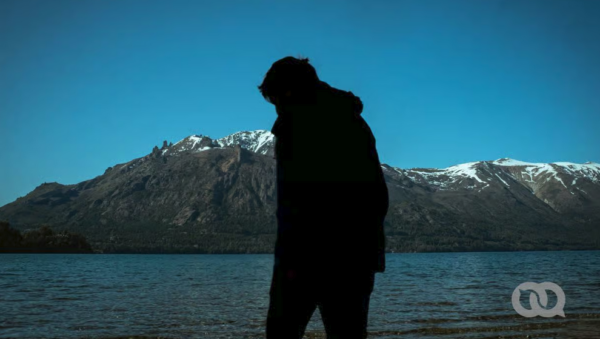
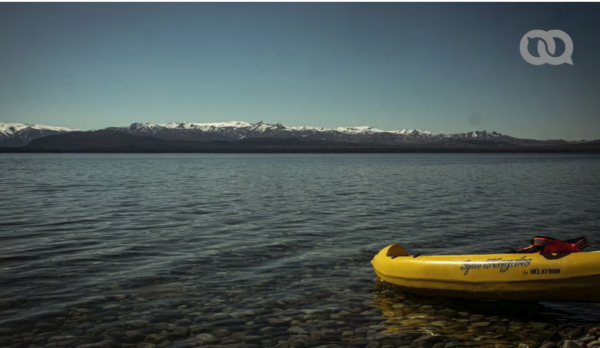
HAVANA TIMES — Lake Nahuel Huapi is deceptive. Nearly 600 km² of glacial water that stretches across much of Neuquén and a bit of Río Negro, in Argentina. It has an intense blue color that, at dawn, is tinged with shades of red, orange, and purple; and waters so transparent that, from the shore, you can see part of what lies near the surface.
“Deceptive” because water transparency in Argentina is rare, hard to come by; it’s a quality the thick sea and Atlantic beaches in this part of the hemisphere don’t share. Along Argentina’s coasts it’s difficult to know what lies beneath: seals, sea lions, or Patagonian monsters. But not in Nahuel Huapi. Its clarity is a punishment for those of us from the insular Caribbean who associate that transparency with warm water. Nahuel’s water is icy and can reach −8 °C without freezing.
For nearly a decade now, Alejandro, a Cuban in his early thirties, wakes up early, leaves his home, and takes in the grandeur of a lake surrounded by the Andes Mountains.
Alejandro, born in the Havana municipality of Diez de Octubre, is one of the 1,200 Cubans who, up to 2020, were living in Argentina—specifically among those who reside in the city of San Carlos de Bariloche, commonly called Bariloche. It isn’t the southernmost location in the country, but without a doubt it isn’t the Caribbean.
Snow and Swiss alpine–style architecture—resulting from European settlements in the area and the consequent displacement of Mapuche peoples—remind you that this is another Argentina and that we are definitely not in Cuba.
Food prices are high, temperatures are low, winters are long, and summers not so much. The last thing you’d imagine is that in this city—less than 2,000 kilometers from the so-called “end of the world”—there is a Cuban community whose current size we don’t know, but which certainly exists, according to Alejandro.
Alejandro ended up almost at the end of the world for love, for a “girl,” he tells me. “It wasn’t a political or social issue. I left because I fell in love,” he says as we talk about the labels—political, urgent, forced—often used to describe Cuban migration. That reality exists, but it doesn’t exhaust the processes. Politics is there, the context weighs heavily, but it doesn’t explain everything.
In Cuba, Alejandro began studying Mechanical Engineering at the Jose Antonio Echeverría Technological University of Havana (CUJAE), but he didn’t finish the degree.
“It had nothing to do with what I liked,” he confides. “I like engines. I like being around metal. I’m also self-taught in painting. I work with wood and stone, make ceramic molds, I work with my hands.”
Alejandro has drawn since childhood. Painting, as a form of expression, now unfolding in almost psychedelic works: childhoods, seas, lakes, and singers who inspire him. One standout in his repertoire is a mop-headed John Lennon who stares at you with great intensity. No matter the subject, there is always lots of color.
At one point he thought about becoming a visual artist, entering the San Alejandro Academy or the Naval or Aviation School. But it was mechanics that ultimately won him over. He’s been taking engines apart since he was 13. He learned from his uncle and cousin.
That love, and his prior training in Havana, is what allowed him to find a job with the Austrian motorcycle brand KTM AG when he arrived in Argentina; years later, he opened his own workshop.
As we talk on the phone, Alejandro is in his workshop, surrounded by cars and engines. He takes a few minutes’ break to chat with me and tell me how he met his partner “purely by chance,” without “looking for anything.” He feels he has to make that clarification: almost a decade later—and in the face of persistent stereotypes—he still believes he needs to explain himself to the world. Cuba is a country where relationships with foreigners are often read as a way out, the stigma exists.
“Anywhere in the world people meet and that’s it, but we still have to clarify that.”
July 26, 2015, and a popular dance-music concert. He doesn’t remember who was singing, but the connection between the Cuban and the South American woman was “natural.” She, originally from Bariloche, was studying at the University of Havana. They lived together for two years.
“We let things happen naturally. Our living together turned out to be natural; that’s when I realized that when there are similar values and a spiritual connection, the language or the country doesn’t matter. It was as if we’d been doing it our whole lives,” he tells me.
“After two years we decided to leave Cuba and come to Argentina. It was about making a life here. Her job required it too. I had a working life in Cuba; I worked at a fairly well-known multi-brand workshop. She told me that here I could have more opportunities here. I had also worked independently in Cuba.”
Alejandro was 27 when he said goodbye to his family at the Jose Martí International Airport and decided to face what he calls “another reality.” In Cuba he had a life, family, and friends, but the decision wasn’t difficult. He had the support of many people around him.
“In Cuba you live differently. Here everything is more spacious, but there are other worries too. They’re different. Nowhere is easy. Migration isn’t simple. Even if you arrive with papers, it’s another context, another culture, another economic system. You start paying rent, living in a different way,” he explains.
“I lived surrounded by family. We used to get together every Sunday; there were about fifty of us. Here that changes. I have friends, but it’s not the same.”
When I ask whether there is a consolidated Cuban community in Bariloche, Alejandro doesn’t speak of unity but of dispersed diversity. People with very different life paths coexist—students of chemical engineering or biology, tourism workers, people with independent projects in other cities—without that translating into collective meeting spaces. Everyone navigates migration as they can. “Everyone does their own thing.” Even in that fragmented map, one emotion repeats itself: the weight of migratory grief and nostalgia, which in some cases turns into resentment toward the Cuban government or toward fate.
“Not all of us migrate for the same reasons or under the same conditions,” he adds. “Migration isn’t always associated with sadness or perpetual nostalgia, which seems very dangerous to me. Necessary, yes, but dangerous. If you’re constantly thinking about what was, a painful feeling appears.”
Alejandro tries by all means to fight that nostalgia, which feeds anger, and he quotes a song by Orishas:
I know I left Cuba
But I know Cuba didn’t leave me
I carried my Yoruba faith
But my saints,
my saints are still there.
“I love my country as it is, because my people live there. I don’t want to detach myself from the place where I was born, where I grew up, and where I lived many joys, with little or with much. I have many beautiful anecdotes I don’t want to erase. And here, well, I might be eating grilled salmon but give me fried rice with an egg and I’m the happiest man in the world. That doesn’t change.”
“I always try to see the positive. When something sinks, it’s because it’s going to give life to something else,” he says.
Alejandro can’t imagine old age anywhere but Cuba, though he doesn’t want to—and knows he can’t—think that far ahead.
The view of Nahuel Huapi, one of “the most beautiful in the world,” according to him, also helps soothe sadness. In a decade he’s become friends with the cold and with mate, at any temperature, but he hasn’t stopped drinking coffee. And, just as Orishas sing, Alejandro brought his saints with him. In the privacy of his home, as a son of the Regla de Osha, he connects with his most spiritual side and with the island.
To Cubans thinking of settling in Bariloche, Alejandro urges them not to be afraid of the cold. The city lives off tourism and a scientific hub that draws students and professionals—fields familiar to any Cuban; work exists.
“People are quite open; there’s a lot of mixing. And the environment is hugely inspiring. Nahuel has a magical effect. You sit by the lake, walk the mountain, sleep in a refuge looking at the stars, and ideas come to you on their own,” he explains.
Although he says he hasn’t directly clashed with contrasts in Bariloche—great wealth alongside Indigenous communities living in difficult conditions—these aren’t hidden. What has bothered him most are the stereotypes he still has to fight and dismantle, especially the sexualization of Cuban men. An imaginary that circulates through jokes, comments, and glances, and is often presented as a compliment. For him, on the contrary, it’s a form of reduction: he doesn’t recognize himself in that image and doesn’t want to be read from that place.
The Cuban wakes up early. Now, in the middle of the austral summer, days are longer and the sun begins to rise around six in the morning. Before heading to his mechanical workshop, he has coffee—first coffee, then mate—looks out the window of his house, watches the river, and figures out how much clothes he’ll need to deal with a high of 24°C—no more.
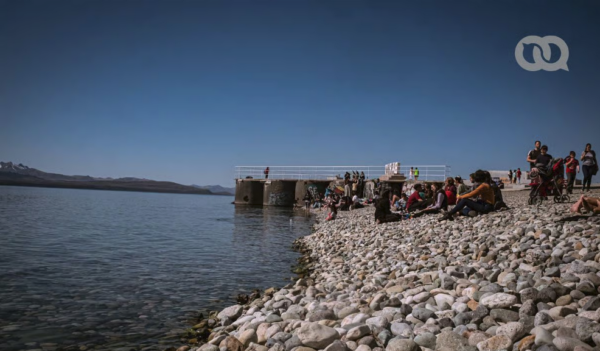
Maybe after work—el laburo, as Argentines say in their Italian-tinged Spanish—he’ll head with his partner to downtown Bariloche to watch the frantic flow of tourists going in and out of restaurants and hotels with astronomical prices, or the crowd that gathers at the pier to take photos next to the city’s name. But he doubts it: he likes his house too much. The Cuban from Diez de Octubre learned to read the cold, to domesticate nostalgia, and to build a life far from the island without ever letting it go.
Alejandro assures that the context on the island has made Cubans resilient, capable of adapting to almost any place. “It serves us for tougher, harsher systems, because we’re strengthened from the foundations, with a lot, with little, or with nothing.”
There are migrations that aren’t explained only by politics and urgency, but by affection and by that—so Cuban—capacity to put down roots even in the coldest water.
First published in Spanish by El Toque and translated and posted in English by Havana Times.