Trump Bets that Havana Will Make a “Deal”
and that “Cuba will be free again”
“There doesn’t have to be a humanitarian crisis,” Trump said when asked about the warning from the Mexican president.
HAVANA TIMES — US President Donald Trump said on Saturday that Cuba will end up seeking a “deal” with Washington after the tightening of sanctions against countries that supply oil to the island, and he claimed that this process would allow the country to “be free again.” The remarks, made aboard Air Force One, confirm a strategy of direct pressure on a regime unable to sustain its energy system without external assistance.
“There doesn’t have to be a humanitarian crisis,” Trump said when asked about the warning issued by Mexican President Claudia Sheinbaum, who cautioned about the social impact of a supply cutoff. “I think they’ll probably come to us and want to make a deal. So Cuba will be free again,” the president added, convinced that the severity of the situation and common sense will force Havana to the negotiating table.
Trump went further in describing the country’s current state. “Cuba is going to collapse pretty soon. Cuba is really a nation that is very close to collapse,” he said—an assessment that aligns with everyday evidence: prolonged blackouts, paralyzed transportation, halted industries, and hospitals operating at their limits. Nevertheless, the Cuban government continues to rely on the rhetoric of “heroism” and a “besieged plaza.” President Miguel Díaz-Canel speaks of peace and dialogue, but “without concessions.”
On Thursday, the White House formalized its offensive by signing an executive order imposing tariffs on countries that supply oil to Cuba. The measure seeks to shut down the regime’s remaining energy supply channels and raise the political and economic costs for its allies. Trump made clear that this is not a symbolic warning. “There will be no more oil or money going to Cuba—zero! I strongly suggest they make a deal before it’s too late,” the president wrote on his social media platform, Truth Social.
In that same message, the president underscored the structural dependence of the Communist Party system. “Cuba lived for many years on large amounts of oil and money from Venezuela… but no more,” he said. The national economy was never self-sufficient and was sustained first by Soviet subsidies and later by Venezuelan backing.
Trump insisted that the island is in a “very bad” situation because that flow of resources has been cut off. The collapse of the Chavista model and international pressure on Venezuela have sharply reduced shipments of subsidized crude, exposing the fragility of Cuba’s energy system.
The US president also referred to Mexico, saying that Sheinbaum was “very good” and had asked that her country stop sending oil to Cuba. Although the Mexican government has insisted that its assistance is based on “humanitarian” reasons, it has acknowledged diplomatic contacts with Washington and the search for “alternatives” to support the Cuban people without exposing itself to sanctions.
From Havana, Diaz-Canel called the measure “fascist” and denounced an alleged attempt to deliberately provoke a crisis. But the response sounds worn out. After more than six decades of invoking the “blockade” as the automatic explanation for every failure, the regime has drained the word of impact and credibility. Like the boy who cried “wolf,” now that the squeeze is finally tightening, the alarm no longer resonates internationally.
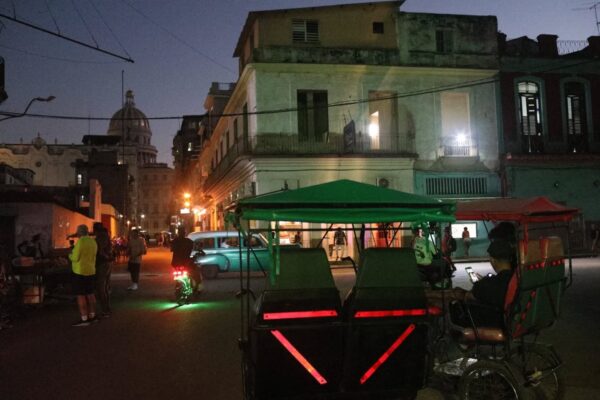
Blackouts have become the most visible symbol of the system’s failure. At peak demand, more than half the country is left in the dark. The government manages scarcity through “scheduled” outages that paralyze daily life and deepen social discontent, while continuing to blame the embargo for all ills and avoiding accountability for its own management.
Trump’s bet is to use economic pressure to force a change in the regime’s behavior. The opacity of the Cuban government makes it impossible to know whether it is willing to negotiate or whether, once again, it will cling to the rhetoric of resistance—shifting the cost of the crisis onto the population rather than ceding power or introducing real reforms.
First published in Spanish by 14ymedio and translated and posted in English by Havana Times.