
CPJ Condemns Arrests of Reporters Don Lemon & Georgia Fort
over Minnesota protests coverage
By The Committee to Protect Journalists
HAVANA TIMES – The Committee to Protect Journalists (CPJ) strongly condemns the arrests and extraordinary felony charges of journalists Don Lemon and Georgia Fort for their reporting on a protest in Minnesota, marking a serious escalation of attacks on the press in the United States.
“This is an egregious assault on the First Amendment and on journalists’ ability to do their work,” said CPJ CEO Jodie Ginsberg. “As an international organization, we know that the treatment of journalists is a leading indicator of the condition of a country’s democracy. These arrests are just the latest in a string of escalating threats to the press in the United States — and an attack on people’s right to know.”
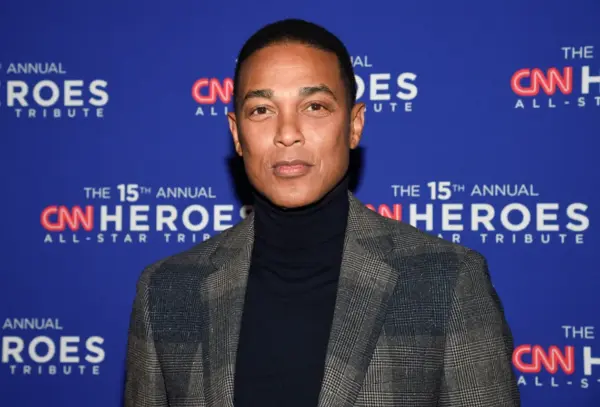
Lemon, who formerly reported for CNN and now publishes on Substack, was arrested Thursday night in Los Angeles by federal agents. Lemon was held in a federal facility in downtown Los Angeles and was released without bond on Friday afternoon, U.S. west coast time.
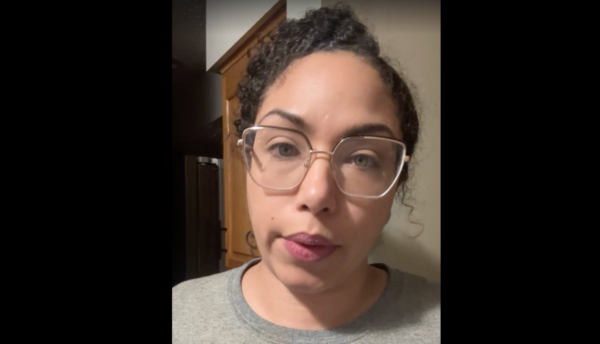
Fort, an Emmy-winning filmmaker, was arrested Friday morning, according to a Facebook video she posted. In the video, Fort can be heard saying that federal agents were outside her home — where her children were present — and had told her that they were granted a warrant for her arrest by a grand jury. Fort was held in the Whipple Building, a federal facility about 11 miles from Minneapolis, and was released after spending the day in custody.
“As a journalist who has worked in media for more than 17 years, I leave this federal courthouse today with one question, ‘Do we have a Constitution?’” Fort said to reporters following her release from federal custody. “Documenting what is happening in our community is not a crime,” she added. In a Friday morning press conference, Fort’s 17-year-old daughter spoke out in support of her mother, saying, “My seven- and eight-year-old sisters woke up today without a mom. My father woke up today without his wife.”
Both Fort and Lemon’s arrests were in relation to their coverage of a protest at a Minnesota church led by local activists against immigration enforcement operations in the state.
According to a copy of the indictment, the Justice Department has charged Lemon and Fort with the felony of conspiring to deprive others of their civil rights and of violating the Freedom of Access to Clinic Entrances (FACE) Act by allegedly obstructing access to a house of worship, a misdemeanor charge.
The felony charge is punishable by up to 10 years in prison, or fines, or both. The misdemeanor is punishable by up to six months in prison, or a $10,000 fine, or both.
It is highly unusual for a journalist to be charged with a felony in relation to their reporting.
The charges were brought despite both a federal magistrate judge and a federal appeals court previously rejecting the Justice Department’s attempt to arrest Lemon and his producer. Magistrate Judge Douglas Micko said prosecutors had failed to present evidence for the arrests. The chief judge of the United States District Court for the District of Minnesota Patrick Schiltz said that the request for an upper court to review the initial magistrate denial was “unheard-of.” The Justice Department then pursued charges through a grand jury.
In the U.S., it is rare for journalists to be arrested in connection with their work. In 2025, the U.S. Press Freedom Tracker, of which CPJ is a founding member, documented at least 34 arrests or detentions of journalists, in which 12 were charged, frequently around protests, rather than through a served warrant later on. Federal charges — especially felonies — against journalists are extremely rare.
According to the Reporters Committee for Freedom of the Press (RCFP), the limited number of cases brought against a journalist documenting a protest on private property have been handled as cases at the state level, and the charges are almost always dropped. In the cases in which a journalist goes to trial, they are usually acquitted.
The National Association for Black Journalists (NABJ) issued a statement, signed by CPJ, condemning the arrests. “Let us be perfectly clear: The First Amendment is not optional and journalism is NOT a crime,” the statement read. “A government that responds to scrutiny by targeting the messenger is not protecting the public, it is attempting to intimidate it, and considering recent incidents regarding federal agents, it is attempting to distract it.”
Lemon and Fort’s arrests follow a growing pattern of journalists being accused of obstruction or of unlawful assembly for exercising their First Amendment rights. In June 2025, Emmy-winning journalist Mario Guevara was arrested on charges including unlawful assembly and obstruction while livestreaming a protest in the Atlanta metro area. He spent over 100 days in law enforcement and immigration custody, and was eventually deported to his native El Salvador, despite being in the United States legally at the time of his arrest.
Journalists are also being physically assaulted while covering ICE actions. During recent protests in Minneapolis against Immigration and Customs Enforcement (ICE) and Border Patrol operations, the U.S. Press Freedom Tracker documented at least 10 assaults of journalists, half of which were targeted or singled out because of their role as reporters, and the arrest of one of those reporters, John Abernathy, who was also shot with crowd-control munitions, subjected to intense tear gas and deliberately pepper-sprayed.
During the Los Angeles protests in June 2025 there were at least 99 cases of journalists being assaulted while covering protests against immigration enforcement raids in the city and related immigration issues; in at least 44 of those cases, the journalists said they were targeted.
The Trump administration has rapidly escalated its attacks on media freedom in the United States in a flurry of executive actions that have made journalists’ ability to report more precarious, ultimately harming the public’s right to know, as CPJ noted in its report on the first 100 days of the Trump administration. Earlier this month, Justice Department officials disregarded usual legal protections for journalists when they raided the home and confiscated the electronic devices of a Washington Post reporter as part of a leak investigation.
“CPJ warned back in November 2024 of its concerns about attacks on the press under the incoming administration,” said Ginsberg. “We never imagined that the erosion of press freedom would happen so fast and in so many ways. We’re stepping up to address these threats by increasing our emergency support to journalists in the United States, while continuing to push those in government at both local and federal level to do more to uphold their constitutional obligation to protect a free press. This is not a future problem — without access to independent, fact-based information, we are all less safe and less free.”