
Cuba’s Zero Options
HAVANA TIMES — During the “Special Period” (the 1990s), amid that crisis of scarcity and social erosion caused by the collapse of the “socialist camp,” the ghost of the “zero option” haunted Cuba: what would the country do if its imports dropped to zero?
Today, authorities and social media voices among those of us who remember the ’90s are invoking that ghost again. Let’s go in order:
Before January 29, 2026, Cuba was already suffering a dramatic deterioration: blackouts, insufficient or expensive transportation, inflation. The government improvised palliative measures, without real success.
Tourism has not recovered: visitors never returned to more than just over half of those who came before COVID. The corporate establishment built enormous hotels that remained empty. Almost nothing exportable is produced, except for some medicines, tobacco, rum, and minerals. In the domestic economy, we extract a little sulfur-laden oil and grow part of our basic food supply (although even some sugar is imported).
The most dynamic sector of the economy consists of various import ventures and retail or service businesses for consumers who can afford them. Their scale ranges from huge para-state corporations and large private chains to family networks, where merchandise arrived by plane and was sold in informal wholesale markets (like the famous “Cuevita” in Havana) or went directly to families through “garage sales.”
The government, corporations, and smaller private firms extract money that reaches Cubans who receive foreign currency from abroad or from other businesses.
The once-famous Cuban public health services are deteriorating due to lack of supplies and personnel, ridiculous salaries, and a critical shortage of medicines (which often must be bought on the informal market).
Material degradation is compounded by the erosion of social bonds: culture is in crisis, much of the intelligentsia has emigrated, solidarities are fading, and prison-yard morality often prevails on the streets. Above, there is no access to foreign credit due to the US embargo and Cuba’s very long history of unpaid debts. Below, there are hardly any life projects except emigration. The future is uncertain.
Then Trump appears
Declaring Cuba in emergency status as an “unusual threat to national security,” he adds to existing restrictions the ploy of sanctioning, with more tariffs, countries that export hydrocarbons to Cuba.
It is supposedly a blow aimed at the Cuban government — accused of hosting Russian and Chinese spy bases — yet those “above” do not suffer the hardships endured “below.” They will not suffer from this tightening of the blockade/embargo, because Cuba is a class society, and the blockade/embargo is also a class weapon: it strikes below, and in the middle, never at the very top. Poor, vulnerable people — subjected to violence, restrictions on freedoms, and limited access to resources and opportunities — are today the targets of class confrontations deployed by the two powerful establishments on both sides of the Florida Straits.
Cuba is living exceptional historical moments
Events are accelerating. We do not know what will happen.
We have spent two weeks with transportation tending toward zero: urban buses are not running; fuel is not sold to private drivers. For several months, cooking gas has not been sold. The issue of aviation fuel (official international alert from Havana: JET A1 NOT AVBL) is especially worrying: there are no longer outbound flights from Canada and Russia — Cuba’s main tourist markets — planes arrive empty to take stranded nationals back; European airlines restrict flights and refuel aircraft in the Dominican Republic.
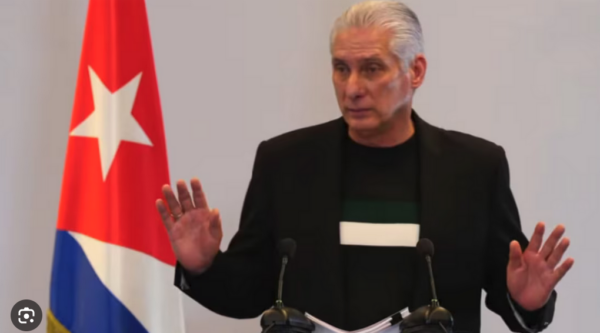
The Cuban president and his ministers mainly speak about medium and long-term measures to improve the situation.
But Keynes already said: in the long run we will all be dead.
No one knows what survival will look like next week. Mexico (Cuba’s last major supplier) is no longer sending oil, nor is Russia (Putin said he would send it, but that fleet moves clandestinely because of the war against Ukraine). China is a net oil importer.
Many compare this reality to the “zero option” of the 1990s: they call the current moment “option 0.2.” Although neither that nor this would really be options, but rather necessities — unforeseen?
An unforeseen crisis?
The Special Period of the ’90s was based on pre-elaborated strategies that Cuban military personnel learned in the USSR (I read in HT that a Russian engineer designed it). The fall into the abyss was not abrupt as it is today, which seems to have caught everyone off guard — above and below. There were even publications for the public (a two-volume book: Solutions for Difficult Conditions, or something like that); establishment representatives gave instructions in community and workplace assemblies (today they do not even convene them, probably out of fear); functional infrastructures existed (there were sugar mills; thermoelectric plants may not have had fuel — over time Cuban engineers learned to use domestic crude, high in sulfur — but they did not break down as often as now). The Ministries of the Armed Forces and Public Health promoted herbal medicine.
Tourism and remittances were increasing and served as a lifeline before Chavez’s Venezuela appeared. An economist notes that pork production — then the main animal protein — increased in that era; today that production has fallen drastically, and the main meat is chicken… imported from the USA.
A neighbor comments: “Fidel didn’t make promises; he knew what there really was; now he’s no longer here.” I don’t know if he’s right.
In the ’90s there were moral reserves in the generations of the “republican” and “socialist” eras. It was normal for a company or state driver to give a hitchhiker a free ride, or for a private trucker to charge regular prices for a late-night “rescue” trip. Today, generations born in the ’90s and after dominate daily life. Their morality is different. Sometimes I feel we are heading toward a “war of everyone against everyone.”
In Cuba’s history there have been two US naval blockades: in 1898, when supplies to the Spanish Army were cut, forcing Spain to sign peace separately with the United States to end the war in Cuba; and in 1962, during the Missile Crisis, which practically did not materialize because the USSR, also separately, negotiated with President Kennedy.
I do not know whether there will be a naval blockade this time. What is already happening is a free fall:
“Our” selfish establishment took no precautions, fostering a catastrophe. Another selfish establishment uses genocide as an instrument of political pressure against its counterparts here. The Cuban people are the victims.