
Nicaragua & the USA: Negotiation, Capitulation, or Rumors?
The situation after Maduro
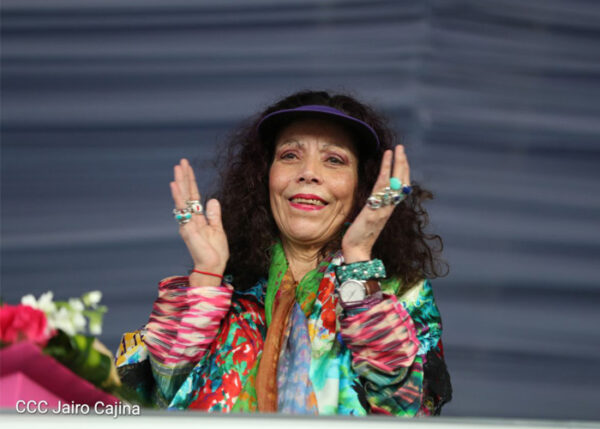
Civic opposition needs to organize inside Nicaragua and direct resistance against the co-dictator, increasing the costs for the ruling elite.
By Manuel Orozco (Confidencial)
HAVANA TIMES – In the wake of Nicolas Maduro’s removal, a wave of speculation has been unleashed about supposed negotiations between Ortega-Murillo and the United States, or vice versa. Commentary on this issue assumes many variables, factors, and conditions, and the act of negotiating suddenly appears out of nowhere without any preceding process. What is true? If there is negotiation, is it toward capitulation, a Venezuelan-style arrangement, or do the rumors stem from speculation and the illusion of a long-awaited change?
The sources of the rumors
Since January 3, rumors claim that the release of 20 political prisoners on January 10, 2026, as well as the suspension of visa-free entry for Cuban citizens on February 8, respond to pressure from the United States. Some even argue this is happening because “they’re already talking,” because there is already “a deal with the United States” so they won’t be targeted.
Regarding the first case, Rosario Murillo has implemented a policy, inherited from Daniel Ortega, of imprisoning, prosecuting, and sentencing citizens on false charges with the aim of beheading any form of civic organization and keeping the population suspended in fear.
As with purges, Murillo uses this technique cyclically every three or four months, ultimately releasing small groups of people while leaving the main targets of her political vengeance in prison—and refilling the cells with new detainees. The cells are never empty.
Historically, both Daniel Ortega and Rosario Murillo have resorted to imprisonment as a method of punishment and intimidation, keeping detainees and the convicted imprisoned for periods of up to three years. There are exceptions such as Jose Manuel Urbina Lara and Jaime Navarrete, who have been punished with the cruelty characteristic of Murillo. It is worth recalling that Urbina Lara had a double conflict with the Sandinistas. He sought asylum in the Costa Rican embassy and later seized the Nicaraguan embassy in Costa Rica in the 1990s, demanding the resignation of General Humberto Ortega and other military officials.
The release of the 20, has been attributed by speculation to a message posted by the State Department on social media as the determining factor in the decision. Yet the decision to release them predated January 3 and that post, since the regime’s plan was to free them around Christmas.
In the case of suspending visa-free entry to Nicaragua for Cubans, the dictatorship indeed did so with the United States in mind, assuming that the crisis following the oil embargo would cause a massive exodus and that its “gesture” of containing migration would serve to preempt any pressure or threat from Washington.
The reality is that the intensification of Cuba’s economic and energy crisis has been unfolding since early 2025, and yet migratory flows have decreased—largely because the United States has contained and restricted migration to the US through Donald Trump’s policies.
Although the visa suspension has been linked to the State Department post condemning Murillo as an illegitimate “co-president,” for the United States this is a silent gesture, unrelated to migration containment and occurring two years after Murillo facilitated the passage of more than 100,000 Cubans, Haitians, and migrants from third countries through Nicaragua toward the United States.
The association of these Murillo decisions with US messages is therefore circumstantial and does not reflect any communication exchange, active diplomatic relationship, or negotiation. It serves Murillo’s interests for it to be interpreted that way so she can slip off Washington’s radar. However, formally and diplomatically there is no evidence of any exchange between the two countries—neither from Washington, D.C., nor from the embassy in Managua. The exchange does not exist because the United States has a tactical approach oin how it will deal with the regime in the future, but at present its priorities lie elsewhere.
When have Ortega-Murillo negotiated with the United States?
Despite the lack of evidence, the rumors are justified in some circles under the assumption that “the dictatorship has always negotiated when its power is at risk.” This is a repetitive expression: political risk generally gives rise to bilateral or multilateral interaction aimed at an arrangement resulting from the balance of power between the parties—usually one side seeks to improve its position through negotiation.
In general, negotiation rumors assume the dictatorship perceives and lives under a high level of threat from the United States, pushing it toward capitulation. This reasoning rests on the assumption that the military will abandon Ortega-Murillo, or that an imminent implosion will lead to their removal from power by sectors within the regime, a new popular uprising, or a magnanimous display of US power toward the dictatorship.
Certainly, Daniel Ortega has participated in political negotiations since the 1980s: in the Contadora process (1983–1986), Manzanillo (1984), Esquipulas I and II (1986–1988), and Sapoa (1988–1989), which led to the decision to move elections forward. He also negotiated with Nicaragua’s civic opposition in 2019 and reached a very important agreement for the country—one Ortega broke three months later.
In each of these moments, the negotiation process was tied to considerations about how to exploit the political moment and bargaining power relative to risk vis-à-vis the Reagan administration, Central America, and more recently the civic opposition and public opinion. Conditions differed each time, and Ortega was not always at a disadvantage or cornered, as some claim.
But there is no doubt that before March 2019, the United States influenced these sides to sit down and reach an agreement—one that lacked safeguards, verification, and a timetable, all key elements for ensuring compliance.
Negotiation terms always include risk factors, each actor’s position, and the level of importance assigned to the matter under negotiation. But above all stands the power position each actor holds. The dictatorship’s current interpretation is that it occupies a position of strength where it does not need to negotiate, since four risk factors are not unfavorable to it: there is no adverse economic crisis affecting the dictatorship, no civic opposition or active social protest weakening it internally, no major international mobilization, and the regime maintains highly cohesive control over the ruling circle.
The fear of a negotiation without opposition
Actions by the Trump administration regarding Venezuela and Cuba have also created the expectation that Nicaragua is next in line, and the association with the release of the 20 prisoners and the visa change for Cuba reinforces that belief. Added to this is the precedent that the United States could negotiate directly with the regime’s power elite like with Venezuela, sidelining the opposition—which is much weaker than Venezuela’s.
However, this speculation overlooks that the power elite’s structure differs in each country. Nicolas Maduro’s inner circle was fairly heterogeneous and not cohesive around him alone, but rather around other influential pillars of power, including the Rodriguez siblings.
In Nicaragua’s case, the power circle is concentrated in Rosario Murillo across all arenas. Her operators—as CONFIDENCIAL has documented—remain loyal to her, whether military, police, political, or economic actors.
The opposition’s options
This entire approach offers important lessons for the opposition.
First, it is important to follow Ronald Reagan’s philosophy: trust but verify. That means leaving no room for assumptions, rumors, speculation, or illusions of change without evidence and hard data. If there is negotiation, the questions are: Who is involved? Who manages it within the ruling circle? How can exchanges with the United States be verified? It is not enough to say, “analysts on Facebook say so,” or “I heard it on WhatsApp.” That the United States will pressure Nicaragua is a fact—but when and how much depends on many factors, including the role played by risk factors, civic opposition included.
Second, the civic opposition needs to organize within Nicaragua and direct resistance and pressure against Murillo, increasing risk factors unfavorable to Murillo within the ruling elite itself. It is not a matter of assuming “change is coming” because Ortega is on his way out—just as many predicted Fidel Castro’s death for nearly 20 consecutive years (since the late 1990s). Castro eventually died, the system continued under Raúl Castro, and now under Díaz-Canel. The task is to work through actions that weaken and dismantle Murillo’s power structure.
Third, if the civic opposition wants to present itself before the international community, it must validate itself as the legitimate representative of the people’s aspirations for change and outline a strategy to alter the balance of power and pressure the dictatorship, with a roadmap for democratic transition. Otherwise, the opposition remains rowing by itself in a sea of rumors and speculation.
First published in Spanish by Confidencial and translated and posted in English by Havana Times.