
Cuban Prison Riot Leaves At least Seven Dead, Many Injured
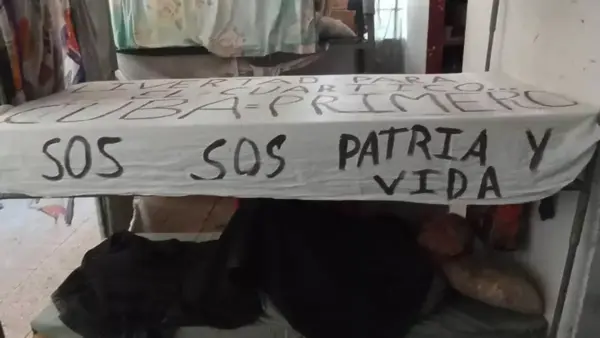
The inmates revolted after a young man, “almost a child,” was found hanged in his cell following a beating for complaining that he was not being given enough food.
HAVANA TIMES – The toll from the riot that broke out this Wednesday at the maximum-security prison in Canaleta, in Ciego de Ávila, is at least seven dead and numerous injured. This is according to the organization Prisoners Defenders, based on statements from witnesses to the events.
The disturbance began, reports a source close to the situation, “because a young man, almost a child, started protesting because they weren’t giving him food and he couldn’t stand the hunger anymore. They beat him very badly and he was found hanged in his cell.”
From that point on, the source continues, the inmates began to protest. The same source witnessed the moment when seven coffins were removed, and several ambulances departed for Camagüey and for the hospital in Ciego de Ávila. “What they’ve done to the prisoners in Canaleta has been a total massacre,” the source asserts. And adds: from a kilometer away, he says, the cries of “Long live Trump,” “Down with Díaz-Canel,” “Homeland and Life,” and “Freedom” could be heard.
As of one in the afternoon on Thursday, the prisoners were still rioting. “Major Carlos,” nicknamed El Cojo (The Lame One), head of prisons in Ciego de Ávila, led the crackdown against the inmates, accompanied by riot squads from Ciego de Ávila and Sancti Spíritus.
Information has trickled out, partly because communication with families was cut off, sources also explain. “The last thing we know is that at the hospital of Kilo 8 prison in Camagüey, they are making room for dozens of injured who are going to be transferred from Canaleta,” Javier Larrondo, president of the NGO Prisoners Defenders—one of the first organizations to report the events, told 14ymedio. “The repression has left a very large number of injured and at least seven dead.”
This high-security prison is a facility that for years has faced multiple complaints of overcrowding, unsanitary conditions, and abuse. A testimony from an inmate provided to the EFE news agency confirmed that reinforcement units arrived at the scene and used rubber bullets, pepper spray, and physical violence to quell the protest.
During the early morning hours, videos and audio recordings circulated on social media in which shouts of “Freedom,” “Homeland and Life,” and slogans against President Miguel Diaz-Canel can be heard. In some images taken from inside the prison, several inmates display sheets bearing protest messages hung in common areas.
Reports indicate that the repressive operation intensified early Thursday morning, when—according to testimonies—special troops known as the Black Wasps intervened. Inmates speak of beatings, rubber projectile fire, and the use of chemical agents.

Canaleta prison, considered the strictest facility in the province of Ciego de Ávila, is located on the outskirts of the provincial capital and houses more than 3,000 inmates, according to data compiled by researchers of the Cuban penitentiary system. The complex began to be built in the mid-1960s with wooden barracks and was expanded in 1975 with multi-story buildings, surrounded by double perimeter fencing and concrete walls. Due to its size and level of security, it holds a significant portion of the province’s prison population.
Prisoners Defenders states that the inmates “have risen up demanding freedom for Cuba.” The Madrid-based organization currently counts 1,207 prisoners held for political reasons on the Island, a figure the Cuban government consistently rejects.
According to figures from Cubalex, in 2025 there were at least 41 deaths in Cuban prisons, linked to inhumane detention conditions, inadequate nutrition, lack of proper medical care, and untreated illnesses.
During that same period, the NGO documented 1,330 human rights violations against incarcerated individuals on the Island. The reports include 1,045 cases of harassment and repression, 402 of denial of medical care, 297 of inadequate living conditions, and 224 related to food deficiencies.
The Center for Documentation on Cuban Prisons (CDPC) has also denounced practices such as prolonged solitary confinement, punitive transfers, and forced labor without pay, in addition to the use of punishment methods that human rights organizations consider forms of torture, including the so-called “Turkish bed,” “the bicycle,” and the use of “shakiras,” shackles that completely immobilize the inmate.
Regarding Canaleta prison in particular, reports consistently point to abuse and repression against prisoners held for political reasons, as well as internal corruption, and deteriorating sanitary conditions. Prisoners’ relatives have also repeatedly denounced prisoner difficulties in accessing medications and food during visits.
Nearly 24 hours after the incidents began, Cuban authorities have not issued an official statement on the riot or on the situation inside the prison.
First published in Spanish by 14ymedio and translated and posted in English by Havana Times.