
The Soundtrack of an Island
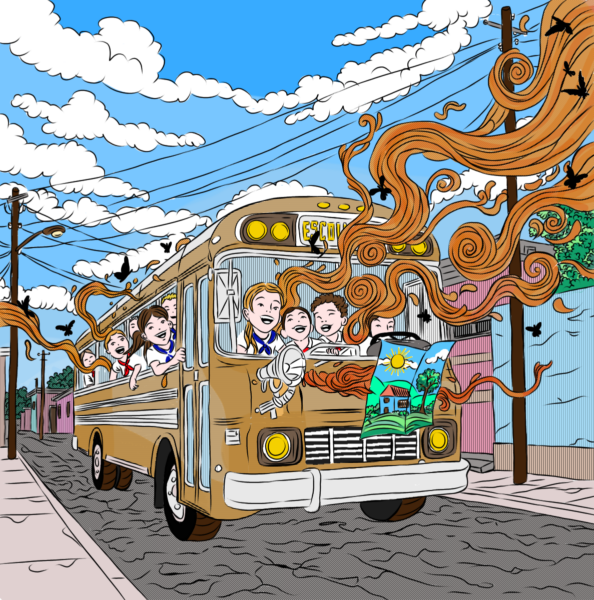
HAVANA TIMES – A few days ago I was traveling to my mother’s house. After waiting an hour at the bus stop, I was picked up by one of the buses that transport students from a special school. These are children with learning delays, each with their own story, with an inner world that needs care, stimulation, and tenderness. As I got on, their restless laughter and a familiar little face or two welcomed me.
What unsettled me was the sound that filled the small space. Blasting at full volume from the driver’s music player was a song by Bebeshito, a Cuban urban music artist—or, more specifically, reparto. This is a musical genre that originated in Cuba around 2007. It is a fusion of reggaemuffin, reggaeton, timba, and Cuban rumba. Its lyrics are explicit, crude, empty, and repetitive.
Amid the children’s laughter, phrases loaded with sexual content slipped in, mixing with an innocence I would like to protect from noise and vulgarity. On this island, music used to be synonymous with poetry, identity, and soul. Now, however, it seems we live under the frequency of reparto and its meaningless choruses.
On every corner, in parks, bars, corner shops, and buses, the same thing plays. There is no escape, because music has become background noise that no one questions anymore. It has turned into a social ritual: it is not only consumed at parties, but people of different ages (even though it is a phenomenon more common among the young) have adopted linguistic traits from this expression as markers of identity.
Cuban music once had words; it was the voice of a country telling its story through claves, sones, boleros, and trovas. Today the same rhythm is repeated, and most lyrics talk about money, naked bodies, and parties. Defenders of the genre justify the language used because they see it as a reflection of a society that struggles daily to survive.
Cultural institutions have devoted broad exposure to this genre in public media and community programs for three decades. Meanwhile, what could inspire and culturally uplift remains out of reach for the masses. Talented artists resist and create from the margins.
What hurts most is that its rise in popularity and consumption has normalized this kind of discourse. It is not just the absence of musical quality; the problem is the lack of discernment. Just as people move through the streets with speakers blasting prosaic choruses, they play hypersexualized and crude music for a group of children with special needs. Music has formative power: it shapes taste, awakens imagination, educates the ear and the soul. If all they hear are these kinds of lyrics, there will be no space left for sensitivity or playfulness.
Cuba remains a country of talented musicians, but the current soundscape feels more like a caricature than a heritage. What is popular has been confused with what is vulgar, the spontaneous with the easy. The problem is not what is playing, but what no longer plays. The space once occupied by those rhythms has been filled with noise.
That day on the bus I kept staring out the window while thinking about all of this—about the children, about how this kind of music may not help them grow and instead keep them confined inside a bubble, trapped in the same beat.