Past Difficulties that Illuminate the Present
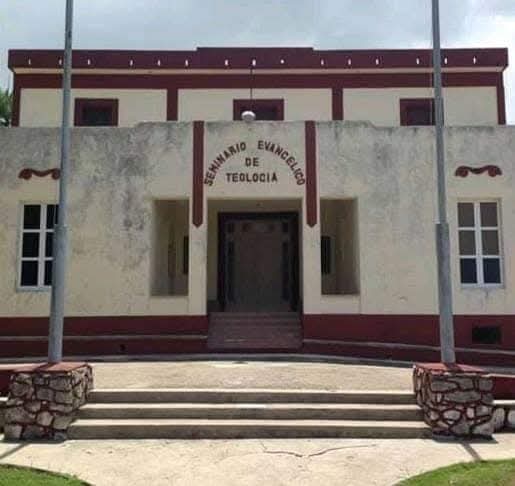
HAVANA TIMES – News has reached me of the death of one of our professors at the Evangelical Theology Seminary in Matanzas. My memories of him are colored with great affection, and, naturally, I feel his parting deeply. To me, he’s a man who stood out for the quality of his character and his human sensibility. Always very kind and pastoral, with an admirable attitude towards service. Qualities I’ve tried to emulate although not always with success.
I’m grateful for every one of our conversations. Even then, I knew I learned a lot from them, as I did in his classes. He’d been a Methodist pastor from the time he was very young, and he had to navigate some very complex and critical stages for Christians in our national history, due to Cuba’s political process. For example, the construction of socialism that doesn’t allow – nor did it from the very beginning – other ways of thinking outside of that camp.
I felt a special respect for my professor’s character, given the cruel experiences that he and those of his generation suffered, especially in the UMAPs – the forced labor camps of the mid-sixties. Given that respect, I listened to him with all the attention I could.
The UMAPs – Military Units to Support Production – weren’t really what they said. Rather, amid the zeal to seek the New Man in Cuban socialist society, those who didn’t agree with the ideals conceived by the “revolutionary” State were punished by imprisonment, and psychologically and physically tortured in concentration camps. Dissidents, homosexuals, religious believers and anyone who – according to the Communist Party – didn’t agree with the new political project suffered these conditions. Their political project was always the priority of those holding Power.
Years later, the consequences of these policies taught the government not to repeat them, at least not in the same way.
My professor was sent to the camps like so many others, but in contrast to some who preferred not to speak of the matter afterwards, my teacher always found a way to tell us about it.
For example, he shared that on Saturdays everyone set aside a portion of their food for their brothers who were Seventh Day Adventist and for the Gideons. Since these groups didn’t work on Saturdays, they avoided going to get their meal, so that those who ruled in that place wouldn’t say: “You don’t work, but you’re eating.” Hence, the rest put together enough for them to eat, and encouraged them to accept it, saying: “We worked, and we want to share. It’s no problem.”
Those in the camps were ordered to do some activities that were absurd, like when they were ordered to dig a trench with certain measurements. When they finished, they were told: “That’s where we’re going to bury you.” Then they were ordered to fill it up again. Torture, abuse and mistreatment every day, an experience far distant from a mobilization to support agricultural production, or any other need.
Among all the stories the professor told us, there’s one I would never let myself forget. It’s the following: many years later, when it might seem that this entire individual and collective nightmare had been overcome, he once more ran into one of the more brutal guards from the UMAP – this time, on a corner in Santa Clara. And the greeting that emerged from my teacher was: “Sargent, how you made us suffer in that Calvary!” The man merely responded: “They were orders.”
And what happened?” I asked, thinking that his answer couldn’t be all of it, and wondering if it was the beginning of some kind of justice, after what he’d lived through. But… “Nothing,” the teacher said. “He continued on his way, and me on mine.”
I resisted the idea that things turned out like that. But existence itself dictates events that way more than once. That fact makes me reflect sometimes:” How can we continue being and doing, despite the small or large injustices suffered at a determined moment? How can we go on with life’s projects we consider necessary, when everything seems to be against them?
My teacher, now gone from this physical plane, gave me his answer: by insisting. He continued on with his life in the church, preaching the God he believed in, in the same society, under the same Communist government that had punished him so cruelly for considering him in error, according to their principles. And he ended up constructing the life he decided to build. I believe there can be no greater reward.