
Cubans Daily Bread Rolls
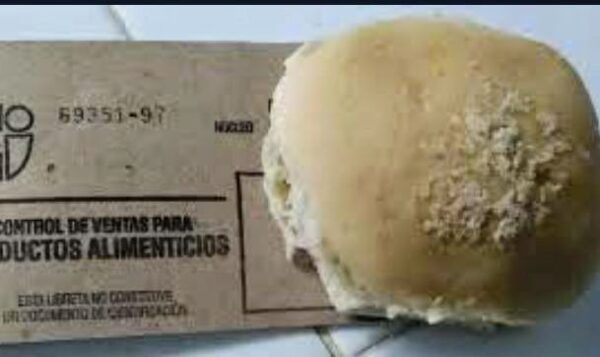
HAVANA TIMES – Dawn in Havana still smells of the sea, but on the corner by a state-run bakery, another scent already hangs in the air: the smell of exhausted patience. A line of twenty people winds along the sidewalk. They don’t speak. They stare at the bakery’s metal door, still shut. They wait for the daily miracle: the “our daily bread roll” which, in today’s Cuba, is anything but a guaranteed right.
Maria, 72, has brought a folding chair. “Before, there was always bread for breakfast, for a snack… Can you imagine Cuban coffee without a toasted slice of bread with butter? Now it’s a luxury. What they give here,” she says, pointing at the bakery with disdain, “is just enough to not die of shame. But it’s all there is.”
From Ancient Grain to the Ration Book
Bread, one of humanity’s oldest foods, originated about 14,000 years ago in Mesopotamia. The Egyptians perfected fermentation, the Romans spread its consumption across Europe, and the Spanish brought it to the Americas. In Cuba, during colonial times, pan criollo—an adaptation of Spanish recipes—became an essential staple.
With the 1959 Revolution, bread became politicized. The promise of “bread for everyone” was institutionalized in 1962 with the Ration Book (Libreta de Abastecimiento), which guaranteed a daily portion at a symbolic price. For years, the smell of freshly baked bread filled neighborhoods at dawn.
The hardest blow came in the 1990s during the Special Period. The collapse of the USSR—Cuba’s main supplier of subsidized wheat—left the country literally with “bread and water.” Then bread suddenly became a memory. It was the era when wheat flour was mixed with anything possible just to fill people’s stomachs. Cuban bread culture suffered a wound from which it would never fully recover.
Bread Around the World: The Normality Cuba Lost
While in Cuba bread is synonymous with scarcity, globally it is a basic and accessible food. According to the UN Food and Agriculture Organization (FAO), per-capita global bread consumption is around 75–80 kg per year. Turks lead the ranking with more than 100 kg per person annually, followed by Serbians, French, and Argentinians. In most of these countries, bread provides between 15% and 25% of daily caloric intake.
In Cuba, official statistics are elusive, but independent estimates place real consumption below 20 kg per year—one of the lowest figures in Latin America and the Caribbean.
Reality: The Basic-Basket Bread, an Invisible Product
Today, rationed bread is a shadow of what it once was. The basic ration book includes it, but its availability is an illusion.
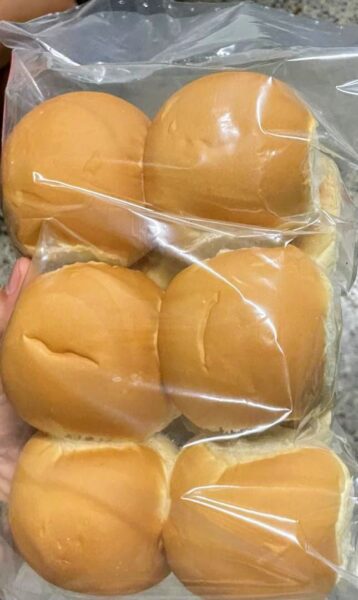
Arriving after 4:30 PM at the bakery usually means finding the place empty, with a sign reading “NO BREAD.” Production is irregular and insufficient. State bread rolls cost just a few Cuban pesos, a symbolic price. However, its quality is terrible. It is made with low-grade flour mixes and, in the worst moments, with substitutes like sweet-potato flour.
“That sweet-potato bread is a punishment,” confesses a baker who prefers to remain anonymous. “It’s dense and grayish; it has nothing to do with real bread. It’s a patch the stomach appreciates, but the palate rejects.”
The product’s deterioration is nutritional as well. Each roll provides roughly 150–200 kcal (less than traditional bread). Protein content is very low due to poor-quality flour. Fiber varies depending on non-traditional substitutes. It is also poorly digestible, causing gastrointestinal problems.
In comparison, quality artisan bread provides up to 260 kcal, 8–10g of protein, and is a source of B vitamins. Cuban rationed bread barely fulfills the basic calorie function.
The Raw-Material Shortage: The Root of the Problem
The cause of this disaster is multifactorial, but it boils down to one word: shortage. Cuba imports 80% of its wheat, mainly from the US and Canada—supplies affected by sanctions and the national economic crisis. The country also lacks capital to purchase wheat on international markets. Logistics are broken: obsolete mills, and frequent shutdowns due to power shortages add to the picture.
The result: low-quality flour producing bread with pale crusts, compact filling, and sour taste.
In the face of state failure, private bakeries have blossomed, offering quality products for those who can afford them.
Bread in Cuba is no longer a symbol of equality but a thermometer of crisis. While global consumption hovers around 80 kg per year, in Cuba it struggles to reach 20. The aroma of freshly baked bread that once filled Cuban neighborhoods is now a nostalgic memory—just like the hope of those who line up at dawn outside bakery doors.
Read more from the diary of Safie M. Gonzalez here on Havana Times.