
Costa Rican Border Towns Coping with Nicaraguan Migration
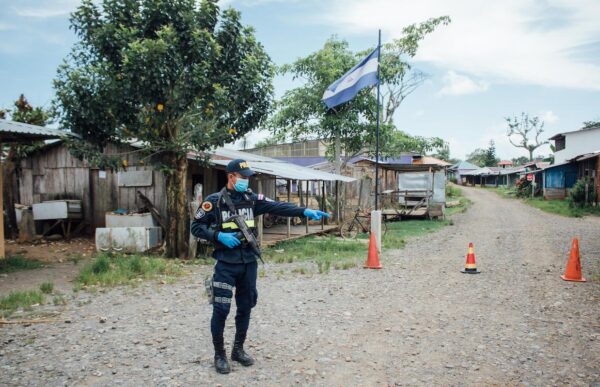
Study points to limited local capacities, high dependence on international cooperation, and lack of commitment from national authorities.
HAVANA TIMES — The constant flow of migrants and displaced persons in the cantons of La Cruz and Upala, on Costa Rica’s border with Nicaragua, along with the lack of state resources to manage migration in the area, has left local authorities “overwhelmed,” according to a study conducted in the region.
As border territories, La Cruz and Upala suffer from “historic marginalization” and lower human development than the rest of the country, warns the study Regulatory and Political Framework of Migration, Reception, and Human Mobility Dynamics in Costa Rica. These structural conditions limit their capacity to manage migrant integration processes.
In both cantons “there are no resources,” emphasizes Arantxa Aguilar, a researcher with the Sin Límites Foundation. “And we’re not only referring to economic resources, but also human resources. This issue has affected how migrants are responded to,” she adds.
Despite the lack of resources, both localities have established municipal offices to assist migrant populations, temporary regularization programs to access basic services, and coordination mechanisms with humanitarian organizations, the study conducted by Fundacion Sin Límites and Fons Catala indicates.
However, in those migrant service offices “there is only one person working,” the researcher warns. That person is “overburdened,” having to respond to multiple migrant needs such as access to documentation, emotional issues, and humanitarian aid.
Aguilar considers the political will on the part of municipal governments “a positive factor,” but the management of migratory flows is not institutionalized. In addition, local initiatives operate “at the limit of their capacity” due to the absence of funding from the central government.
Dependence on international cooperation
The research highlights that given the “notable institutional deficit” in managing migratory flows, the municipalities of La Cruz and Upala work in coordination with civil society organizations and international cooperation agencies. But “these efforts and commitments are not sufficient for the scale represented by the migration phenomenon in these communities.”
Due to the absence of central government funding, migrant assistance in La Cruz and Upala depends almost entirely on local NGOs and international cooperation.
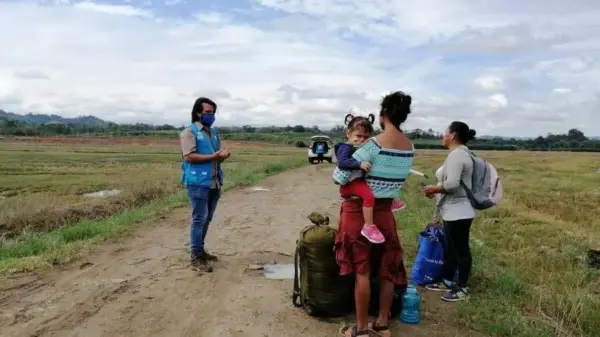
“When (much international) cooperation withdrew last year (2025), when budget cuts were made, it left very clear gaps: a refugee unit operating at half capacity, a refugee unit giving asylum appointments a year and a half out, a refugee unit denying access to asylum at border posts,” Aguilar underscores.
Another example of the vacuum left by the withdrawal of international cooperation is that “just the 41% budget cut to the United Nations Refugee Agency (UNHCR) in Costa Rica led to the closure of five partner organizations operating in the northern zone,” the study notes.
The report adds that although collaboration between local authorities and civil organizations is positive, this collaborative management model is not “sustainable,” and it is necessary to “transition from informal coordination toward institutionalized structures with formal mandates.”
The Costa Rican state “must take the reins and assume that responsibility,” Aguilar warns, noting that historically Costa Rica “has kept its doors open to migrants, and that requires responsibility.”
The situation of migrants
Given the lack of resources to manage migratory flows and the “overwhelming” of local authorities, migrants in La Cruz and Upala face state bureaucracy and must incur expenses to regularize their migratory status, whether they are economic migrants or asylum seekers.
Aguilar explains that although the asylum application process is free, applicants may wait more than a year for their first ID card. In addition, even if the application is filed in La Cruz or Upala, as the process advances applicants are referred to the capital, San Jose.
“Some people begin the processes and, because they lack resources, end up abandoning them,” the researcher notes.
Something similar happens with economic migrants seeking Costa Rican naturalization, who “have to pay a lawyer, because access to the entire process is tedious and bureaucratic,” Aguilar stresses.
The lack of migratory regularization places migrants in a situation of “vulnerability,” as they cannot fully integrate — a situation that extends beyond the economic sphere to social, cultural, and institutional dimensions.
“One of the main difficulties faced by migrants and displaced persons in their territorial adaptation processes is access to livelihoods that allow them to meet their basic needs and fully exercise their rights to a dignified life,” the study reads.
It adds that “effective access to fundamental rights such as health, education, formal employment, and housing constitutes a determining factor for the sustainable integration of refugees and migrants in host countries, and this study identified that it is closely linked to their migratory status.”
A binational territory
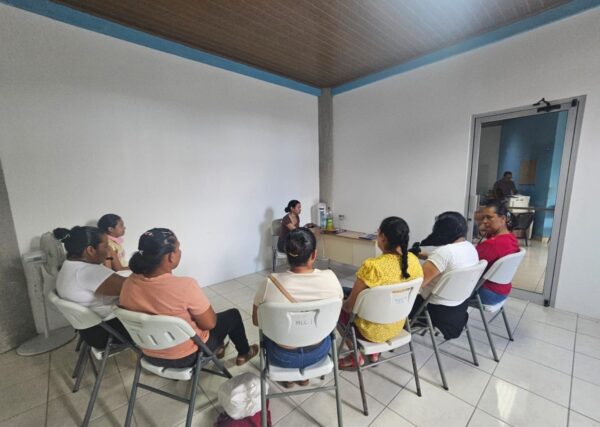
In La Cruz and Upala there exists a “well-marked binational cultural vision,” Aguilar notes — a situation she attributes to geographic proximity, the historic migration of Nicaraguans to Costa Rica, and the fact that many residents in the area have Nicaraguan ancestry.
In the 1980s, Costa Rica hosted large camps of Nicaraguan refugees fleeing the war between the Sandinista Army and the Contra forces. Many of those people stayed to live and work in the neighboring country.
Four decades later, the sociopolitical crisis that began in 2018 has generated a new pattern of forced displacement. Since then, Costa Rica has received more than 194,000 asylum applications, according to UNHCR, and it is estimated that more than half a million Nicaraguans live in the country.
Researchers from the NGO reviewed immigration laws and policies and compared them with interviews and focus groups conducted with local authorities and community leaders from La Cruz and Upala. Their results confirm that the reality of these migrants differs from those living in more central areas of the country.
In interviews, “they always mention Nicaraguan food, that they are of Nicaraguan origin, that despite talk of xenophobia, they have also tried to create programs and spaces so that Nicaraguans can integrate,” Aguilar highlights.
Migrants “not only contribute to the local economy,” the researcher notes. They also “make cultural contributions, such as diversifying food, sharing customs and traditions, and opening spaces for other migrants who are arriving,” Arantxa Aguilar concludes.
First published in Spanish by Confidencial and translated and posted in English by Havana Times.