
Cuba Suspends Habano Cigar Festival Amid Spiraling Crisis
Its most lucrative celebration of the year
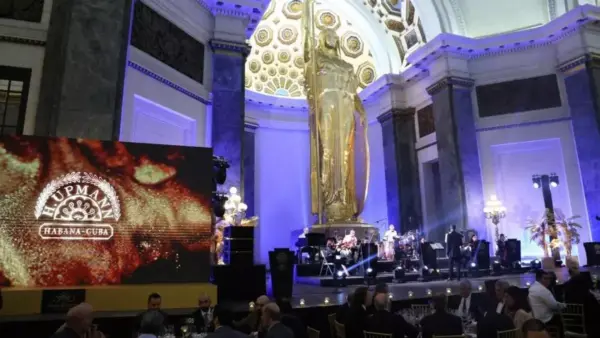
The event underscores the fracture between the exportable image and the Island population’s ruined daily life.
HAVANA TIMES — The Habano Festival, considered the premier international showcase of Cuba’s premium tobacco, was suspended this Saturday with no new date set, in the midst of the worst energy crisis the Island has experienced in decades. The state company Habanos S.A., which monopolizes the global commercialization of the famous cigars, published a brief statement on its website announcing that the 26th edition of the festival, scheduled for February 24–27, has been “postponed,” and that a new date will be announced “in due course.”
The official argument maintains that the decision seeks to preserve “the highest standards of quality and experience” of the event. The reality on the Island, however, has already hit bottom: severe fuel rationing, closures or cutbacks in basic services, and a collapsed economy that can barely sustain its most elementary functions.
A worker in the food service sector, who has participated in previous editions of the Festival and requested anonymity for fear of reprisals, explained to 14ymedio that the suspension also frustrated plans for even greater displays of ostentation than last year’s. “Imagine that this year the private party was going to be at El Morro. The Chinese guy who organizes all that wanted that, at one point in the night, the lighthouse would ‘ignite’ at the top, all with lighting effects, like a giant cigar. You would’ve been able to see it from the whole city,” she recounts.
According to the source, the businessman is “quite furious” over the cancellation of an event whose motives — she says — were not only the lack of fuel but also the negative political impact of celebrating it amid the crisis and after the trail of backlash left by the previous edition.
The worker adds that among many of the employees involved there was this year a dilemma not felt so intensely in prior years. “On the one hand, the money was badly needed, because they pay well and in foreign currency. But on the other, there was fear,” she confesses. Fear of possible protests, of being singled out or confronted while serving drinks and dishes to a foreign elite untouched by blackouts and scarcity. “After what happened with the Capitol (last year), nobody wanted to be at the center of a viral photo or a confrontation,” she says.
The previous edition of the Habano Festival, held with a sumptuous gala dinner at the National Capitol, provoked broad public rejection that overflowed onto social media. While the country endured prolonged blackouts, food shortages, and a generalized deterioration of daily life, images of foreign guests toasting beneath restored chandeliers and lavishly set tables in one of the Republic’s most symbolic buildings were read as an obscene provocation. Thousands of Cubans reacted with anger to the waltz of millions for an elite, in contrast to a population condemned to darkness, rationing, and everyday precarity.
Each year, the Habano Festival attracts millionaires, global distributors, and international aficionados to a celebration of selective glamour in colonial hotels and luxury halls in Havana. Its auction of exclusive humidors — artistic cases that preserve legendary cigars — has reached stratospheric figures. In the previous edition, a commemorative humidor from the Behike Line set a historic record when it sold for €4.6 million, and the seven pieces auctioned totaled more than €16 million, destined — according to the Government — for Cuba’s public health system.
But that symbolic and real capital coexists grotesquely with a population facing the limits of hardship, following the interruption of oil supplies that Cuba imported mainly from Venezuela and Mexico. The thermoelectric plants — most of them obsolete — operate sporadically, and electricity generation never manages to meet national demand.
The decision to postpone the Festival comes at a moment when the Cuban economy is undergoing accelerated deterioration driven by multiple factors: the interruption of Venezuelan oil flows since the capture of Nicolás Maduro, the January 29 US executive order threatening tariffs on those who supply fuel to the Island, and the chronic shortage of foreign currency that prevents the importation of basic raw materials.
The energy crisis has also served as government justification for reductions in work hours, strict gasoline and diesel rationing, temporary hotel closures, and even alerts at airports, where several airlines have canceled flights due to lack of fuel. At the same time, the regime has prioritized internal control, with systematic military exercises and a visible increase in repression.
From the Government, there is continued insistence on blaming the US embargo and the tightening of the oil siege for the crisis, presenting it as an almost exclusive effect of blockade policy. But that narrative fails to extinguish the general perception that the national economy is shipwrecked by internal errors and by persistence in a failed model. While negotiations continue with foreign distributors and record sales figures are displayed — such as the $827 million earned from tobacco in 2024 — everyday Cuban life unfolds amid blackouts, shortages of food and medicine, and health services on the brink of collapse.
In this context, the suspension of the event confirms that outward-facing luxury and the reality of the average Cuban have entered into an impossible contradiction to conceal. While in gala halls humidors are auctioned for millions, most neighborhoods in Havana and the provinces survive on the edge. It is the stark contrast between showcase ostentation and daily misery.
First published in Spanish by 14ymedio and translated and posted in English by Havana Times.