
Cuban Migrants Die in Fire in Russia
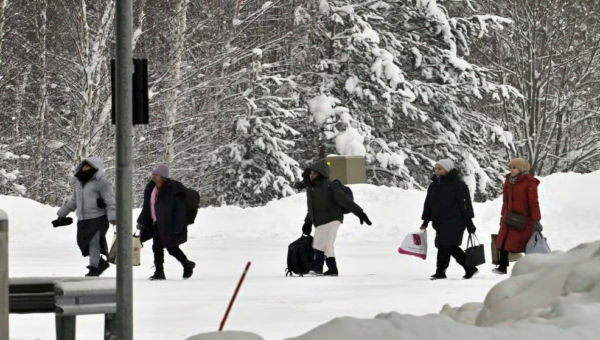
HAVANA TIMES — The Russian winter shows no mercy. With temperatures dropping to 30 degrees below zero, the cold seeps through clothing and penetrates to the bone; heating is not an option but a matter of survival. Under such conditions, improvisation can be just as lethal as the absence of a heat source.
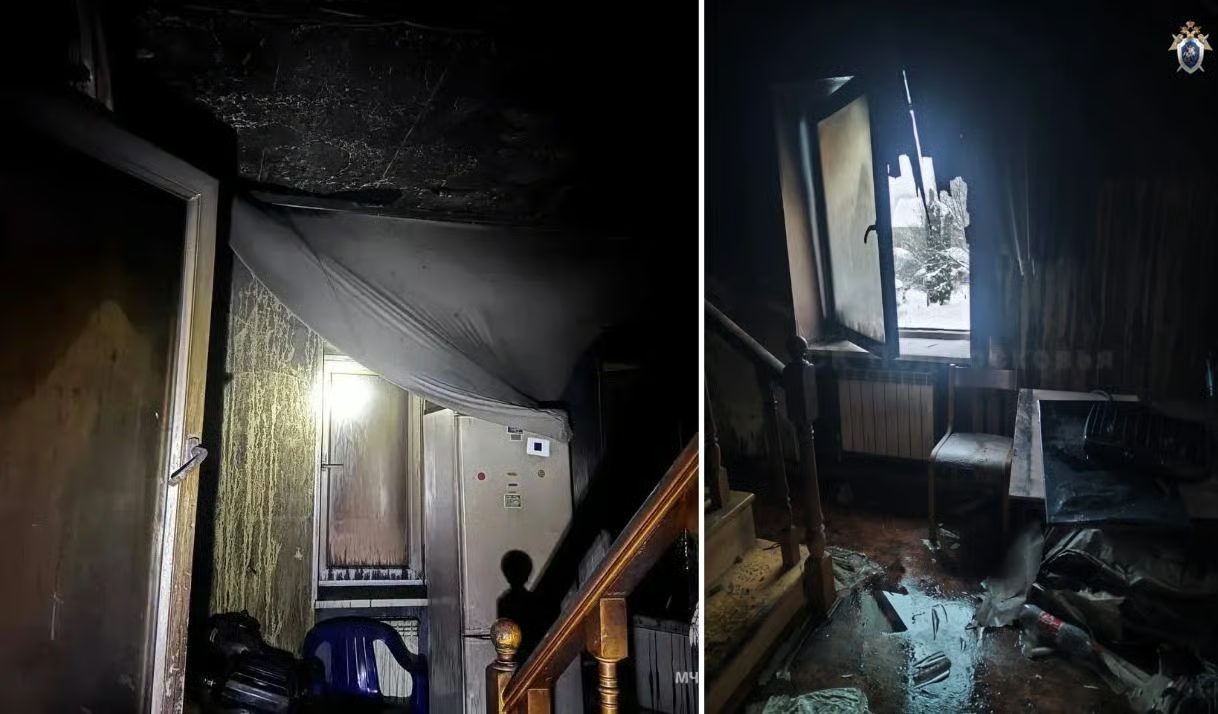
Four Cubans lost their lives in a fire at an improvised hostel in Balashikha, a working-class neighborhood east of the Russian capital. In the dacha (country house) that served as the hostel, about 20 people had gone six days without electricity and without any way to keep warm, precisely when the lowest temperatures of the winter season were being recorded.
According to preliminary accounts from emergency services, the house had been disconnected from basic utilities due to debts owed by the owners. Forced by the cold, it appears the Cubans tried to keep warm with a fire that got out of control.
The fire was fast. Final. But the tragedy did not begin that night—it began much earlier, thousands of kilometers away.
Before Russia
Russian authorities have not yet officially identified the victims, but various sources among their acquaintances say they were four young people from Ciego de Ávila: Yadisley, Arisleidy, Ángel Gabriel, and Lisvey.
Dionnys was their neighbor in Cuba and is currently in Russia. She remembers them as they were before becoming news: young, hardworking, people from the neighborhood.
“They were wonderful people. Arisleidy was my daughter’s teacher. Yadisley worked for Water and Sewage. The guys survived however they could: one fixing appliances, the other making soft drinks on his own. None of them was over 35,” she told elTOQUE.
A year ago they left for Russia, like her and so many others from the town of Gaspar, in the municipality of Baraguá. They were not chasing a life of luxury, she clarifies. They left because, no matter how hard they worked in Cuba, what they had “was no longer a life.”
Russia appeared as a concrete possibility within reach of their meager budget. Relatively cheap airfare and visa-free entry seemed like an opportunity to work and save a little. Like almost everyone else, they arrived without a support network, without knowing the language, without understanding what they were getting into. After the permitted three months, they became undocumented, but they thought they could hold out for a while and then return home or move on to another destination.
At first, it worked. They moved away from the city and found housing and jobs. “They worked at a dairy factory on the outskirts of Moscow. It wasn’t bad, but then the job ended and they decided to move until the snow was over,” Dionnys recounts.
That’s how they arrived in Balashikha, a locality in Moscow Oblast that has become an anchor point for hundreds of Cubans. But there—or almost anywhere in Russia—it’s not easy to find decent shelter with little money and no papers. Until they found that hostel they shared with 15 others, all Cubans. Dionnys, still struggling to process what happened, says she last spoke with them on December 31, 2025.
Five Days Without Power
On social media, the Cuban woman Anayansi said she knew several of the people staying in the dacha and described the conditions that led to the tragedy. “I found out because my friends asked me for help to get out of there—it was really bad.”
“The conditions were terrible,” she says. “Five days without electricity, with temperatures like that, and working in the snow—anyone who lives here knows how brutal that is.”
She also talks about informal rentals and the irresponsibility of some landlords: “They don’t pay the utilities. They spend the money. And the ones who suffer are us migrants.”
Living Where You Can
The Balashikha tragedy is the vortex of a situation many Cubans in Russia face, for whom accessing formal housing is nearly impossible. Beyond prices, without the language, papers, work contracts, or payment guarantees, the real estate market becomes yet another border.
Since 2024, these difficulties have been compounded by steep fines for those who rent to foreigners without legal status and by rewards for those who report them. Migrants have become more exposed to abuse and forced expulsions.
Alternatives are usually few: country houses (dachas), shared rooms, illegal hostels. Sometimes cramped spaces where five, ten, or 20 people live together. Places where no one asks too many questions—but no one takes responsibility either.
Although in Moscow city and other urban centers heating is usually not a problem because it is centralized, migrants may still face shortages of other basic supplies and unsanitary conditions.
Alina and Jorge are two people from Camagüey who have been in Russia for nearly five years and have lost count of how many times they’ve had to change accommodations, almost always sharing space. “At first we stayed in rentals run by Cubans, but as soon as we could we started looking on our own, directly with Russians,” she says. “The first problem is that many hang up as soon as they realize you’re a foreigner.” Those offering the worst conditions tend to be more flexible. “In one place we spent three days hauling out trash just to be able to move in. Another had leaks and flooded every other day; in another the owner was a drunk who would come banging on the door at any hour to ask for money,” she recalls. Other times they had to leave with almost nothing because someone reported them.
Among Cubans, some have taken to subletting apartments where more people live than the space allows.
“It looked like a sugarcane workers’ dorm,” recalls Rodolfo, from Matanzas, who spent time in Russia between 2021 and 2023. “More than 20 of us lived in a two-bedroom apartment—even the hallway had bunk beds. It was almost impossible to use the bathroom and kitchen, but I stayed there a long time because I had nowhere else to go.”
Areas farther from cities are usually less problematic for housing, but transportation becomes harder and other difficulties can arise. “Here you survive as long as everything works. The problem is when something fails—especially in winter—like what happened to the people in Balashikha,” says Yoandri, a young man currently living in an old dacha in Ramenskoye, southeast of Moscow.
In a country where many Cubans live in a legal and social limbo, winter can turn precariousness into Russian roulette.
“If something breaks or the power goes out, you keep quiet. You can’t complain. You can’t report it. You endure it, because being out on the street is worse—as has happened to many,” says Yenia, a Cuban engineer who has lived in Russia for two years and works cleaning shops on the outskirts of the capital. “You emigrate out of necessity, because you see no way forward in your country and elsewhere you can at least eat and help your family,” she reflects. “But you also lose things—your home, your comfort, your health. And in the end, if you’re unlucky, your life.”
The investigation continues
On January 29, 2025, Russian media reported that authorities detained the woman acting as the representative of the owner of the house in Balashikha where the four Cubans died.
According to investigators, between March 2025 and January 2026 the property was systematically used to rent to migrants in irregular status, following direct instructions from the owner, who has not yet been located.
The house lacked fire protection systems and extinguishers, and tenants were not informed about basic safety rules, including the prohibition on lighting fires indoors.
The investigation remains ongoing…
First published in Spanish by El Toque and translated and posted in English by Havana Times.