
Hundreds Line Up for Chikungunya Aftermath Help in Cuba
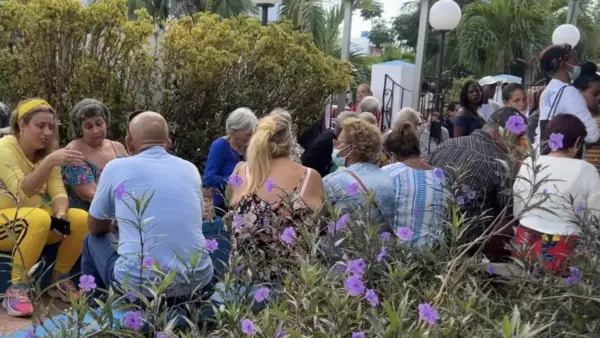
After long waits, patients waiting for help to deal with the after-effects of Chikungunya are given appointments more than ten days later.
By Juan Diego Rodriguez & Darío Hernandez (14ymedio)
HAVANA TIMES – Berta has just managed to get an appointment, after trying for almost a month, at Havana’s Institute of Neurology and Neurosurgery, one of the places where the government has launched a specialized clinic for people recovering from the chikungunya virus. She will be seen in ten days.
Infected in early October, the woman, a resident of Centro Habana, spent several weeks bedridden, immobilized by pain. When the fever subsided, she still couldn’t go outside and had to borrow a wheelchair. More than three months later she is better, but she continues to suffer many aftereffects. “I can’t sleep; I spend my nights awake with pain in my hands and knees,” she told 14ymedio.
Since the Ministry of Public Health announced on December 22 the start of care for patients with chikungunya sequels at the Neurological Institute, Berta’s husband had been trying to get her a spot, but he only succeeded two days ago.
Every day, hundreds of people relentlessly form a line to request appointments at the institution, located in Havana’s El Vedado on 29th Street between F and D. This Wednesday, 14ymedio witnessed two lines: one to request an appointment and another for consultations. The first moved along fairly well; the second barely budged. “I’ve been here since 7:00, and from 8:00 when they opened until noon only four people had gone through,” said an elderly woman who was waiting. “This is far too slow.”
Appointments are being scheduled for roughly 15 days out. “The first time the doctor sees you in the clinic, they give you medication, but then, if you need physical therapy, they refer you elsewhere,” explained another woman, younger than the first. Most of the doctors observed were young and foreign. By contrast, most of those waiting were over 60.
“I’m hopeful they can help me, even though my husband doesn’t believe it,” Berta says. “At least on the news they say this actually works.”
Indeed, the information disseminated by official media could not be more optimistic. They promise the design of “personalized physical therapy programs to promote rehabilitation and a rapid return to daily and work activities.” The service, the Ministry of Health explained, is intended “for the management of neuropathic pain, joint disorders, and paresthesias,” some of the consequences suffered by chikungunya patients, in some cases chronically.
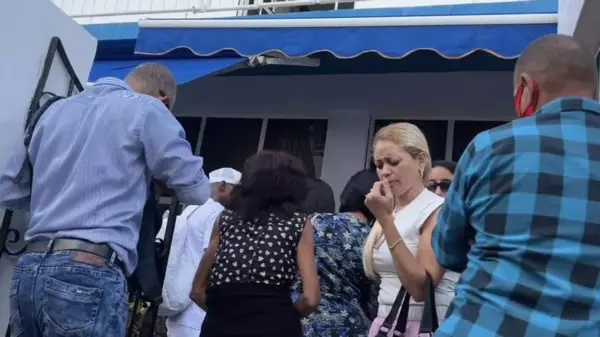
“Our objective is to evaluate and treat each case individually, facilitating a path toward functional recovery and an improvement in quality of life,” promised Orestes Lopez Piloto, director of the Institute of Neurology. The project is being carried out by a multidisciplinary team made up of neurologists, neurosurgeons, anesthesiologists, and physical therapists, the Ministry also assured.
In addition, health authorities painted a picture that included sophisticated studies such as CT scans, ultrasounds, and even “specialized anesthetic interventions” to relieve aftereffects. Asked about this, Lopez said they could not know the exact number of people who would seek care, but that the Institute had the necessary resources. “The strength of our health system allows us to organize this kind of response,” he asserted.
The long wait outside the facility seems to contradict that claim.
“At least they have a clinic,” objects Amauri, a resident of Ciego de Avila. “Here, those of us who had the virus are left with nothing but patience.” He, his partner, and his mother contracted the disease in November and still suffer its consequences. “In the mornings I wake up with numb hands; I have to move them a lot just to function halfway decently,” he confesses.
According to the Pan American Health Organization, based on official Cuban statistics, a total of 65 people have died from chikungunya and dengue. Most of the deaths in the official registry are minors. Within this age group, the most vulnerable are newborns, whose lives are at risk if they fall ill.
In 2025, 51,217 cases of chikungunya and 30,692 of dengue were recorded. The epidemic, as happened with covid-19, has exposed the fragility of the health system, once an emblem of the Revolution. In addition to the lack of medications and the deterioration of health facilities, there has been a 27% decrease in the number of doctors in just five years, from 103,835 in 2020 to 75,364 in 2024.
The challenge, wrote Periódico 26 newspaper this Thursday, is to find “the keys through research in order to impact the recovery of patients experiencing aftereffects” of arboviral disease. Authorities still do not see things clearly. One of the measures has been to promote trials with Jusvinza, also known as Cigb-258, a drug created more than a decade ago by Cuba´s Center for Genetic Engineering and Biotechnology as an immune system modulator, originally intended for autoimmune diseases such as rheumatoid arthritis, and which has not yet proven effective for those recovering from chikungunya.
Translated by Regina Anavy for Translating Cuba.