
Nicaragua: Under-Reporting of Political Prisoners Confirmed
Recent releases reveal the gap
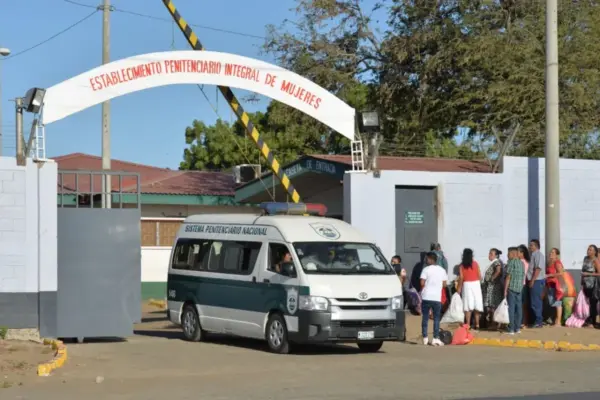
Around 35 Nicaraguans were released from prison over the past week; 17 of them had not been identified as political prisoners.
HAVANA TIMES – The Mechanism for the Recognition of Political Prisoners reported that about 35 people were released between November and December 2, 2025. Of these, 17 had not been identified as political prisoners, leading the group to warn that a significant under-reporting exists, generated by the “climate of fear” in Nicaragua.
According to the organization, those 17 newly released individuals who had not been previously registered as political prisoners were mostly former state employees, ex-military personnel, and sympathizers of the ruling party, who appear to have been detained “for apparent political reasons.”
“These arrests were part of the under-reporting that has been denounced in recent months,” the Mechanism noted. “The silence that surrounded these cases confirms that the under-reporting is greater than previously estimated, and that the State’s practice of temporary disappearance functions as a tool to conceal the real extent of the repression,” it added.
They warn that this under-reporting “does not stem from a lack of cases, but from the widespread fear imposed by the government of Daniel Ortega and Rosario Murillo, whose coercive structures use arbitrary detention, surveillance, and threats as mechanisms of social control.”
They emphasize that “many families prefer not to report detentions out of fear of immediate reprisals, which makes it difficult to identify in a timely manner all those imprisoned for political reasons.”
Released individuals remain under threat
Regarding the Nicaraguans who were included in the Mechanism’s list, they specified that 12 men and 6 women were released. These releases occurred without prior notification, and several people were returned to their homes showing signs of physical and emotional deterioration.
“After being returned to their homes, these individuals and their families were explicitly threatened not to report what had happened, and they were informed that they would remain under ‘house arrest’ or ‘municipal arrest,’ with the obligation to appear daily at police stations to sign in,” the organization stated.
The Mechanism also stressed that these releases “do not constitute full freedom.” The State continues to offer no explanation for the reasons for their detention, the nature of the judicial processes, or the violations committed during their captivity.
62 political prisoners remain
After the releases, the Mechanism counts 62 people still imprisoned for political reasons: 56 men and 6 women. Among them are 18 elderly individuals, and 28 remain in a situation of enforced disappearance.
“Enforced disappearance remains one of the gravest violations: 28 people are still unlocated, and their families face silence, fear, and harassment,” the organization warned.
The updated list of political prisoners still includes Indigenous leaders Brooklyn Rivera Bryan, Steadman Fagoth Müller, and Nancy Elizabeth Henríquez, all of whom are among the 18 elderly detainees.
Also still detained are retired military officers Carlos Brenes, Víctor Boitano, Aníbal Rivas Reed, and Eddie Moises Gonzalez Valdivia.
In addition, former Sandinista revolutionary commander Henry Ruiz remains confined to his home by the Nicaraguan police since March 8 of this year, as does retired general Álvaro Baltodano Cantarero, a former adviser to Ortega.
Published in Spanish by Confidencial and translated and posted in English by Havana Times.