
The Cuban Government’s New Plan to Capture More US Dollars
Authorizes some foreign currency transactions in the private sector
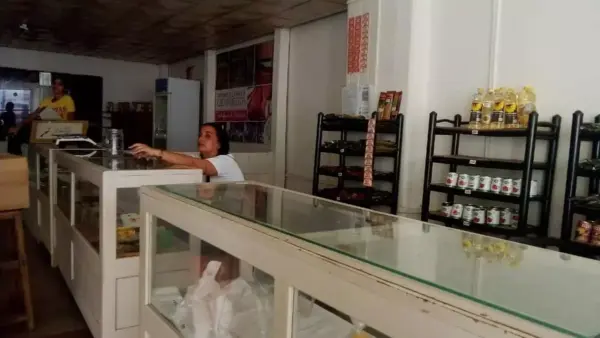
Private businesses and self-employed workers will be able to use these resources to import raw materials but must deliver 20% of the balance to the Central Bank at the official exchange rate.
HAVANA TIMES – For the first time, the Cuban government will allow private individuals to hold foreign currency accounts and conduct business with them, a measure the sector has long called for, but which will be limited by the amount they must hand over to the state. The regulation establishes a clear difference between foreign investors and national companies. The latter are subject to an 80% retention coefficient — the amount of foreign currency income that can be retained, while the rest must be sold to the Central Bank at the official exchange rate, far below the actual street value — compared to 100% access for foreign companies.
The decision is part of a legislative package published on Thursday in the Official Gazette, through which Cuba is implementing a partial dollarization, “until economic conditions allow the Cuban peso to be reinstated as the only legal tender in the country”. In total, there are four regulations – a decree-law and three resolutions – that establish “a new mechanism for the management, control and allocation of foreign currency, with the aim of increasing foreign currency revenues and achieving a more efficient use of them.”
The measures affect all economic actors regardless of whether they are state-owned, private or cooperative, foreign or domestic, but there are some differences between them. One of the most important is the retention coefficient. There are special circumstances for state-owned companies, as many of them already had approved foreign currency financing schemes, but in the case of private companies there is a special requirement.
The 80% rate will apply to income from exports, e-commerce with payments from abroad, sales of goods and services to users and concessionaires of the Mariel Special Development Zone (ZEDM), foreign investment modalities, and entities authorized to trade in foreign currency. For all other cases listed in Article 5 of the regulation (dedicated to possible legal sources of foreign currency), 100% may be retained.
According to the government, retained foreign currency can be sold on the foreign exchange market or used for authorized payments, promoting productive linkages and import substitution.
The measure provides a solution to the demands of private individuals, who had been calling for years for a legal currency market in which to operate: its absence prevented them from legally importing the supplies that are so scarce in Cuba, encouraging the parallel market and leaving them exposed to the risk of losing their licenses, among other penalties, if they were inspected. Also, if the measure is successful, the state will be able to regain access to foreign currency that was operating illegally and therefore beyond its control. This, in turn, made it difficult for the government to make the payments it needs to finance its own expenses and pay its foreign suppliers, including the essential fuel without which the economy cannot move forward.
The regulations also govern foreign currency bank accounts, authorizing private individuals to hold them for the first time, which in turn allows them to pay for imports without having to exchange currency. This also paves the way for payments between different economic actors, facilitating the much-discussed “chain reactions”.
Another element established by the legislation is the so-called ACAD, a purchase authorization that the Government, through the Minister of Economy and Planning, will grant to companies to purchase foreign currency from the Central Bank. To obtain it, the applicant must have the national currency available. The permit is also non-transferable.
Domestic transactions – internal, as defined by the resolution – will preferably be made in pesos, except when they occur between operators in the Mariel Special Development Zone (ZEDM), between wholesalers and shops (retailers) in foreign currency, and other exceptional cases that may be approved. Exporters and those operating in e-commerce may pay their domestic suppliers in foreign currency provided that this is mutually agreed, a new development that will facilitate the flow of currency without intermediaries.
As for other economic actors, the law states that foreign investors collect and pay in foreign currency and can operate domestically with both currencies. Private individuals must, as a rule, trade in pesos, but if the customer pays in foreign currency, the business owner can receive payment in that same currency, although they may choose to convert it into pesos. Agricultural producers, for their part, will receive income in their foreign currency accounts if they are recognized as exporters or import substitutes.
Translated by GH for Translating Cuba.
Viva the Cuban people !
When the Cuban is going to realize that Cuban regime is only looking to benefit themselves? They shouldn’t do anything and just wait for them to fall because by following their new so called open opportunities all they are doing is oxygenating their stupid socialism, VIVA CUBA LIBRE Y ABAJO LA TIRANIA, support Venezuela because You guys are next
When do the Cuban people realize the socialist people of the government only look after themselves, not the individuals of the beautiful country that they have. Viva the Cuban people
More smoke and mirrors nonsense….Cuba is in trouble as long as Socialism is embraced.