
Another Ally for Trump
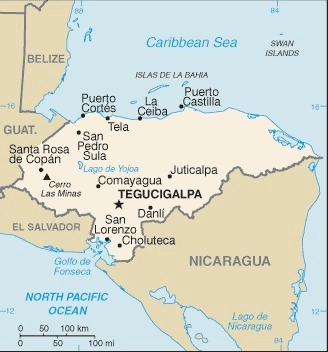
Honduras’ new president could add another Central American country to the growing influence of the Bukele model.
By Rafael Rojas (Confidencial)
HAVANA TIMES – The elections in Honduras have resulted in a technical tie between Nasry Asfura, a businessman and politician of Palestinian descent, former mayor of Tegucigalpa and leader of the conservative National Party, and Salvador Nasralla, an engineer and television presenter. Asfura received explicit support from Donald Trump, who said during the recent campaign that if he won, there would be collaboration for development. Trump has repeated the formula he used in Argentina — economic cooperation in exchange for ideological alignment — and it has worked for him.
With either Nasralla or Asfura coming to power, the Bolivarian bloc loses yet another member, adding to the recent defeat of Ralph Gonsalves in Saint Vincent and the Grenadines in his attempt at a sixth reelection. The setback comes at a time when the United States is reasserting its hegemony in the Caribbean and Central America with a large-scale military deployment off the Venezuelan coast, without any international allies — Russia or China — or regional actors — Colombia or Mexico — offering any resistance beyond occasional presidential statements.
Whoever assumes power in Honduras will do so amid a state of exception and a rise in crime, insecurity, and migratory pressure. After tensions in the 2021 elections, Asfura, Nasralla, and Bukele, the president of El Salvador — whose strategy of concentrating power and militarizing the fight against insecurity is becoming increasingly popular in the region — have grown closer during Honduras’ most recent electoral process.
The new president could add another Central American country to the expanding influence of the Bukele model and to the pro-Trump networks of the continent’s new right-wing movements. Honduras’ role is not decisive at a Latin American level, but in Central America it will very likely contribute to increased pressure on the regime of Daniel Ortega and Rosario Murillo in Nicaragua. The pardon granted to former Honduran president Juan Orlando Hernandez also favors this repositioning of the Central American country.
This regional realignment is already beginning to show in the increasingly weakened attempt to contain the U.S. military deployment off the coast of Venezuela. The governments of some neighboring countries — such as the Dominican Republic, Trinidad and Tobago, and, to a lesser extent, Panama — have provided varying degrees of cooperation with the United States during Washington’s recent operations in the region.
All of this effectively dismantles the strange cliché — symptomatically shared by the Bolivarian wing of the regional left — that under Trump, the United States would pursue an isolationist foreign policy, not inclined to reinforce its interventionism in Latin America and the Caribbean. Little by little, thanks to the advance of the new right-wing movements, the United States is enjoying its greatest level of regional support since the early 21st century, when the first pink tide pushed back against Washington.
Published in Spanish by Confidencial and translated and posted in English by Havana Times.