
Chile: The Failed Decentralization of Gabriel Boric’s Gov.
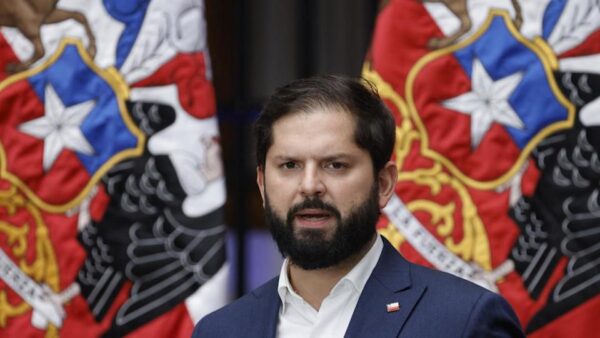
HAVANA TIMES – When Gabriel Boric assumed the presidency in March 2022, many of us saw in him—a legislator from Magallanes, a region historically plundered by Santiago’s extractivist centralism—a real possibility of breaking with two legacies that have suffocated Chile for centuries: the Portalian centralism of the unitary state imposed in 1833, and the controlled, power-poor administrative decentralization inherited from the Pinochet-era neoliberal model.
That is why, during the campaign, Boric, whose term ends in March, 2026, explicitly promised to eliminate the figure of the presidential delegate, concentrate authority in democratically elected governors, move toward greater territorial autonomy, and revive long-standing demands for decentralization that he himself had defended in Parliament.
In fact, I participated with him and Egon Montecinos in a panel at La Furia del Libro in 2020 (1), where Boric, then a legislator—now President—underscored the importance of effective decentralization, criticized Santiago’s centralism and the figure of appointed intendants, and called for granting more power to regional governments and municipalities, advancing toward a broader distribution of wealth and power.
However, nearly four years into his administration and after the second democratic election of governors, decentralization has become one of Gabriel Boric’s most serious and evident debts. What promised to be a transformative process has been reduced to formal, partial, and in many cases cosmetic advances that fail to touch the core of power concentrated in La Moneda and Santiago.
The continued existence of regional presidential delegates—a figure Boric swore he would abolish—creates overlapping authorities, confusion in the coordination of public services, citizen disillusionment, and an effective brake on regional autonomy. It is an unfulfilled promise subordinated to a security-driven discourse that has blocked any meaningful progress on decentralization.
It is true that some advances can be acknowledged, such as the Mining Royalty Law (which benefits regions and municipalities), the National Decentralization Policy, and the Stronger Regions bill, but these measures are insufficient given the persistent lack of regional own-source revenues, the limited capacities of subnational governments, and the vetoes on deeper reforms.
Likewise, the paralysis following the Convenios corruption scandal and the sluggishness in citizen participation have only worsened the perception that real power remains concentrated in the central executive, reproducing the Portalian–neoliberal binary: a unitary state that decentralizes administrative responsibilities (health and education municipalized since the 1980s) without transferring political power or genuine fiscal resources.
Worse still, the government neither resumed nor promoted the idea of a regional state that appeared in the first constitutional proposal of the 2022 Convention: real autonomy for regions and municipalities, a Chamber of the Regions with gender-parity representation, and regional legislative assemblies with normative and oversight powers.
In other words, although the Boric government initially supported the first constituent process, after the September 4, 2022, rejection there was no strong executive initiative to revive that model through legislative or constitutional channels. Other agendas (security, immigration) were prioritized, leaving structural centralism intact due to “correlation of forces” in the parliament or political pragmatism.
Consequently, this situation represents a deep contradiction with Gabriel Boric’s transformative and anti-neoliberal discourse. He had embodied a break with historical centralism and the Pinochet-era subsidiary model, yet in practice has perpetuated elements of both legacies. His regional origin (Magallanes) and his long-standing defense of decentralization make this continuity even more troubling: the historical plundering of the regions by Santiago was not broken, nor was the promise of greater territorial autonomy fulfilled.
All of the above makes it urgent to recognize that decentralization is not merely a pending task, but a structural limit on the promised change. Without the political will to eliminate delegates, transfer real power, and move toward a more regional, plurinational, and ecological state, Boric’s government will be remembered for a failed decentralization that demobilizes expectations and strengthens skepticism toward the left.
Chile needs more than national policies imposed from above: it requires an irreversible process of deconcentrating power that places territories and their peoples at the center. Otherwise, we will remain trapped in the same centralism we have criticized for decades.