Chile’s Birthrate Crisis and the December 14th Elections
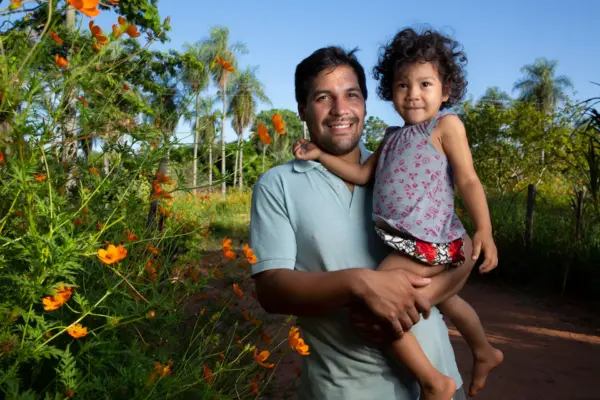
HAVANA TIMES – In the midst of the discussion about Chile’s birthrate crisis—a topic notably absent from presidential debates, which have focused mainly on crime, migration, and employment—I believe it should be central on the agenda of the next president elected on December 14, 2025. This is a structural, long-term problem that requires urgent attention given current data.
Chile’s fertility rate has fallen to 1.03 children per woman, the lowest in Latin America and one of the lowest in the world. Added to this is the accelerated aging of the population: according to projections, by 2050 one in every four inhabitants will be over 65. The consequences of this trend will be profound across all areas: pensions, health, the labor market, and the sustainability of the country’s development model.
In response, presidential candidates have offered partial solutions. Some highlight the progress in the Senate of the universal childcare bill, as does Jeannette Jara, who offers a more comprehensive perspective by stressing the need to move toward a care-based society and greater shared parental responsibility. For his part, José Antonio Kast, Jara´s opponent in the runoff, has suggested economic incentives and bonuses for women with the goal of increasing birthrates—a proposal that seems anchored in a return to the traditional family and yet again leaves men out of the equation.
In other words, Jeannette Jara addresses the birthrate crisis from a gender perspective, pointing out that the vast majority of men remain absent from caregiving tasks, which fall disproportionately on women, as does unpaid domestic work. Kast, on the other hand, seems to reinforce traditional gender roles that hinder any real transformation.
However, although Jara’s approach is much broader and more in line with the present than Kast’s, the birthrate crisis is not only a caregiving crisis: it is also the consequence of a historical construction of masculinity that I call a “masculinity of death.” This model renders men not only incapable of participating in the care of their children, but also in self-care and in caring for life on the planet.
Ambitious caregiving and shared-responsibility policies could be implemented—like those in Sweden, France, Finland, Norway, or Iceland, with long and mandatory paternity leaves, a real work-life balance, and a comprehensive model of social welfare—but they will not be enough if the cultural mandate that presents care as “women’s work” and as something contrary to progress and development is not challenged and transformed.
Just look at who cares today for children, older adults, people with disabilities, chronically ill people, animals, and nature: overwhelmingly, women. Men, by contrast, have been taught to believe that being “more of a man” means being rational, risk-taking, independent, successful, and an accumulator of wealth at any cost.
That is why it is not enough to encourage men to participate more in domestic tasks and childcare if that participation is not connected to a deep critique of the socially and environmentally unsustainable economic model built precisely from that masculinity of death: a masculinity disconnected from emotion, the body, and nature—one that has left us mired in an unprecedented climate crisis.
Put another way, beyond policies promoting shared parental responsibility to confront Chile’s birthrate and caregiving crises, what we really need—both in the country and the world—are masculinity policies. Explicit policies at the political, family, school, workplace, social, and media (traditional and digital) levels that offer alternatives and openly question a model of manhood that causes harm in so many areas.
There will be resistance, of course. There will be those who want to maintain the status quo or even revert to traditional gender roles, as Jose Antonio Kast proposes. But we cannot continue normalizing violence, wars, predatory extractivism, rape, male homicide, and male suicide by arguing that “that’s just how men are” or that “it’s in their DNA.” Such naturalization is part of the problem, not the solution.
It is time to build masculinities that care for life in all its forms.