
Ecuador Freezes Accounts of Indigenous & Environmental Groups
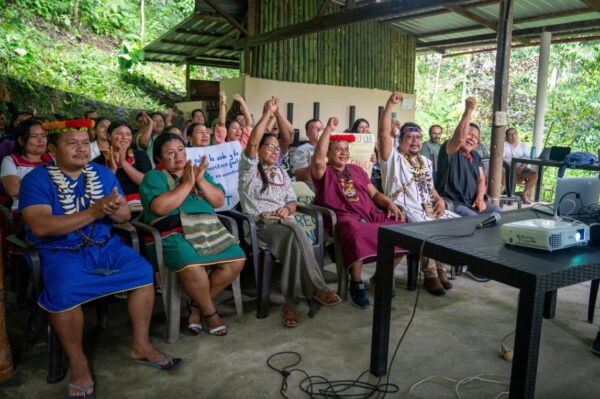
HAVANA TIMES – Ecuadorian authorities have used secret intelligence reports to freeze the bank accounts of Indigenous and environmental organizations, Human Rights Watch (HRW) reported on Decembrer 9.
Since September 19, 2025, the government’s Financial and Economic Analysis Unit (Uafe), which is responsible for preventing financial crimes, has ordered the banking sector regulator to freeze the accounts of several Indigenous and environmental organizations, as well as those of their leaders and members.
The decisions were made while some Indigenous and environmental organizations were protesting the government’s decision to eliminate diesel subsidies and to give the green light to a mining project in the southern province of Azuay.
Judges later overturned part of the account freezes after authorities failed to provide courts with evidence to support the measures.
“Safeguards designed to prevent money laundering should never be used to target civil society organizations for their work or to stop peaceful protests,” said Juanita Goebertus, HRW’s Americas director.
“These mechanisms should be used to combat organized crime, not environmental groups,” Goebertus stressed.
HRW researchers interviewed members of organizations whose accounts were frozen, their lawyers, reviewed documents from judicial proceedings challenging the account-blocking measures against entities and individuals, and attended two hearings on lifting the freezes.
President Daniel Noboa publicly stated that the frozen funds were intended to be used to “destabilize the government” through demonstrations.
In September and October, Ecuador experienced strikes and protests led by social, Indigenous, and environmental organizations, initially against the elimination of the diesel fuel subsidy, and later expanding to demands related to Indigenous rights and the protection of the Amazon.
Road blockades and other demonstrations were repressed, leaving at least three people dead, dozens injured, and some 140 detained.
And on November 16, a majority of the population rejected, in a referendum proposed by Noboa, the readmission of foreign military bases to Ecuadorian territory and the president’s initiative to convene an assembly to rewrite the Constitution.
In this context, the Financial and Economic Analysis (Uafe) office applied a provision of the new Social Transparency Law to freeze accounts suspected of illicit activity without a court order. Some civil society organizations have challenged the constitutionality of the law before the Constitutional Court.
The freezing of bank accounts paralyzed the work of several organizations and halted educational, health, and environmental protection programs, according to the affected groups.
Their members told HRW that they were unable to pay salaries or basic services, were not notified of the freezing of their bank accounts and only learned of it when they attempted to access the funds.
The Pueblo Indio Foundation, which has supported Indigenous communities for nearly 40 years, discovered that its accounts had been frozen after foreign donors were unable to transfer project funds.
On October 5, the Uafe cited intelligence reports when it froze three bank accounts belonging to the Indigenous organization Alianza Ceibo, blocking funds earmarked for projects financed by the European Union and US donors.
The organization, made up of the Waorani, Siekopai, A’i Cofán, and Siona peoples, has spent 10 years defending the economic, social, cultural, and collective rights of Indigenous peoples.
Authorities also froze the 14 bank accounts associated with the Union of People Affected by Texaco’s Oil Operations, which supports communities affected by oil contamination in the Ecuadorian Amazon.
On November 5, a judge ordered the accounts to be unfrozen after the Uafe failed to disclose any information justifying the decision. The banking sector regulator unfroze the accounts nearly two weeks later, following repeated insistence by the judge.
HRW argues that the provisions allowing bank accounts to be frozen on the basis of intelligence reports must be urgently reviewed to ensure they comply with Ecuador’s Constitution and international human rights obligations.
The Inter-American Court of Human Rights has also held that restrictions on the right to property must be exceptional and should only be imposed to the extent that they are necessary and proportionate to achieve a legitimate aim.
“Prosecutors and judges must ensure that these criminal investigations follow due process, are based on credible evidence, and are not used to unduly restrict the work of Indigenous and environmental organizations,” Goebertus concluded.