
Spain Recommends Against Traveling to Cuba
“If you are not vaccinated against Chikungunya, Dengue and Hepatitis A”
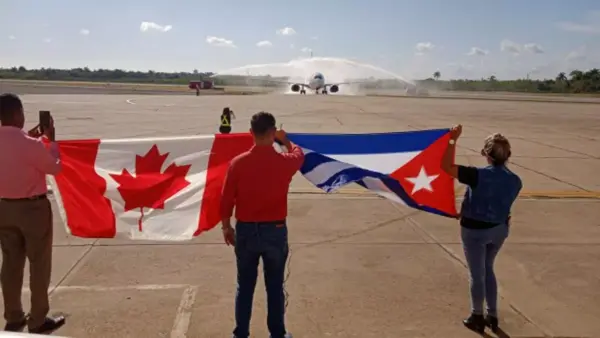
The drop in tourism in the last five years has led the Government to reduce its investments in that sector, which until now was a priority.
HAVANA TIMES – The Spanish Foreign Ministry issued a health alert this Friday stating that “Cuba is currently experiencing a serious epidemic, with simultaneous outbreaks of various mosquito-borne viral diseases.” Consequently, it recommends against traveling to the island if one is not vaccinated against chikungunya, dengue, and hepatitis A.
This warning comes at the worst possible time for the Cuban government, in the middle of the peak tourist season and at the end of a catastrophic year in which the number of international travelers will not even reach half of the four million registered in 2016.
The new guidelines from Madrid were released this Wednesday, after it was confirmed that the situation in Cuba has deteriorated significantly. The accumulation of garbage and the increasing number of hours without electricity—two factors that directly impact hygiene—explain the updated alert, according to sources consulted by Confidencial Digital.
According to the most recent data from the National Office of Statistics and Information (ONEI), between January and September 2025, 36,788 Spanish tourists traveled to Cuba, representing a 27.1% drop compared to the same period in 2024. Canada—traditionally the leading source market for Cuba—has also drastically reduced its presence on the island this year. In the first seven months of 2025, the number of Canadian tourists who traveled to Cuba totaled 478,388, down from the 622,204 registered in the same period of 2024.
The health emergency that is now keeping tourists away is a direct result of the neglect of basic services. And that neglect, in turn, stems from an investment policy that for years prioritized tourism over agriculture, energy, health, and infrastructure.
Over the past decade, the regime has turned the tourism industry into its economic totem and its riskiest gamble. The result in 2025 is empty luxury hotels in cities where water can take weeks to arrive, beach destinations with more rooms than food in the markets, and a healthcare system lacking staff, resources, and supplies.
Official investment figures up to 2024 confirm this. While agriculture received a mere 3% of the total and public health a meager 1.9%, hotels and restaurants absorbed 10.8%, and the so-called “business services, real estate and rental activities” – a category that includes a significant portion of hotel spending – accounted for a hefty 26.6%. In other words, more than a third of national investment was earmarked for building or renovating tourism infrastructure.
The paradox is that, just now that Spain is recommending vaccination before visiting the island and even bringing a complete first-aid kit because hospitals lack medicines, the Cuban government seems to have discovered – late, very late – that perhaps it should invest more in basic services.
Data from January to October 2025 show a shift. Funding for tourism falls to 5.2%, and the real estate and business sector drops to 17.1%, while the provision of essential services for the general population—electricity, gas, and water—jumps from 12.6% to 36.7%, becoming the main recipient of investment. Transportation—key to moving goods and people in a semi-paralyzed country—also grows, from 8.5% to 10.7%.
But the inevitable question is: will this change be enough at this point? Because the figures also reveal what the government continues to fail to prioritize. In 2025, investments in agriculture—the foundation of food security—represent a mere 2.1% of the total, compared to 2024. Education falls to 0.4%, science and innovation also to 0.4%, and public health to 1.3%, percentages that are barely enough to keep buildings standing, much less to modernize or supply them.
The Spanish government also warns travelers that, although Cuban healthcare personnel are generally competent, “medical facilities suffer from a severe lack of supplies” and fall far short of Spanish standards. Furthermore, it emphasizes that foreigners are required to pay for any medical treatment immediately and that Cuban authorities may prevent them from leaving the country if any medical bills remain unpaid. The alert also stresses the need to only use bottled water due to the risk of Hepatitis A.
Today, with several countries—including the United States, Russia, and Mexico—advising travelers to think twice before visiting Cuba, the regime is trying to correct its course. But investments are like economic cycles; their effects take years to materialize. What went under funded in 2015 or 2018 is now exploding in the form of blackouts, epidemics, and shortages. And what begins to be funded in 2025 may come too late to prevent the island from continuing to lose—among many other things—one of its main sources of foreign currency.
Translated by Translating Cuba.
I’m in cuba now as a tourist and also a public health professional. The chikungunya although I don’t have figures appears to have swept through the country all five places I have been a few months ago and now is on the downturn. Normal precautions should be fine for most tourists.
It’s an amazing country no comment on the government but still the tourist infrastructure is great, people amazing as always, don’t avoid! Good time to come
Reality speaks volumes when it comes to Cuba. What we see today is the result of a reckless government that has been unable to provide growth opportunities for its people for 60+ years. Anyone blaming the embargo as the cause of this disaster has the same level of impairment.
99.5% of the comments here are such hogwash and biased, uninformed crap. One person here, Mr. Alvin Jackson, has said what really matters: lift the damn blockade and let’s see what happens. How many of you commentators here have lived in a country besieged by a criminal economic, commercial and financial blockade for 65 years, while the same country imposing the blockade has enjoyed what Economists describe as “exorbitant privilege” of its currency for over 5 decades? Go do some research on the topic, and wheel and come again for more intelligent discussion!
There should be another ” Revolution “, In Cuba and fast. Castro’s initial dream has slowly become a nightmare for the Cuban people. Governmental corruption is very evident and the people are severely paying the price, and there seems to not be any light at the end of this tunnel, only more darkness.
In my opinion, this was set in motion by competing government factions, in order to destroy the Cuban government and it’s connection to the other communist supporting countries to leave Cuba vulnerable to a Democratic takeover by the American government.
I wish the best of luck to the Cuban people so that they can prosper one day. Perhaps it will take a decent good government for that to happen and with no Trumpitas involved as he is an evil guy.
Propaganda against Cuba.
The conterrevolutionary shall not return to Cuba.
Motherland or dead, we shall overcome !
Is the communism that destroy any country. Compare Venezuela before and after or North Korea with South Korea.
They know but they are slave. Only in the west we have idiots that believe in Marx.
Communism is an unmitigated disaster and Cuba is proof, when the elites in government and the military are running away you know just how bad things are and have gotten.
Regrettably this was bound to happen its the result of communism. The mystical bs some of you profess with this lift the embargo nonsense is pure ignorance. Cuba’s problems are self-inflicted nothing more and as far as that sanctioned tanker who was sailing under a false flag its point of destination was China not Cuba do stop spreading your propaganda.
The person who
Said : “Why not remove the blockade from Cuba”, dear friend, the blockade in Cuba was part for the American interests nationalized by Castro & not paid for, and Cuba receive million of dollars donation ( no charges) in food, that the Cuban government SALES to their people. Also, relatives of Cubans in USA send millions of dollars. In food and hardware, to their relatives in Cuba (what blockade is he talking about?) YES, blockade to the Cuban Government to purchase weapons and industrial equipment for the factories nationalized by Castro y never paid for. What Castro did with the money the ex-URSS gave them (100 million dollars a year from 1959 to 1997) ? Castro used to finance terrorist/guerrilla organization throughout the world. The comunist Cuban regime does not pay for the credits they have taken and no private foreign business sales them under credit if they do not pay their debts. Before anyone making a judgment about the present situation in Cuba, why the country is so deteriorated, do not blame USA, read the non partisan press, books, Investigate why Cuba is where it is today… More than 1 million Cubans left the country in the fist 20 yrs ( and continue today) of the government that in 1959 promissed was not communist. Why so many people leaving the country and no one (*)wanted to go there to live and work ( except counted few with goverment contracts a
Nd may be some living there with USA or CANADIAN dollars retiree checks), only those wanting to emigrate to Cuba at (*) above are ( what I have seen in the past) the would-be-terrorist (wanted by the law in their country) or terrorist trainers from other countries.
Most people and even the article writers here are greatly misinformed. I live in eastern Cuba part of every year amongst the people in the provincial capital Holguin. The mosquito borne viral outbreaks happening currently are a result of massive amounts rainfall and flooding caused by hurricane Mellisa. It is already past it’s peak and the situation is improving. The U.S. government recently siezed (pirated) an oil tanker bound for Cuba with 2 million barrels on board. This oil powers the electric plants to keep the lights on and pays for basic services. People like to say that the Cuban gov’t is corrupt and to some extent it is ( they all are) but the country would be fine if the U.S. gov’t was not trying to destroy them without any moral compass.
I agree this is propaganda. I have been hearing about the Hepatitis scare for 30 years. If it’s so bad then why don’t the locals have it? Surely they don’t solely drink from water bottles? I have returned from havana a few weeks ago. There were no shortages of anything if you have western currencies. In fact, it was probably my best trip (of 20). There are no mosquitos between 7:00am and 7:00pm. At night put on bug spray and have fun.
I just left holguin which is a total disaster half the city sick in bed the other half trying to help the sick shame on the tourists that go to the resorts to support gaviota which is the military that controls the resorts shame on the airlines. Rouge. Air transat and especially sunning for promoting cuba.i met 4 women at the airport going to holguin I asked if they were going to resort they said no we have an air b+b and we are going out for dining and dancing hmm not in cuba. I’ll bet they will never go back we bought a ticket to Montreal to get out as fast as we could.lost our original return flight thank air scamsat .my wife is cuban and has been crying for the conditions for her family I lived the for a long time in the past and we have a house so I am well versed FYI cuba is the last place I would go . Haiti might be a better place.this has nothing to do with blockade which is the biggest false excuse for a failed dictatorship. Please to pres Trump help the cuban people
I was fortunate to visit havana, trinidad (?), and cienfuego 10 or so years ago (small tour in minivan) during brief window for tourism. beautiful countryside, lovely people, good food, but obviously in servitude to repressive government.
I am Canadian and I have been traveling to Cuba for many winters..to me things that are happening here are inconvenient but not a reason to not come here..i was in the hospital 3 times this winter and had excellent service and no charge..I’m sure this anti Cuba propaganda news outlet won’t show my comments
Why not remove the blockade from Cuba, and allow her the same freedom of movement afforded Russia and China?
Give it a go, what the hell do we have to lose?
I’ve being going to Cuba now for 30 years and it only has got worse with no electricity no food on the shelves and no confidence in its people the government is so afraid the people will get ahead and then they will have money to create problems in 1995 my first year I said don’t worry in five years all this will change for democracy well I was terribly wrong 30 years have passed and we are worse off then ever the saddest part is the Cuban people suffer the most no money no food no life in 2025 who would imagine a life like that with no change in sight so sad but what will be the outcome. Good luck Cuba you are a beautiful country in a severe dilemma hope God shines on you
I am a Canadian who lives in Cienfuegos Cuba. We have our problems but it is very safe sunny and the best part is the people are wonderful. I recommend a vaction here the price is right and yes we have good food electricity most times and fantastic beaches.
To all the young adults protesting their hate for democracy…tell me why once again you think socialism is better than democracy?
Ill wait!
Canadians should stop going to Cuba,last week à friend had to go down with antibiotics for a familly membre who was at the hospital,imagine no antibiotics in a hospital.these dictactorial ,communist regime dont work,the presidente is rich and his entourage but the regular cubanos are suffring. I am sure that in a few months à New order and à change of governement will arrive. Best of luck for the cubans with à real democratic clean leaders.
I am so sad and sickened to see what is happening to my favourite island to visit Those beautiful people of Cuba do not deserve to live like this, its absolutely heartbreaking to see the country going down, especially with the shortage of food and electricity, it’s heartbreaking this government will have to come up with a very very good plan in order to save tourism and its beautiful people
The situation in Cuba is absolutely disgusting. The scams and fraud perpetrated on the tourists are on a Commercial- Manufacture-Scale. It starts with the top when the Cuban government steals from the tourists by exchanging their US dollars and Euros for 50% of their real value. But the worst happens in the streets where the tourist is hunted like an animal by the local hustlers, scammers and fraudsters of all kinds. If you’re a tourist and think you’re going to Cuba for a holiday you are dead wrong. You are going there to be a prey and you will be hunted at every moment and with step you take.
It is just complete misery for the Cuban people at this moment, this G’ovt should do something garbage is everywhere even in Varadero & especially in Santa Marta which is just over the bridge, electricity in Santa Marta,Cardenas & Matanzas is maybe 3 hours a day, these are the Cities that I am familiar with, it is pathetic the way these people are treated by this inept Government.
The continuation of the Cuban regime is exacerbated by the Cuban exile mafia in Miami whose leaders do business with Cuba via the ‘mulas/mules’ who carry merchandise and hard currency cash to Cuba on an informal basis.
Those Miami businesses survive by flaunting the American ‘blockade’ on Cuba. On one hand they publicly shout ‘down with the Blockade’ but on the other hand support it so they can profit from circumventing it.
It is difficult for the ordinary exiled Cubans living in the US to stop sending support to their families trapped in Cuba. They don’t seem to think about the bigger picture in that if monetary remittances to Cuba were to stop for just 30 days the Cuban regime would likely collapse completely.
Corruption amongst officials has been rife for years from customs at Cuban airports through to anyone involved in the procurement, wholesale and retail sectors.
Change has to come from within Cuba by the now hungry and destitute population taking to the streets en masse at the same time. Normally the latter has the desired effect as could be seen in the Communist Eastern bloc satellite countries culminating in the Berlin Wall coming down.
Alas in Cuba the regime, when the situation reaches boiling point, issues US supplied chicken and other foods from controlled stores, just enough to quell dissent.
Cubans have to wake up to the fact that they only can bring down the regime.
The US Blockade has failed miserably as do sanctions on any country as they only serve to create ingenuity through self preservation.
All that is wrong in Cuba is blamed on the Blockade by the regime however small the problems are.
If the US were to lift the Blockade, without announcing it first on CNN, the regime would be caught with their pants down. Cuban government financial assets just would remain frozen.
“One million overweight American tourists wandering around Cuba demanding toilet paper, soap and cold beer would quickly ensure collapse of the regime”.
Seriously though tourists should stay away from Cuba as it’s a potential powder keg right now in all respects of life there.
Spain has kept tourism in Cuba running for decades. Most hotels in Cuba are managed by different hotel chain such as Melia.
The Cuban Regime day’s are numbered. Spain has a lot to lose, when that change takes place.
Wow do not sound good
We were in varadero last year
Half of town without power
But the food was ok in the
Hotel
We always try to reach beyond hotel to regular people
That don’t work in the hotel
To help them directly.
The hotel staff generally is way better of financially
Then other people not working for hotels
Excellent please no travel to Cuba
Sadly, the Cuban nation is succumbing to the deepest decay due to a fateful combination of factors, beginning with the disastrous management of a corrupt, ambitious, inept, and dictatorial government (among many other shortcomings and sins). This is compounded by a population that, through years of Marxist dogma, socialist doctrine, media manipulation, and iron-fisted repression, is increasingly divided, subjugated, fearful, malnourished, and sadly, increasingly sick, saddened, and aged by the mass exodus of its youth, workforce, and scientific, athletic, and artistic talent. Another detrimental factor to the island’s development and quality of life has been the clumsy and persistent international projection of its government, which openly declares itself anti-capitalist and anti-American, supports and is friendly with various dictatorships around the world, and has a long history of failing to honor economic agreements, defaulting on debts, and supporting paramilitary movements to establish its model in numerous countries with weak democracies. The world looks the other way, or worse, continues doing shady business with the government and enjoying the beautiful beaches, the exquisite mulatto women, the rum and the tobacco, while almost the entire population suffers hunger, disease, hopelessness, and death.