
Miguel Coyula, a Cuban Director Who Thinks the New Man
By Franco Avicolli (ytali.com)
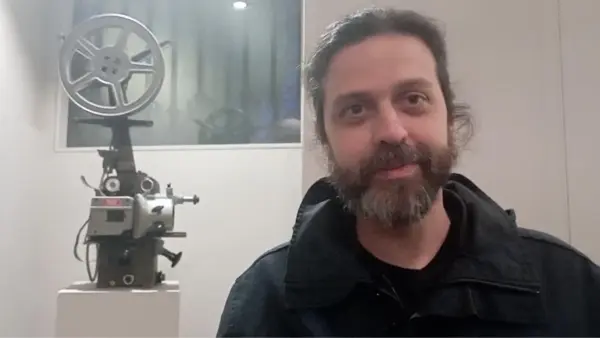
HAVANA TIMES – Miguel Coyula Aquino (born in Havana in 1977) is an independent director. This condition, regarded by the filmmaker and writer as a defining characteristic of his work, also makes him responsible for the screenplays, cinematography, and editing. According to him, the text must be visual; this suggests the rhythm, and the storyboard helps him remember how many shots he needs to film. For Coyula, handling the script, filming, editing, and music is not difficult when he is clear about rhythm and tone. This, in my opinion, expresses the essence of the director’s Cubanness, as he states: “Growing up in Cuba is incredible training for functioning anywhere in the world, because it teaches you to do a lot with nothing.”
His cinema is an invitation to reflection, a way of looking without complacency or assertiveness. It relies on the capacity of framing to convey meaning; it is a risky choice of a truth sought in the fragment, in deconstructed reality, linguistically proposed by the image conceived as an ideal suggestion for the viewer and intellectual coherence for the author.
Coyula is an “uncomfortable” figure, something indicated by the professional marginalization he faces in Cuba. This, however, does not deprive him of the freedom to screen his films at home or wherever possible, for a reasonable audience. Nor does it deprive him of the freedom to travel to give lectures, to participate in cinematic activities abroad with his tenacious and passionate partner, actress Lynn Cruz, or to accept the numerous international awards he receives. The director lives and works under an indifferent and watchful State which, unfortunately, does not engage with his cinema and its interesting linguistic solutions, nor with the existential questions that are entirely alien to the utopian premises of the bearded revolution and to the critique of a neocolonialist ideology disguised as an increasingly exclusionary form of development.
Among his films, I recall Nadie (2017), a feature-length dialogue with the poet Rafael Alcides, a man marginalized like himself; Corazon azul (2021), and Coónicas del absurdo (2024). These are essential works, between documentary and fiction, that focus on the inconsistencies and paradoxes of contexts, suggesting a transition beyond reference models—ideological questions of colonialism on which Frantz Fanon reflected deeply in The Wretched of the Earth.
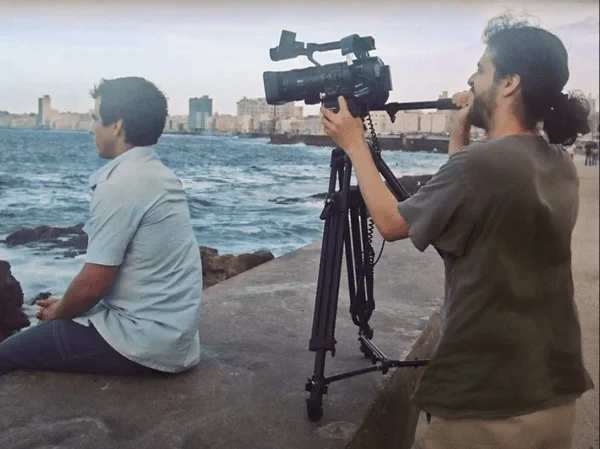
Coyula’s most important film, Memorias del desarrollo (2010), based on a work by his Cuban compatriot Edmundo Desnoes, received around twenty awards both in Cuba and abroad. The work delves into existential unease and a complicit void of purpose, employing a fragmented and frenetic style. The author offers a “narrative” with circumstances and details that reaffirm or empty the meaning of the “thing,” in a kind of journey in which discomfort and icons, with their meanings, come together to demonstrate their relevance or obsolescence.
Coyula’s cinema should be read as an event that seeks a hypothetical, forceful, and fleeting original substance, transformed into a fragment within the dynamics of complexity. It is a process similar to that of music, which is heard in the original sound of thunder, of an object breaking, of painting that looks at itself in the material consistency of color, or of poetry that delves into the generative word to recognize its own reason. The dimension of complexity cannot be reached through the linear time of logic; it must be sought in the structure of meaning, in the contextual dynamics of things. Its time is an attribute of the thing, an independent value of its circumstantial function; “justice” and “freedom” are complex data and do not have a definitive form, nor do they arise from changing models; it is their consistency that determines their propositional or rhetorical character.
Memorias del desarrollo addresses existential questions very similar to those of Memorias del subdesarrollo (1968) by Tomas Gutierrez Alea, known as Titón, considered one of the most important works of Cuban cinema. It is also based on a novel by Edmundo Desnoes, who later left Cuba, in which the protagonist, Sergio, a member of a Cuban bourgeois family that leaves the country, decides to confront the new context that emerged from the Castro revolution, while remaining rooted in a past he seeks to transcend.
Miguel Coyula is also the author of the novels Mar Rojo, Mal Azul (2013) and La isla vertical (2022). Matar el realismo, a nonfiction book published in 2024 by the Spanish publishing house Huron Azul, presents a large number of photographs, texts, and high-quality interviews that offer a broad overview of his work.
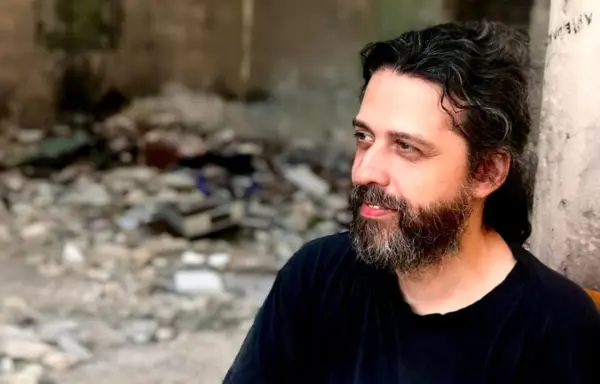
I believe that Coyula’s cinema should be read in the context of the origins of the Cuban Revolution and, in particular, the quality of its demands, which generated a stimulating and contagious enthusiasm, contributing to the great processes of emancipation from colonialism—so numerous in those years—and to the formation of a generation projected toward the era of the new man. Revolutions cannot be simplified by reducing them to outcomes often contrary to their premises, to the point of presenting them as betrayals.
There is no practical measure to grasp the effects of what has been called “an assault on heaven.” At the same time that the Cuban Revolution sought ways to provide milk to children and to teach literacy to a population largely excluded from education, Titon narrated the existential dilemma of a bourgeois and represented it in the ephemeral flow of everyday life. There is no alternative, nor even a hierarchy, between the quality of the demand for milk and the existential questions addressed by cinema, the arts, and knowledge. It is very likely that in the brutal and deadly battle of Cuito Cuanavale, which opened the doors to Namibia’s independence, the life of a Cuban came to an end—perhaps someone born in a movie theater where Memorias del subdesarrollo was being screened, alongside the anxieties of Sergio, who sought meaning in his life, spurred on by the Castro revolution.
As for Miguel Coyula, whom I deeply respect, I do not share his generalized criticism of Fidel Castro. But I believe that in his creative and practical trajectory, marked by a firm rejection of the regime’s propaganda and rhetoric, lies the seed of the new man, whose vision the Cuban Revolution revived by seeking a path that does not conform to an idea of development and progress based on industrial growth—a form of “good capitalism” that, having to function according to the “master’s model,” eliminates neither the master nor the unease of a society that thinks in numbers.
Originally published in Italian on the Ytali website.