The Agony of ATMs in Cuba
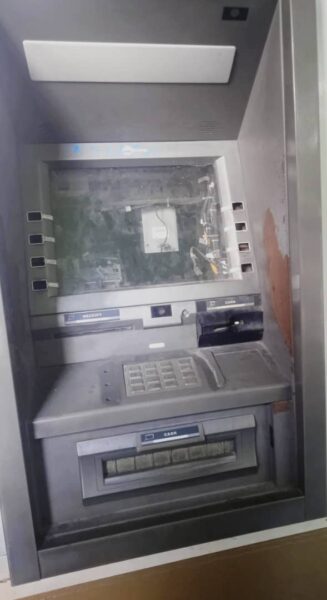
HAVANA TIMES – In a world where withdrawing cash with a plastic card has been an everyday gesture for more than half a century, the history of automated teller machines in Cuba is paradigmatic. While the first successful cash dispenser began operating in a London neighborhood in 1967, and countries in the region such as Chile installed them in 1984, Cuba remained on the margins of this financial revolution.
It was not until 1997 that the first machines—of French manufacture—arrived on the island. This three-decade gap was not merely a technological delay, but a portent of an always conflicting and fragile relationship between the population and automated banking.
The Accelerated Decline: From a Promising Network to Forced Obsolescence
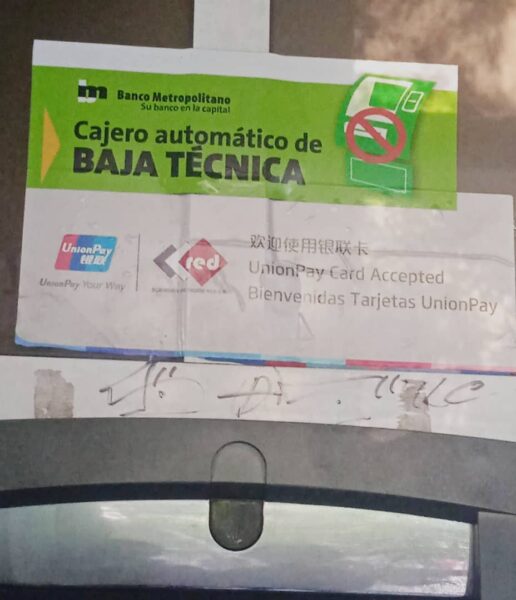
There was a brief period when the network worked. The ATMs, located in central areas, were regularly stocked by armored vehicles. Banco Metropolitano came to operate the largest network in the country, with approximately 525 machines. However, today’s reality is one of collapse. The network has shrunk drastically due to absolute technological obsolescence and the impossibility of obtaining spare parts on the international market. The situation was aggravated by acts of vandalism by part of the population against the machines, frustrated by the constant lack of cash, which forced many ATMs to be relocated inside bank branches, limiting access to banking hours.
This material crisis creates a domino effect: the remaining ATMs are often empty or out of service, pushing human pressure toward the teller windows. Scenes of endless lines from the early morning, with citizens waiting for the remote possibility of withdrawing some cash, have become commonplace in front of bank offices.
The problem goes beyond physical ATMs and exposes systemic vulnerability. All electronic payment services in Cuba—ATMs, the Transfermóvil app, and EnZona points of sale—depend on the same fragile infrastructure managed by the state-owned company REDSA. This means that frequent “essential maintenance” shuts down the entire national digital payments network at once, leaving the population completely cut off from their funds. These interruptions, announced opaquely, have eroded user trust. Citizens live in a state of permanent uncertainty, where any “update” or “improvement” translates, in practice, into yet another limitation.
The Human Drama: Cash, Pensioners, and Silent Resistance
The crisis has a deeply human and unequal face. Those most affected are the elderly, who, after a past of collecting their pensions in cash, are now forced to battle endless lines, incomprehensible digital interfaces, and the anguish of being unable to access their money.
Faced with forced using of poorly functioning bank technology, a practical and silent resistance has emerged. Many establishments, both state-run and private, refuse to accept digital payments or apply a surcharge for using them, demanding cash instead. This turns the Resolution, which limits cash payments to 5,000 pesos (around 12 USD), ineffective across broad sectors of the real economy, and forces citizens to seek creative solutions to obtain the prized paper currency.
In August 2023, the Central Bank of Cuba attempted to restrict the use of cash and promoted digital payments. However, independent economic analyses point to deep conceptual flaws in this strategy.
Experts criticize the Central Bank for operating with an 1980s-era mental model of cash “inflows and outflows,” ignoring the autonomous demand for money in an economy that now includes a dynamic and vast private sector. In a context of steadily rising inflation, deficient digital infrastructure, and a historic distrust of the banking system due to past devaluations and confiscations of savings, limiting cash is perceived as a “recessionary” measure. Instead of incentivizing, it compels. The solution, economists argue, is not to restrict access to money, but to tackle the causes of inflation and offer attractive financial products—such as genuinely positive real interest rates—that encourage people to deposit savings voluntarily.
Epilogue: The Crisis Within a Broader Reform
The agony of ATMs and the struggle with digital banking are not isolated phenomena. They are framed within a broader and traumatic monetary and exchange-rate reform. On December 18, 2025, the government implemented a new scheme establishing a floating exchange rate for the Cuban peso (CUP), in the hope of unifying a market fragmented among the official rate, the informal rate, and the one used by the business sector.
Nevertheless, the initial results have been meager. The new floating rate was set almost identical to that of the informal market, without resolving the underlying problem: the scarcity of foreign currency in banks to back operations. Thus, distrust persists, the parallel market remains alive, and the shortage of cash—both national and foreign—continues to be the bottleneck of the economy.
ATMs in Cuba, which began as a symbol of modernization, have become synonymous with material scarcity, forced technological obsolescence, and a poorly designed digital transition. But above all, they embody the daily struggle of Cubans to have control over their own money.