
Parenting in Cuba: Does it Amount to a Misfortune?
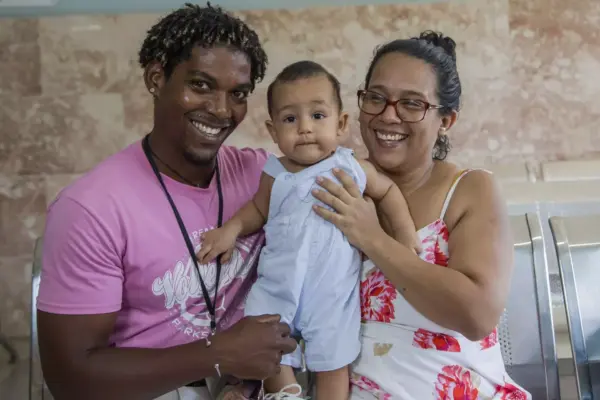
HAVANA TIMES – Once, when I was very little, I congratulated a neighbor because a grandson had just been born to her. This neighbor, whom I remember as very kind and helpful, replied: “Thank you. Another man for Fidel.” It wasn’t a strange response in those years. I could even say it was the most common one. But this was the first time in my life, as far as I can remember, that I became aware in some way that at birth we did not belong to ourselves, but to someone or something far more powerful, something it would be hard to break free from, for those who ever managed to do so.
I could have had many more experiences related to the theme of motherhood in Cuba amid Fidel’s revolution, of course, because in Cuba everything is politicized and birth rates are a matter of great importance in any society—especially in fascist, communist, socialist… totalitarian regimes.
I don’t forget that discussion in classes at the Evangelical Seminary of Matanzas with its then-rector, Reineiro Arce Valentín. From time-to-time tensions arose because as a group we were quite critical of the system, and the rector understood the issue differently. On one such occasion the professor said to me: “Lien, the fact that you are not a mother is a way of telling the State that you do not agree with it.” Wanting to be emphatic, I replied: “That’s true. I won’t give children to a system like this.”
Which wasn’t entirely true. Hand on my heart, I never embraced motherhood as a life project. I wanted to devote myself to my personal fulfillment in every way possible—study, sports, work, social life… but never to creating a family, at least not a biological one. I never stopped to reflect on whether I was living under a dictatorship and didn’t want whoever I brought into the world to suffer the outrage of living in such a humiliating reality as this. Although I understand that yes, there have been women who said to themselves: “I won’t have my descendants in Cuba,” and they didn’t. Their sons and daughters were not enslaved by the Cuban Communist regime.
Still, the experience of motherhood, like fatherhood, can arrive in many ways and without you noticing. I myself, who have fled from that kind of commitment so much, when I see myself surrounded by my female cats, male cats, and dog, I tell myself: I am a mother. Because I worry about their health, well-being, and food; I give them affection; if I have to leave the house, I leave them in the care of responsible people whom I know will look after them, etc. And if this isn’t exactly being a mother, it certainly resembles it. Because one thing I am convinced of: being a mother or father goes far beyond conceiving and reproducing our genes in another body.
However, motherhood is experienced—whether one has given birth, is responsible for granddaughters or nieces, dogs and cats, finds an abandoned baby along the way, or in whatever manner—it is one of the most demanding responsibilities. And under certain circumstances it becomes daunting to reckless levels, as I perceive it in Cuba. Because if for me, who only have under my protection these wonderful beings whose greatest demand is food, that is already enough to make me feel anguished because it is so difficult… then what it must be like to be a mother or father raising babies who grow up under such deplorable conditions?
How do these women and men manage (less so the men, because Cuba’s macho society leaves much of the task of raising children to women) to sustain the lives of their little ones? In a country where food requires (costs) so, so, so much… work, and therefore everything else that is also necessary becomes science fiction.
And the clothes? And the little backpack with school supplies? The shoes? And hygiene? And drinking water and water for everything else? And toys? And outings? And the trips to and from the puppet theater? And the little books to educate them well? And that small gift because we want to see them happy? And… how do Cuban mothers and fathers manage?
Today we celebrate a birth: that of Jesus, the Messiah who was born in Cuba (in a nativity scene), because I feel this country as that—a manger. Filth, stench, weary animals, dirt, and abandonment. But the Messiah told us, like Simone de Beauvoir, that biology (birth, beginnings) is not destiny. There is hope! A better kingdom (not one of those that only knows how to build nativity scenes) can be built—not in some distant future, but right here and now. And this is worth continuing to preach, despite everything.
My wish—one I am sure anyone would share—is that motherhood or fatherhood is not a martyrdom, but a blessing: the blessing of knowing we carry good news. That it is not a marathon without water or rest, but one lived with the joy of knowing a story better than ours has begun. And that life—the life that deserves to be lived (not the other one)—is passed on precisely for that reason: because it deserves it, redundancy and all.