
Panama: The Cost of Two Decades of Corruption
More than US $5 billion in ‘lost’ public funds
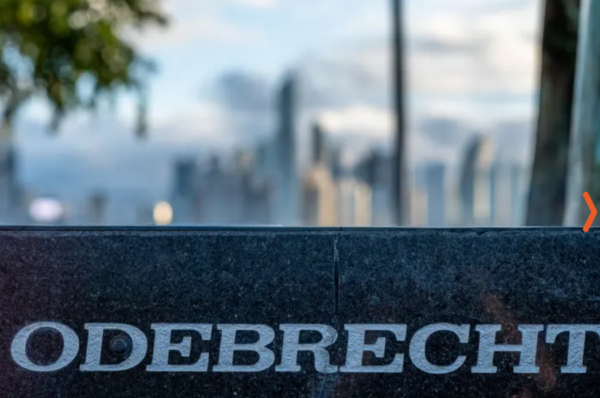
A review of 90 emblematic corruption cases—contained in public proceedings, including “Odebrecht”—allows only an approximation of the economic, political, and institutional damage inflicted on the State over the past 20 years
By Melquisedec Quintero Castillo (La Estrella de Panamá)
HAVANA TIMES – Between 55 and 70 people, mostly children and adolescents, have died over the past two decades in the Ngäbe Buglé comarca while on their way to or returning from school, attempting to cross one of the area’s many rivers—often swollen during the school year.
A recent report by the Foundation for the Sustainable Development of Panama (Fudespa) and Jóvenes Unidos por la Educación identifies the “systemic exclusion of Indigenous peoples from public investment” as one of the underlying factors behind these fatal accidents.
The report, presented to the National Assembly last October and titled “Mortal Education,” adds that these deaths occur in a context of multidimensional exclusion, extreme poverty, geographic isolation, and lack of basic services, directly linked to the absence of public resources.
These tragedies, which repeatedly plunge Panamanian families into mourning, are the product of an “exclusionary development model” that coexists with systematic corruption practices that feed off the money of all Panamanians.
To approximate the economic cost of this widespread practice, this investigation built an inventory of 90 emblematic cases, bringing together proceedings in which the most onerous damages in each of the four administrations preceding the current government. It is a reconstruction exercise that seeks to trace the cost of corruption, contextualizing the most prominent episodes of each period examined.
Although the inventory reviews cases of diverse nature, two stand out—one of them still in an early phase of investigation—for the scandalous size of their amounts.
The first involves the Brazilian construction firm Norberto Odebrecht. Data and estimates from national and international journalistic investigations—including analyses of contracts, addenda, and final costs published in leading outlets—indicate that cost overruns associated with works executed by “Odebrecht” in Panama between 2006 and 2019 exceed US $2 billion. To date, this is the largest amount in public works modifications or adjustments in the country’s recent history.
The second case came to light a few months ago and involves Panama Ports Company, which operates the ports of Cristóbal and Balboa, the Atlantic and Pacific terminals of the Panama Canal, respectively.
The complaint against the company was filed by the Comptroller’s Office, which, after an extensive audit process, concluded that the State suffered damages exceeding $1.2 billion due to administrative decisions and contractual modifications unfavorable to the nation’s interests related to the concession dating back to 1997.
The other 88 proceedings included in this inventory add up to nearly $1.5 billion in damage to the State, spanning social programs used as tools of patronage, poorly executed roads, unjustified advances, inflated institutional purchases, and a long chain of sustained acts of corruption.
The bulk of the documented facts corresponds to the 2009–2014 period, with 57 cases selected for their representativeness.
The 2019–2024 period left a significant number of corruption cases, but most lack a precise official calculation of patrimonial damage—a task that falls to the Comptroller’s Office and depends on prosecutors’ investigations, generally constrained by major limitations.
The final balance of this work reveals that over the past 21 years an estimated $5.104 billion disappeared from the State’s coffers—an amount that not only impacts public finances but also exposes an institutional fragility that corrupt actors have exploited for two uninterrupted decades to pocket such a sum.
The compilation was prepared using information from official sources such as the Public Prosecutor’s Office, the Judicial Branch, the Comptroller’s Office, the Office of the Prosecutor General of Accounts, the Court of Accounts, and reference journalistic archives on the cases.
This journalistic investigation was supported by the Foundation for the Development of Citizen Freedom, the Panamanian chapter of Transparency International, a global organization that has operated independently since 1993 and publishes an annual Corruption Perceptions Index to measure this pervasive scourge.
Corruption, according to the definition used by the organization, “is the abuse of entrusted power for private gain.” The harm it causes is general, affecting the entire population without distinction, and depends, “for it to occur, on the integrity (or lack thereof) of people in positions of authority.”
Keys to Understanding the Impact of the Multimillion-Dollar Economic Damage
To gauge the magnitude of the calculated amount, it suffices to compare it with the country’s recent economic performance, one of the most dynamic in the region, according to the Economic Commission for Latin America and the Caribbean (ECLAC).
https://www.cepal.org/es/publicaciones/82263-estudio-economico-america-latina-caribe-2025-movilizacion-recursos
Nominal GDP in 2024, according to official figures from the National Institute of Statistics and Census (INEC) of the Comptroller’s Office, closed at $86.2604 billion. Against that size of the economy, the estimated $5.104 billion lost to corruption over twenty years represents about 6% of the GDP of a single year.
Put another way, it is as if Panama had stopped producing for almost a full month—about three weeks—of its annual activity.
To better grasp the seriousness of this shocking figure, it is compared with two of the main social areas of the 2025 budget: education, with $3.651 billion, and health, which received $2.374 billion. Even the direct contributions of the Panama Canal to the National Treasury—$2.4708 billion in 2024—fall below the amount taken by corruption, according to this publication’s calculation.
By these measures, the calculated cost of corruption exceeds—at least—the financing of public education for one year, the resources required by the health system, or more than what the Canal itself contributed to the State in the last fiscal year.
Although the economic impact is clear and forceful, the institutional response has not been up to the task. Most of the cases that make up this investigation progressed slowly or became trapped in a judicial system that, due to backlog, lack of resources, or dilatory strategies, rarely reaches a final conviction. Thus, the economic damage is compounded by an institutional one: the perception that there is no certainty of punishment for corruption.
Among the 90 proceedings evaluated, barely a dozen stand out with final convictions, two statutes of limitations, eight acquittals, and one conviction with an extraterritorial sentence in the United States.
According to sociologist Gilberto Toro, the impunity that dominates many of these proceedings is not accidental, but the result of a system that primarily punishes those with fewer resources, while those who commit large-scale crimes manage to evade sanctions or face minimal consequences. This pattern, repeated for so many years, has strengthened corruption, turning it into one of the country’s main problems.
For Toro, this situation has made Panamanian citizens increasingly less tolerant of abuses and more willing to demand profound changes within public administration and the transparent management of resources.
Evolution of Corruption Over 21 Years
Over two decades, corruption in Panama has not been an isolated phenomenon but one of constant evolution. Each administration left a different kind of trail, with practices adapted to the controls—weak or nonexistent—of each period.
During the 2004–2009 government, the first signs of a system in formation appeared: irregularities in public procurement, projects awarded through poorly competitive processes or with contractual modifications that raised costs. Operational embezzlement emerged early. Corruption scandals such as “optical fibers,” “ranch schools,” and the Equity and Quality of Education Fund (FECE) stood out during this administration.
Between 2009 and 2014, there was an expansion and sophistication of the embezzlement of public funds, along with a qualitative and quantitative leap in alleged acts of corruption. Cases of overpricing in large-scale public works projects multiplied, some left unfinished despite having received advance payments without contractual backing. Social programs designed to support vulnerable populations were transformed into vehicles for diverting resources through inflated purchases or nonexistent beneficiaries. At the same time, more structured money-laundering schemes appeared, involving shell companies, fund triangulation, and the use of related suppliers. The most well-known cases included “Blue Apple,” “New Business,” “Riegos de Tonosí,” “dehydrated foods,” “food bags,” and “Cobranzas del Istmo,” among others.
From 2014 to 2019, the Public Prosecutor’s Office opened an unprecedented number of corruption files related to the preceding government—an offensive that those affected described as “political revenge.”
The modernization of specialized Anti-Corruption Prosecutor’s Offices in 2015 generated expectations of real scrutiny, but they quickly faced the same limitations: a shortage of technical staff and insufficient resources. Never had so much been investigated, yet institutional capacity remained insufficient to achieve strong convictions. While numerous cases were opened, corruption persisted, with notable cases such as the “Assembly payrolls,” “CONADES” (National Council for the Sustainable Development of Panama), and the “IMA” (Agricultural Marketing Institute).
The 2019–2024 period shows different irregularities: the political capture of key institutions. Entities such as the Social Security Fund, the Institute for Training and Use of Human Resources, the Government Innovation Authority, the Ministry of Education, the Ministry of Housing and Land Use Planning, and several municipalities exhibited patterns of partisan appointments, discretionary handling of funds, and institutional programs used for political ends. The COVID-19 pandemic opened fertile ground for abuses, including direct contracting without competition, emergency purchases at inflated prices, acquisitions not aligned with real market value, and opaque processes for distributing supplies.
Factors Affecting Criminal Prosecution
The gradual entry of the Accusatory Criminal System between 2011 and 2016 completely transformed how crimes are investigated and prosecuted in Panama. As criminal lawyer Arges Eduardo Ribera notes, “the rules of the game changed (…) now it is a rights-guaranteeing system that takes the defendant’s rights very much into account.” This feature, far from being a defect, is modernizing; but in Panamanian practice it has encountered another obstacle: investigating corruption requires complex expert analyses, technical work, and institutional coordination that demands funding.
In this area, Attorney General Luis Carlos Gómez Rudy explained to the National Assembly’s Budget Committee that of the US $224,416,287 requested for 2026, $198,791,150 has been recommended, directly compromising the institution’s functioning and performance in criminal prosecution. In October 2025, the Attorney General presented two anti-corruption bills seeking to require institutions to report and act as private prosecutors, streamline investigations without relying on prior Comptroller audits, and toughen penalties for crimes against public administration, including prison sentences for the notorious “ghost employees.” Both were rejected by the Assembly’s Government Committee.
The rejection of these anti-corruption initiatives reveals resistance to equipping institutions with indispensable tools to investigate State bodies. This dilemma between the urgency of modernization and the lack of will to do so connects to a deeper reflection. The problem of corruption, according to consulted experts, goes beyond the legal or administrative; its genesis is ethical.
In this sense, Alma Montenegro de Fletcher, Panama’s first anti-corruption czar in 2005, former Prosecutor of the Administration, and founding director of the Center for Public Policy and Transparency, believes corruption is “a distortion of social relations” and a profound deviation of the State’s institutional function. She affirms that the country does not lack laws. “What we have in excess are rules; what is lacking is the commitment of those appointed to enforce them.”
Montenegro noted that public administration has mechanisms to prevent abuses, but these have stopped working because those who must apply them do not assume responsibility. “There is a code of ethics, but no one follows it or enforces it.” She also considers the problem cultural: institutions neither train nor reinforce principles of honesty, integrity, or vocation for service.
She insists that every public official must understand their role: “They are not the owner of their ministry or their position.” In her diagnosis, institutional culture has been replaced by “playing smart,” normalized by the absence of sanctions and the lack of example from above. According to the jurist, justice must be equal for all, and precautionary measures must be applied without privileges.
For his part, lawyer and specialist in regulation and corporate ethics Carlos Barsallo points out that calculating economic damage—estimated in this publication at more than $5 billion—will always be approximate.
“This calculation is very difficult and will always be an estimate. One cannot know for certain. Official data—if they exist—are not reliable,” he said.
The economic damage, he warns, is only part of the problem. “The damage to the rule of law, to public trust, and to the credibility of institutions is just as serious. People believe in nothing and no one,” the specialist concluded.
Regarding the structural void that has allowed so much impunity, Barsallo identifies three levels of failure: legal, with delayed norms produced by international pressure, weak or incomplete laws, excessive evidentiary requirements, and special jurisdictions such as Parlacen; institutional, with weakened or politically captured entities, limited technical (and operational) capacity, and insufficient or poorly used budgets; and oversight, due to a lack of independence “in fact and in law” and the absence of technical and independent criteria.
Finally, he asserts that internal prevention mechanisms also failed. There was no real accountability for collaborators or “facilitators”—lawyers, accountants, bankers, and advisers—who enabled or assisted the frauds.
What Could Have Been Built with $5.104 Billion
The Fudespa study concludes that an investment of between $42 and $63 million—allocated to safe bridges, rural roads, and school transportation—would have been sufficient to eliminate the conditions that led to the more than 50 drowning deaths it documents.
That amount easily fits within the more than $5 billion lost, which could have been used to transform entire regions that are now isolated and suffering deprivations whose remediation is a constitutional obligation.
Resources are also lacking in public institutions tasked with ensuring ethics and accountability among officials, as well as in the authority responsible for managing the nation’s assets with the diligence the Constitution itself demands—a standard of conduct rooted in Roman law and evoking the care, responsibility, and prudence of the “good family father.”
This is confirmed by Article 3 of the Uniform Code of Ethics for Public Servants, established by Executive Decree No. 246 of December 15, 2004, which states: “The public servant must act with rectitude and honesty, seeking to satisfy the general interest, rejecting any benefit or advantage obtained for themselves or through an intermediary; nor shall they accept any payment or compensation from third parties that could lead them to breach their duties and obligations.”
Pope Francis (2013–2025), one of the most critical voices addressing contemporary ills, addressed corruption in the early months of his pontificate. In his homily of November 8, 2013, reflecting on the “Parable of the Dishonest Steward” (Luke 16:1–8), he warned that those who support their families with corrupt money feed them “dirty bread”—a stark and direct image that portrays the ethical degradation accompanying illicit enrichment.
Over these two decades, it is not difficult to see how many in Panama have fed on that bread.
*This investigation was conducted under the auspices of the Justicia Hoy investigative journalism fellowships, awarded by the Foundation for the Development of Citizen Freedom (www.libertadciudad.org).
First published in Spanish by La Estrella de Panama and translated and posted in English by Havana Times.