
The Key Figure in the Flow of Oil Between Venezuela & Cuba
Who is Ramon Carretero and why is he singled out
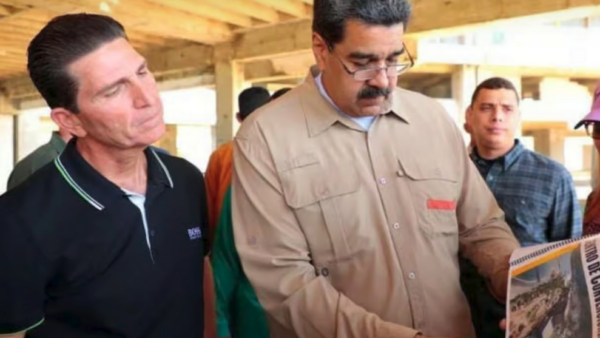
HAVANA TIMES – In late September 2025, the name Ramon Carretero Napolitano appeared in several press reports across the region. The Panamanian businessman was aboard the Learjet 55 that crashed in Maiquetia, Venezuela.
According to records from flight-tracking platforms, the crashed aircraft, registration YV3440, traveled to Cuba four times up until September 14. Previously, it had also made frequent trips to Havana.
Two months after the accident, the Panamanian press mentioned him again in an investigation into the frequent private-jet trips to Panama made by Raul Guillermo Rodríguez Castro, alias “El Cangrejo,” grandson of Cuban General Raúl Castro.
As El Toque reported in a previous article, investigations into the air accident that Carretero survived exposed a network of influence linking the Panamanian trader with the upper echelons of power in Havana and Caracas. These investigations were also key to uncovering the secret trips made by “El Cangrejo” to Panama—who he traveled with, his purchases, and his connections to the Panamanian business world.
This week, Carretero, 60, has once again appeared in local and international headlines because of his ties as an intermediary and contractor for the regimes of Cuba and Venezuela.
On December 10, 2025, the United States intercepted and seized an oil tanker in the Caribbean Sea, identified as The Skipper, which was carrying nearly two million barrels of heavy crude allegedly bound for Cuba.
The following day, Carretero was added to the Specially Designated Nationals List—known as the Clinton List—of the Office of Foreign Assets Control (OFAC) of the US Department of the Treasury, along with three nephews of Cilia Flores, wife of Nicolás Maduro. According to the United States, Carretero and the “narco-nephews” (Efraín Antonio Campo Flores, Francisco Flores de Freitas, and Carlos Malpica Flores) facilitate oil shipments and marketing on behalf of the Caracas regime.
Being included on this list means that all of their property and interests are blocked and must be reported to OFAC. In addition, any entity in which they own, directly or indirectly, 50 percent or more is blocked, and any transaction by US persons—within the United States or in transit—with any property of the blocked individuals is prohibited unless a special authorization is issued.
In this context, the Panamanian businessman is identified as the key figure coordinating shipments destined for Cuba, although only a fraction of the oil actually reaches the island, since most of it is resold to China.
To get an idea of the scale of the business involving Carretero, according to an investigation by The New York Times, his firms have managed up to a quarter of the crude exported by Venezuela’s state oil company, PDVSA.
But let’s take a step back to understand the scope of Carretero’s relationships with the Miraflores Palace in Venezuela and how they extend to Cuba.
Carretero, Maduro, and multimillion-dollar contracts
The cross-border investigation “His name is Carretero, but his businesses fly with Maduro (and family),” published in May 2025, begins by summarizing that “the relationship between Panamanian businessman Ramon Carretero Napolitano and the regime of Nicolas Maduro is a party.” “It began in 2013, while Hugo Chavez was battling cancer, and continues to this day. This businessman and his brothers, with a long track record of doing business with Cuba, obtained contracts in Venezuela to build gyms, a baseball stadium, a convention center; remodel hotels; and import toys, tires, and household appliances for 769 million dollars.”
The text details that “favors also flowed in the opposite direction. Juan Carlos Lopez Tovar and his then partner, Iriamni Malpica Flores—Cilia Flores’s niece—received payments from Carretero companies of at least 5.8 million dollars through a corporate entity. While the Maduro regime paid the Panamanian businessman lucrative contracts and the political nephew received millions of dollars, the two flew together on private jets and became partners in several companies.” The investigation was based on court records, public registries from several countries, invoices, emails, and various sources.
It also revealed that Carretero and Flores’s nephew-in-law, Juan Carlos Lopez Tovar, flew together at least 28 times during 2014 and 2015 and became partners in three companies.
In addition, the Venezuelan investigative outlet Armando.info indicates that Carretero “controls Landscape Vision Corp (Lanvicorp) in Panama, Venezuela, and Hong Kong. That company first received contracts for public works in Venezuela, but years later took part in imports of toys, household appliances, and even the technological equipment for the development of the Carnet de la Patria,” a document created by the Maduro regime in 2017 to identify citizens who are beneficiaries of certain state programs, as well as their ties to the ruling party.
Business connections crossing borders between Cuba and Venezuela
Carretero’s business network also extended to Cuba, where one of his flagship companies operates: Corporación Logística del Caribe, S.A.
The journalistic investigation cited above also revealed that part of the logistics for the contracts awarded to Carretero in Venezuela were carried out in Cuba.
Despite breaches and delays in projects involving Carretero’s companies, the contractor’s fortunes with the Maduro regime did not change. Both Corporación Logística del Caribe and Lanvicorp obtained more public contracts between 2016 and 2018—no longer for construction, but for the supply of goods.
In December 2016, the state-run Venezuelan Foreign Trade Corporation—a holding company created by Maduro to centralize public imports—signed a 4.5-million-dollar contract with Lanvicorp for the acquisition of toys. One month later, another deal was signed with Lanvicorp for just over 37 million dollars for the “acquisition of technological equipment” for the so-called Carnet de la Patria. Corporación Logística del Caribe also obtained three additional contracts from public entities in Venezuela, which together amounted to just over 8 million dollars and 17.3 million euros (19.6 million dollars at the exchange rate at the time). Under these agreements, the Carretero Napolitano company committed to selling 3.7 million toys, 4,843 household appliances, and 77,610 tires. These figures were disclosed in the investigation carried out by Transparencia Venezuela, CLIP, Armando.Info, and La Prensa.
Ramón Carretero Napolitano is a central figure in the economic relations between Cuba and Venezuela, operating as an intermediary in the flow of oil and other essential products between the two countries. Through this network, he has not only consolidated his economic power but has also shown how international business networks can operate on the margins of sanctions and government controls, benefiting from the opacity of the political systems in Cuba and Venezuela.
In an environment where institutions lack effective oversight and control mechanisms, Carretero and his allies benefit from multimillion-dollar contracts and secret operations that escape public scrutiny. Carretero’s connections—like those of other businessmen in similar positions—underscore the lack of accountability in regimes where networks of business power intertwine with political structures, while perpetuating hardship for the majority of citizens.
First published in Spanish by El Toque and translated and posted in English by Havana Times.
As the people starve so is the People’s paradise