
US Invasions in Latin America 2.0?
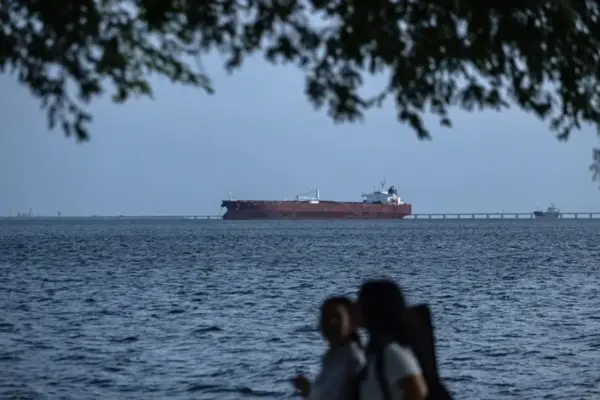
An invasion of Venezuela would intensify the remilitarization, authoritarianism, and fragmentation already growing in the Latin American region.
By Rafael Rojas (Confidencial)
HAVANA TIMES – The United States has not invaded a Latin American country since the overthrow of Manuel Antonio Noriega in Panama between 1989 and 1990. Over the past four months, during which nearly 30 attacks on vessels in the Caribbean and the Pacific have taken place, leaving more than 100 dead, we have been closer than at any time since then to a new invasion—this time of Venezuela.
In the past week, the extraordinary military deployment off the Venezuelan coast, including the powerful aircraft carrier Gerald Ford and a blockade against sanctioned oil tankers, went far beyond the stated objective of harassing vessels linked to Venezuelan and Colombian cartels. Although it was repeatedly insisted that the goal was not the overthrow of Nicolás Maduro or regime change in Venezuela, it was ultimately acknowledged that the aim was to apply maximum pressure until the president resigned or fled.
In recent days, on three occasions, Donald Trump directly referred to an invasion with an objective that until now had not been stated so clearly. According to Trump, Venezuela had “stolen oil, land, and assets” from the United States, and he intended to recover them. The White House deputy chief of staff, Stephen Miller, clarified the matter by specifying that the president was referring to the 1976 oil nationalization under the government of Carlos Andrés Pérez, which created the state-owned company PDVSA.
Indeed, in 1975, when Venezuela was one of the few Latin American Cold War democracies allied with the United States, and Perez had been in office for barely a year, a law was enacted transferring to the state the reserves of oil, asphalt, natural gas, and other hydrocarbons, as well as their exploration, prospecting, and commercialization. The reason invoked in the law for that measure was “national convenience.”
The nationalization took place after the oil embargo imposed by Arab countries on the United States for its support of Israel. Oil prices soared, and what was then called “Saudi Venezuela” benefited. But the United States was not excluded from those benefits either, as could be seen in the good relations between Carlos Andrés Pérez and Jimmy Carter.
As if awakening from a long sleep, like Rip Van Winkle, Trump now seems to want to turn back history and confront not only Nicolás Maduro and his mentor Hugo Chávez, but also the old regime of the so-called “Bolivarian Revolution,” the Fourth Republic, in which the politicians of the anti-Chavista opposition were formed, including María Corina Machado and Edmundo Gonzalez Urrutia.
Over these four months, the greatest resistance to these military actions in the Caribbean and the Pacific—actions that international organizations regard as “extrajudicial executions”—has not come from Russia, China, Cuba, or any other ally of Maduro, but from Democrats in the United States Congress. Trump and Rubio respond to that pressure with the argument that there is no plan to overthrow Maduro, despite the fact that Chief of Staff Susie Wiles has not ruled it out.
Thus, for now, Trump’s casus belli against Venezuela would officially be framed as an invasion to stop the flow of drugs and recover oil. Of course, much of the opposition, the eight million people in the country’s diaspora, and Venezuelan society itself harbor the hope that an armed action would lead to Maduro’s overthrow.
But history matters: as acts of war, all US military interventions in Latin America have been disastrous, and all have fueled the most authoritarian nationalisms—from which, precisely, Nicolas Maduro, Daniel Ortega, and other twenty-first-century Caribbean despots have emerged. An invasion of Venezuela would intensify the remilitarization, authoritarianism, and fragmentation already growing in the region.
Published in Spanish by Confidencial and translated and posted in English by Havana Times.