
Seventeen Cuban Artists Remain Imprisoned
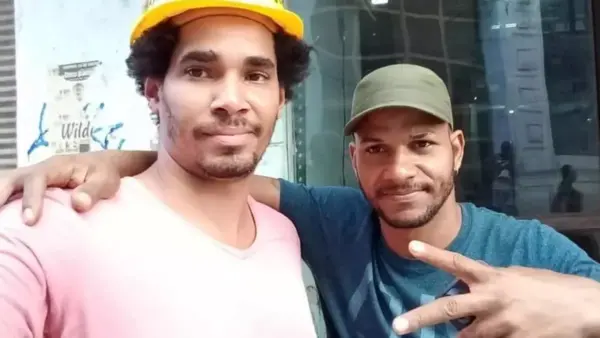
The Observatory of Cultural Rights laments that “young creators whose personal development has been cut short by political hatred” continue to be punished.
HAVANA TIMES — As 2025 comes to a close, 17 Cuban artists remain behind bars in prisons on the Island, and ten more are serving sentences without incarceration “as a direct consequence of their creative practices, their civic participation, or their refusal to renounce an independent voice,” the Observatory of Cultural Rights denounced this Monday.
In a brief statement posted on its Facebook page, the organization notes that “one of the most serious and persistent expressions of repression in Cuba is the imprisonment of citizens for exercising their freedom of expression, specifically young creators whose personal development has been cut short by the political hatred that characterizes the Cuban government.”
The Observatory does not provide the names of those on its list, although in previous statements it has referred to the most visible cases, such as visual artist Luis Manuel Otero Alcantara and Maykel Castillo Osorbo, sentenced in 2022 to five and nine years in prison respectively—a sentence that, in Otero Alcantara’s case, would mean release this year, since both were detained in 2021.
Previous complaints have also cited the cases of Yasmany Gonzalez Valdes, an activist and rapper sentenced to four years in prison for painting anti-government slogans, and Wilmer Moreno Suarez, sentenced among the July 11, 2021, protesters in La Güinera (Havana) to 18 years in prison, whose artistic name is Míster Will D’Cuba.
“Throughout this year we have accompanied, documented, and denounced the cases of artists imprisoned or sanctioned for political reasons, updating the situation of those who continue to face institutional violence, medical negligence, isolation, threats, and arbitrary punishment within the country’s prison system,” the Observatory adds.
In its post, the organization also accuses the authorities of pressuring the artists’ families—as well as the families of other prisoners—and of disrupting their careers and creative work.
“We will continue naming each artist, recording every abuse, and preserving the memory of those who resist from prison and of those who do so under harassment in semi-freedom,” the platform declares.
Amid this bleak landscape, the Santiago-born artist Luis Alberto Viscet Vives, known as La Crema, has decided to put an end to any thought of returning to Cuba. With thousands of followers for his music denouncing everyday life on the Island, the artist had traveled to the Dominican Republic for work two weeks earlier, prompting speculation about his exile.
Now the singer has released his new video, Navidad en libertad (Christmas in Freedom), humorously recounting his change of life: “I left behind the blackouts, the mosquito nets, and the filth. Goodbye, chikungunya,” the lyrics say.
In case there was any doubt, La Crema confirmed in the comments on the video—recorded in Punta Cana—that he does not plan to return to the Island, thanking his followers and his new reality.
Almost simultaneously, the Cuban Institute of Music announced yesterday the National Music Prize 2025, which this year was awarded to one of the best-known artists aligned with officialdom: Amaury Perez Vidal, one of the founders of Nueva Trova, along with Silvio Rodríguez and Pablo Milanes.
In its statement, the Music Institute highlighted that “his songs are close to jazz and to pop, others blend with rock music, and his most recent creative line is based on the style of the romantic song.”
For its part, the National Union of Writers and Artists of Cuba (Uneac) emphasized that “as a composer and performer, he has managed to fuse poetic rigor with emotional closeness, without renouncing a critical and committed view of reality. His fidelity to an ethic of creation makes him a reference point of Nueva Trova and contemporary Cuban song.”
The award recipient thanked the jury for what he considered an unexpected prize: “Against hostile and capricious winds I fought, I tried, and I achieved some songs that, I am sure, will outlive me, and that is more than a privilege (…) I have not been a man of ambitions or vanities; I believe that I was, and am, on the side of just causes.”
First published in Spanish by 14ymedio and translated and posted in English by Havana Times.
You should send this article to the 165 countries that have voted in favor of Cuba at the last UNGA via Their Havana embassies!!!