
The Path of International Justice in the Case of Nicolas Maduro
That Maduro is tried for crimes against humanity before jurisdictions that uphold international standards is a test of international law.
By Antonia Urrejola Noguera* (Confidencial)
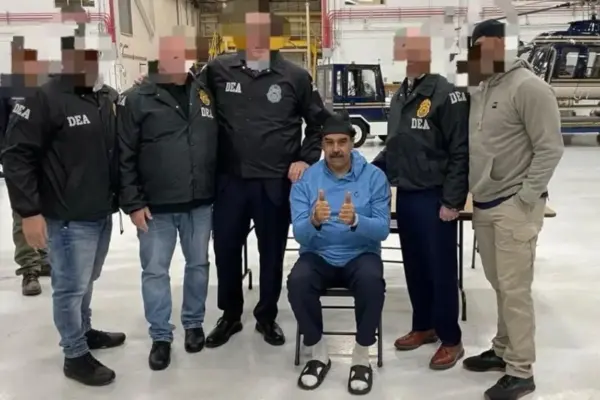
HAVANA TIMES — The image of Nicolas Maduro before a New York court has reopened a fundamental debate: how should those who commit crimes against their own population be prosecuted?
While Maduro faces charges in Manhattan, the International Criminal Court (ICC) is investigating crimes against humanity committed in Venezuela: arbitrary detentions, torture, and systematic political persecution. After the Second World War, the Nuremberg trials held the leaders of a state accountable for crimes committed against civilians. Philippe Sands stresses in East West Street that the terms “genocide” and “crimes against humanity” were born from the attempt to subject the worst horrors to the rule of law.
Although Nuremberg was in part the justice of the victors, Sands defends its attempt to proceduralize revenge through genuine courts: that is where the difference between justice and the exercise of power lies.
The Rome Statute created the International Criminal Court. This is not rhetoric: international criminal justice has convicted Karadžić and Mladić for genocide in Bosnia; Kambanda for genocide in Rwanda; Charles Taylor for war crimes; and Habré for torture and crimes against humanity.
In 1998, Pinochet was detained in London on the basis of extraterritorial jurisdiction. The House of Lords held that torture is so grave that no immunity as a former head of state can shield it, even without a direct territorial link.
Thus, under universal jurisdiction, any state may prosecute crimes against humanity because they offend the entire international community. Extraterritorial jurisdiction requires a link (national victims, territory); universal jurisdiction does not — the gravity of the crime suffices. Prosecuting serious crimes demands rigorous procedures, because that is where the distinction between justice and vengeance lies.
The military capture of Maduro sidesteps both universal and extraterritorial jurisdiction. It is not anchored in international crimes but in drug trafficking; nor does it respect extradition procedures that would activate the legitimate competence of courts.
The ICC has issued arrest warrants: against Putin for the illegal deportation of Ukrainian children, and against Netanyahu for war crimes in Gaza. Whether they are executed depends on political will, but the legal message is unequivocal: the impunity of top leaders is no longer guaranteed.
The solution is not to abandon legal frameworks, but to use them: the ICC could issue an arrest warrant for crimes against humanity, or courts could exercise universal jurisdiction as they did in the cases of Pinochet or Habré.
If it becomes normalized that dictators are captured militarily and prosecuted only for ordinary offenses, the legal order born in 1945 is emptied of content. Prosecuting serious crimes demands rigorous procedures, because that is where the distinction between justice and vengeance lies.
That Maduro be prosecuted is indispensable. That he also be prosecuted for crimes against humanity, before jurisdictions that respect international standards, is the test of whether international law remains a living project.
*This article was originally published in Spanish by La Tercera de Chile and translated and posted in English by Havana Times.