
Cuban Journalist Sentenced to 6 Years in Prison for Protesting
during one of the daily blackouts
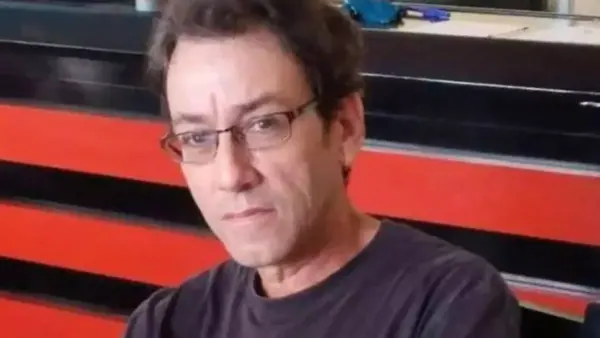
Five other people were sentenced for the same events, two of them to eight and seven years, respectively.
HAVANA TIMES — Four months after the oral trial was held, the Provincial Court of Villa Clara has handed down a sentence for the intellectual and independent journalist Jose Gabriel Barrenechea. The chamber confirmed the six-year prison sentence requested by the Prosecutor’s Office for the 14ymedio contributor, whom it found guilty of the crime of public disorder for his participation in a peaceful protest over blackouts in November 2024 in the town of Encrucijada, Villa Clara.
In the ruling, dated January 15 and accessed by this newspaper, Yandri Torres Quintana was also sentenced to eight years in prison — the highest sentence — and Rafael Javier Camacho Herrera to seven; Rodel Barbaro Rodríguez Espinosa and Marcos Daniel Díaz Rodriguez to five; and Yuniesky Lorences Domínguez to three. All of them, like Barrenechea, for the same single crime of public disorder, and with the usual additional penalties, principally the loss of suffrage rights and the prohibition on leaving the national territory.
The court’s chamber for crimes against state security considers it proven that the five defendants went out into the street on November 7, 2024 in Encrucijada during a blackout that “extended to almost all the provinces of the country given the serious energy situation the country was experiencing, caused not only by the economic blockade that the United States has imposed on us, but also by the damage caused by Hurricane Rafael.”
The text concludes that all the defendants arrived at the site of the protest — which unfolded in front of the local headquarters of the Communist Party and the Municipal Assembly of People’s Power — “each on their own,” joining a group of some 300 people who “began shouting that they wanted electricity.” Barrenechea is singled out specifically because he “incited other people to join the march, not abandon the place, and continue demanding their rights.”
According to the narrative of events, the defendants began banging “pots and other objects of a similar type but made of stainless steel, which they struck incessantly with great force against other metallic objects such as spoons and pieces of rebar, producing great noise and commotion.” According to the court, this “disturbed the town’s tranquility,” and it adds as an aggravating factor that the defendants obstructed traffic by walking in the middle of the street.
The ruling continues, asserting that although the highest authorities in the municipality tried “to convey the situation of the national electric power system and that power service was already being restored,” several of the defendants continued “causing disturbances by banging the objects” and preventing the population from hearing the information the officials were giving them orally. The court considers that the defendants’ actions were driven by “the intention to destabilize civic order and create insecurity among the population,” and that such acts warrant the lengthy prison sentences ultimately imposed.
As is customary, the ruling also makes statements about the behavior and associations of the defendants. It notes particularly in Barrenechea’s case that he “associated with people of poor morality and social conduct” and “had no recognized employment ties,” since the writer and journalist worked independently.
It also cites the personal relationships of Rodel Barbaro Rodríguez Espinosa, whom it additionally accuses of consuming “alcoholic beverages with great frequency,” and it evaluates favorably another of the defendants for participating “in activities convened by mass organizations.” The smallest sentence was reserved for the accused who “worked uninterruptedly for 15 years at the Ministry of the Interior,” where he stood out and received “distinctions and acknowledgments.”
The ruling is not final and may be appealed before the Supreme Court, although relatives have not indicated what they plan to do in such a bleak scenario.
For the moment, Jose Gabriel Barrenechea faces almost five more years in prison, subtracting the year and two months he has already spent in pretrial detention. There he has suffered the usual poor conditions of Cuban prisons, including limits on visits, obstacles to receiving medication and food, and isolation that has affected his health.
In addition, the journalist suffered an especially painful blow during his time at La Pendiente prison: the loss of his mother — who died of cancer in May 2025 — without being allowed to say goodbye. The Cuban Observatory of Human Rights, based in Madrid, described the decision by prison authorities as part of a pattern of “systematic psychological pressure” with which the authorities seek to break the accused and send a warning to other intellectuals and activists. The organization had repeatedly called for Barrenechea and his co-defendants to be acquitted: “It is a political case from beginning to end.”
Similar sentiments were expressed by Amnesty International’s Cuba researcher, Johanna Cilano, who said of the case: “Protest is a right. No one should be imprisoned simply for exercising their human rights.”
This Thursday, Prisoners Defenders — also based in Madrid — reported a total of 1,197 political prisoners in Cuba at the end of 2025, five more than in November. The organization added ten names to its list of political prisoners, while another five were released after “fully serving their sentences.”
Over the course of 2025, its registry added a total of 134 new prisoners, averaging more than 11 per month.
First published in Spanish by 14ymedio and translated and posted in English by Havana Times.
The justice system in Cuba is very bad . A Canadian ended up spending over 11 months in Cuba prison when he refused to pay a fine / donation of about 140 000 pesos or 1200 U S $ after another vehicle horse cart made him have to stop very quickly in a rental car that had less than $2000 damage i know of several tourists that have been accused of doing certain things in Cuba including taking pictures of certain people during street march from March 18 almost 2 years yet nothing or very little is being done to protect anyone from thefts or assault
Without better human rights Canada and other countries will not invest in improvements to make Cuba competitive.