
Outspoken Cuban Youths to Remain in “Pretrial Detention”
one more blow to freedom of expression in Cuba
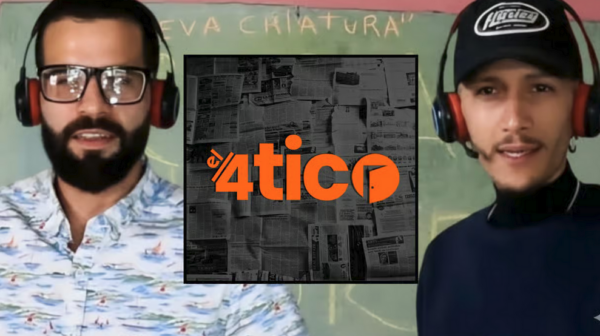
HAVANA TIMES — A small room wallpapered with newspapers from the state press, a worn-out chalkboard, and an old fan that serves little purpose except as a symbol that in Cuba appliances outlive their practical usefulness. With these elements — and a strong desire to speak to Cubans — Ernesto Ricardo Medina and Kamil Zayas spent months filming short videos for the social media platforms of the El4tico project.
With a relaxed, direct style, they voiced their political opinions and explained topics related to economics, history, and human rights — until the regime decided they were too visible, outspoken, and influential to be allowed anywhere but a prison. They were arrested on February 6, 2026, after authorities confiscated the equipment they used to create content and even their personal means of communication.
The Provincial Prosecutor’s Office of Holguín confirmed on February 12, 2026 — the same day as a habeas corpus hearing filed on behalf of the detainees and admitted by the Holguín court — that it is pursuing a case against Ernesto Ricardo Medina and Kamil Zayas for alleged “propaganda against the constitutional order” and “incitement to commit crimes.” These offenses are frequently used to criminalize freedom of expression and could result in sentences leaving them deprived of liberty for close to a decade.
In its first official communication on the case, the court also reported that the accused were placed under the “precautionary measure of pretrial detention” while the investigation continues.
According to the Prosecutor’s Office, “from the digital space identified as ‘El4tico,’ publications were made that incite the people, members of the Revolutionary Armed Forces, and the Ministry of the Interior to change the constitutional order of the Republic of Cuba; and that defame the actions of the country’s political and social institutions.”
Following the arrests, the case has received much international attention, unlike other repressive incidents in Cuba. Perhaps the regional political context, the deepening Cuban crisis, and the connection the platform El4tico achieved with broad sectors of civil society and the public led to denunciations of the persecution of Ernesto and Kamil appearing in international media such as the newspaper El Mundo (Spain) and the television channel Azteca Noticias (Mexico).
The detention has also been seen as an attack on independent journalism and expression, in a country where the Ministry of the Interior (Minint) has forced into exile media outlets not controlled by the Communist Party of Cuba.
“Cuban authorities should release them without delay and allow the free flow of information in the country,” said Katherine Jacobsen, coordinator of the USA, Canada, and Caribbean Program at the Committee to Protect Journalists (CPJ).
The Inter American Press Association also expressed its “alarm” over the detention of the El4tico youths, who, it noted, “have opened an independent space for expression, analysis, and opinion” in Cuba. The organization described the proceedings as “a new violation of the human right to freedom of expression” and called for the “immediate release” of Medina and Zayas.
But the regime in Havana appears determined to add names to the list of hundreds of people convicted for political reasons in Cuba, documented by independent organizations.
Even before the decision of the Provincial Court of Holguín regarding the February 12 morning hearing became public, the Prosecutor’s Office released the statement mentioned at the beginning of this article — a clear sign that the process was moving forward and that the youths would remain in jail.
Yamisel Hernández Rodriguez has been identified by academic and journalist Jose Raul Gallego as “one of those responsible for executing criminal repression against the members of El4tico for exercising their right to freedom of expression,” given her position as head of the Criminal Proceedings Department of the Holguin Provincial Prosecutor’s Office.
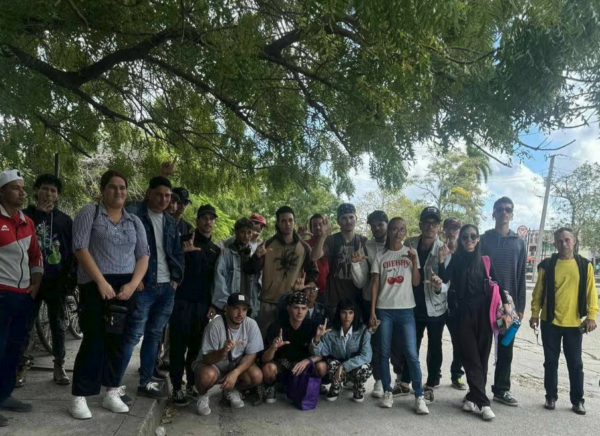
Paula Amador Lobón, a friend of the detainees, told El Toque that after the judicial proceeding Ernesto and Kamil were “transferred back to the Criminal Investigation prison.”
The week since the arrest of the El4tico creators has reaffirmed the value of public denunciation and civic mobilization to pressure authorities and, at the very least, expose the arbitrariness of the system. Without the numerous solidarity videos posted on social media, the international impact, and the filing of a habeas corpus petition, it is unlikely the court would have admitted the procedure or scheduled a hearing attended in the streets by relatives, friends, and supporters.
For example, in a similar but lesser-known case unfolding in Havana, not even a hearing was allowed. Judicial authorities of the regime flatly rejected the “special habeas corpus procedure filed against the detention” of Ankeilys Guerra, a 23-year-old arrested on January 14, 2026, for his comments on Facebook. He was transferred to a prison in Güines (Mayabeque province), according to his father, Eduardo Guerra, told El Toque.
Regarding the hearing for Ernesto Ricardo Medina and Kamil Zayas, the NGO Ciudadanía y Libertad reported a heavy police presence around the building. It also denounced that Yanet Rodriguez Sanchez, the activist who filed the habeas corpus, “was prevented by agents of the Ministry of the Interior from leaving her home when she was preparing to appear at the hearing.”
In a message delivered by Kamil Zayas to his friend Paula Amador to be published in case of his arrest, he wrote:
“I am not anyone special, nor a leader nor indispensable. I am just another Cuban, a small piece in an immense cause: that of wanting to live with dignity, of being able to tell the truth without fear. That of a Cuba where saying what one thinks does not cost one freedom or life.”
Freedom House continues to rank Cuba among the nations without Internet freedom, according to its latest report, which cites the “severe criminal sanctions related to online activities” imposed on Felix Daniel Pérez Ruiz (five years in prison) and Jose Manuel Barreiro Rouco (two and a half years) for critical posts on Facebook and WhatsApp, respectively.
“The Cuban one-party communist state bans political pluralism, prohibits independent media, represses dissent, and severely restricts basic civil liberties,” the NGO concludes.
The political imprisonment of Ernesto Ricardo Medina and Kamil Zayas Perez, as well as the arbitrary proceedings imposed on them, are evidence — once again — that the Cuban government is a despotic regime that finds no limits in national or international law when it comes to punishing dissent and independent information.
First published by El Toque in Spanish and translated and posted in English by Havana Times.