
Chile: Digital Media Key Under Kast’s Far-Right Government
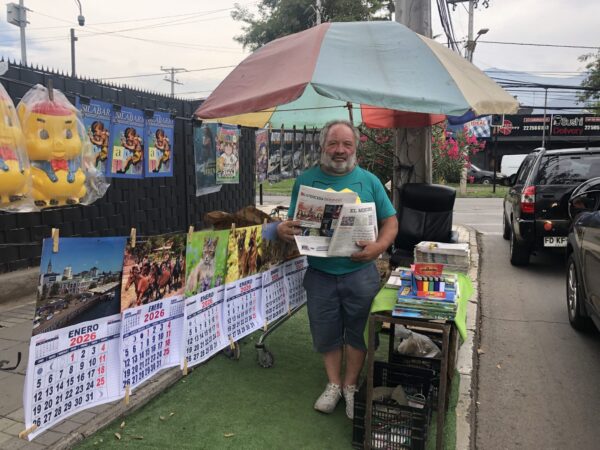
“Good journalism is more necessary than ever, but it is not only the task of journalists but also of intellectuals, academics and politicians.”
HAVANA TIMES — Alternative digital media will be key to balancing Chile’s unequal communications system which, as of March 11, will have far-right leader Jose Antonio Kast as president, the first openly pro-Pinochet figure since the end of the dictatorship in 1990.
Following the inauguration on March 11, there is hope that Chilean digital journalism will gain new relevance in disseminating independent, verified information that does not fall into the disinformation typical of platforms that promote the extreme right.
But these outlets face a critical economic situation that raises questions about their ability to compete with digital journalism financed by corporate conglomerates.
In Chile, for decades the newspaper tandem of El Mercurio and La Tercera, belonging to the Edwards and Saieh groups respectively, has controlled the print press and now extends its dominance to radio and the internet.
Both newspapers supported the military dictatorship of Augusto Pinochet (1973–1990) and later avoided bankruptcy through a favorable agreement sealed upon the return to democracy. Both conglomerates remain reference points in the press of this South American country.
In broadcast television, the Luksic business group controls the Catholic University channel and the Solari family owns Megavisión — two billionaires controlling the main signals.
State television barely survives, as it is forced to compete for commercial advertising under highly disadvantageous conditions.
In Chile there are no public radio stations or newspapers to counterbalance this media imbalance.
Maria Olivia Monckeberg, winner of the 2009 National Journalism Prize, told IPS that Chile “is an extremely harsh picture for journalism that defends democratic values and freedom of expression.”
“We are reaching a deficit situation in terms of media that practice independent journalism, with freedom of expression and investigative reporting,” said the journalist, who now teaches at the public University of Chile.
Author of the book The Magnates of the Press (2015), she affirms that media concentration has increased since then.

Impact of the Communication–Kast Pairing
With Kast’s arrival to the presidency — in his third attempt to become the occupant of La Moneda Palace — Monckeberg acknowledged: “I view the situation of journalism with concern and how we might do quality journalism in the service of the community.”
She teaches investigative journalism, considered key for democracy and oversight of public powers.
She adds that alternative digital journalism works with great effort but lacks the means and resources to build solid reporting teams.
In her view, the current development of these digital outlets is insufficient to advance pluralism or to expose irregularities and abuses.
Monckeberg argues that it is not digital media that are in debt to independent journalism, but the country itself, because it does not allocate resources to journalism.
“The Kast government has been possible due to a reversal produced in Chilean society precisely by those who campaigned and convinced people of situations and realities that are not such,” the journalist said.
She cited as an example the informational overdose used to portray the 2019 social uprising as an act of violence, without contextualizing the real problems raised by thousands of demonstrators, thus covering up what lay behind their demands to move toward a more real and social democracy.
“Good journalism is more necessary than ever, but it is not only the task of journalists — it is also the task of intellectuals, academics, and politicians,” she stressed.
A Working Experience
Journalist Mario Lopez directs Está Pasando, a local digital outlet with two years of development and 12 permanent journalists.
Lopez believes that during the Kast government “digital media will have a fundamental role because today you can compete on equal footing and clearly win with truth, good information, and good journalism.”
“Digital media outlets are going to make the difference with an extremist governmentese outlets are capable of mobilizing, helping people understand, and informing,” he emphasized.
He added that digital media understand and access social networks as a point of explosion and distribution for news.
Está Pasando far surpassed its self-imposed goal of two million visitors in its first 18 months. Most of those visitors are between 35 and 65 years old.
“We have demonstrated how one grows while maintaining a line of absolute independence,” he said.
He denounced attempts to suffocate digital journalism through lack of funding.
“The response is to go all in, call for unity, and promote associations of digital outlets in order to compete,” he asserted.
He warns that these outlets suffer government discrimination in the allocation of advertising, as those resources are concentrated in large media — something that also occurred during the outgoing government of Gabriel Boric.
This despite the fact that Boric’s government has faced an unrelenting critical siege from major conventional media since coming to power in March 2022, with disinformation campaigns about its policies and initiatives.
“That must have a legal response. If lawmakers care about democracy, they have to balance that situation,” he said.
The Difficult Road
Fernando Villagran is editor of La Nueva Mirada, a biweekly magazine that has circulated online for six years, always financially strained — despite its 18 collaborators, including journalists and other professionals, working unpaid.
“It has been difficult to pay for basic things like layout and social media distribution. Every year it’s an anguish to secure that minimal funding,” the journalist told IPS.
La Nueva Mirada is an analysis outlet with emphasis on economic, international, and especially cultural issues.
Villagran is critical of how center-left Concertación governments treated the media during the democratic transition after 1990.
“The outlets that were born during Pinochet’s dictatorship (Apsi, Análisis, Cauce, Fortín Mapocho, La Época) were very important in recovering democracy, but once it arrived they had zero possibility of expanding,” he said.
He recalls that the government of Patricio Aylwin (1990–1994) made a mistaken bet, believing it could influence El Mercurio and La Tercera.
“It was a very complex tension that ended with all democratic media on the ground and the outlets that supported the dictatorship strengthened and with their debts wiped clean,” he criticized.
For this journalist, the rise of digital media reproduces that inequality.
“There are very powerful digital outlets financed by economic groups and others of us who struggle greatly to survive. A reality is taking shape that reinforces a counterweight that has favored the most conservative positions resistant to democratic change,” he said.
Villagran is confident that current and future digital media will help defend democracy, just as independent outlets created before the internet once did.
“If submission to the empire of censorship or hiding what was happening in society did not occur during the dictatorship, it should occur even less now,” he asserted.
Loreto Rebolledo, dean of the Faculty of Communications at the University of Chile, emphasized in an interview with IPS that digital media are generally the ones that expose corrupt practices of power or collusion between political and economic elites.
She expressed dismay that during the recent forest fires in southern Chile, major media showed only the horror, the people who lost their homes, and firefighters’ work, “but nobody spoke about the forestry companies surrounding those towns and suffocating them.”
“That is not said because there are strong interests — there is Corma (the timber business association) and the policy installed by Pinochet subsidizing those forestry companies,” she said, noting those policies remain in place.
She also argued that a very large sector of Chileans simply does not stay informed, either because they do not know how or lack the habit.
In her view, media control by conservative sectors is an established and accepted reality in Chile.
“There are very uninformed segments of the population, and that can explain why easy narratives are bought and why we have Kast and such a high vote,” she said, recalling that the president-elect won the runoff on December 14 with 58% of the vote.
According to the Rebolledo fear promoted by television played a role, as did the public’s failure to verify information.
“When the sense of risk increases and you have people who are afraid, they want a strong hand to control things,” she explained.
According to Rebolledo, today’s youth get informed basically through social networks and digital media without reading print outlets.
“The cellphone connects them to the world. They don’t even use computers — they do everything from their phones and through social networks where they get informed,” she explained.
She warns this brings significant biases and a tendency to accept disinformation as if it were information.
“Certain reports of reality are generated based on algorithms and artificial intelligence. And as one searches for this, you end up reading and hearing things that confirm what you already believe and reinforce prejudice against others or mistaken ideas. It closes you off instead of opening things up,” she said.
She added that young people do not adequately select information or know how to distinguish truth from falsehood.
She concluded that both information and disinformation levels are very high, and education should teach how to filter them.
“Artificial intelligence will operate ever more strongly and current networks will multiply. So people must learn, from childhood, to discriminate and distinguish truth from lies,” she concluded.
First published in Spanish by IPS and translated and posed in English by Havana Times.