
Cuba: Canadian Mining Co. Sherritt Suspends Moa Operations
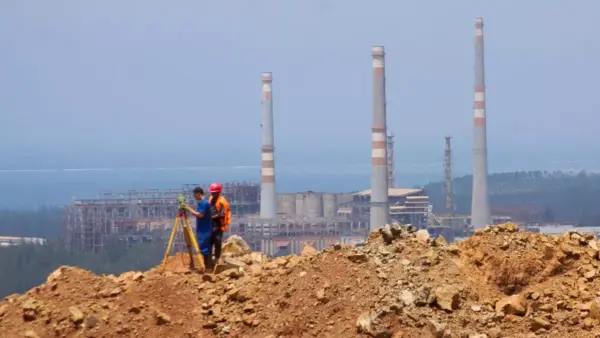
Businessman William Pitt fears the consequences for the natural gas production that the Canadian company manages and supplies to the population of Havana.
HAVANA TIMES – “It was written in the clouds!” For businessman William Pitt, the suspension of Sherritt’s operations at the Moa mines in Holguín, due to a lack of fuel, announced this Tuesday, was more than predictable.
“Little by little they approached the failure, and not even the administrative change could stop its decline,” said the US American speaking to 14ymedio. He was referring to the December 8th appointment of Peter Hancock as interim director of the company, replacing Leon Binedell, who had served as CEO for the previous four years. His family had had multiple mining properties expropriated by the regime in 1960, including the one operated by the Canadian giant in Holguín.
According to Pitt’s analysis, Sherritt’s decision—which he asserted is not having “an immediate impact” on the refinery it operates in Fort Saskatchewan, Alberta, Canada, as it continues to produce nickel and cobalt “finished for sale”—means that “no more nickel and cobalt sulfide will arrive from Cuba to be refined into nearly pure blocks of nickel or cobalt briquettes” and that “they will only be able to process the sulfides they already have in storage.” The company estimates it has enough raw material to last until approximately mid-April.
The most significant point, the businessman explains, is that the production process for the nickel-cobalt sulfide used by Sherritt is a “continuous process,” meaning “it is not produced in batches but in series.” He continues: “Only at the very end, when the powder is put into its bags for shipment to Canada, can it be considered as a batch.” What does this mean? “Restarting production in Moa is very costly and very difficult.” Therefore, Pitt summarizes, “this plant shutdown is going to be a long one.”
To survive, the specialist speculates, the mining giant will have to sell all the nickel and cobalt it has stored in Canada. There’s an added and serious difficulty: the Cuban government was paying Sherritt with cobalt to repay its $250 million debt, and while production is halted it will no longer be able to do so.
Pitt believes that natural gas production is also at risk
This is not just another default by Havana, as it could affect the plants that the Canadian company operates with Energas in Mayabeque and Matanzas. “Cuba will have no way to pay for the 50% that Sherritt produces in Boca de Jaruco, Puerto Escondido, and Varadero,” Pitt asserts. The consequences could be disastrous for Havana residents, who directly benefit from the cooking gas produced by these two plants and delivered to them via pipeline. “If everything was working well,” the businessman recalls, “it was because Sherritt was managing the production.”
On the other hand, Pitt observes, there are the “thousands of Cubans who work in mining” and the people of Moa themselves, “who depend almost exclusively on Sherritt’s work,” and who now see their jobs end and, with them, the food subsidies they received. The government fully controls another mine and the Comandante Che Guevara plant and “may try to keep it operating by force even if it loses money.”
The businessman advises, with a note of optimism, that the universities of the Island “should not stop training future professionals in the industry, because sooner or later, Cuba will have a global role in mining.”
He is harsher on Sherritt, predicting very little chance of surviving the losses, “when the only operation that is economically profitable for it is fertilizer production in Canada,” for which it used raw materials extracted from Moa. “On the stock exchanges, Sherritt’s entire economic value is plummeting, just like Cuba’s.” He doesn’t regret it: “They put all their hopes in Cuba and have lost everything in Cuba.”
Finally, one thing is certain for him: Sherritt’s experience spells the end of all expectations placed on the Island by the Australian companies Melbana and Antilles Gold : “The investments in oil and copper and gold mines that have been waiting for years to materialize have no chance whatsoever of being implemented.”
Translated by Translating Cuba