
Havana, Cuba in Critical Condition
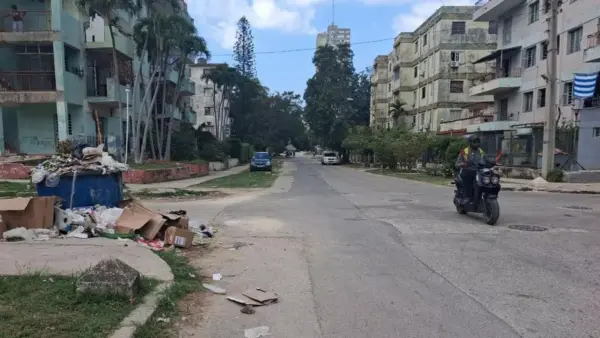
Cuba’s capital is living through its worst moments: garbage on every corner, empty markets, sky-high prices, streets deserted due to the fuel crisis.
HAVANA TIMES — When a cyclone approaches, Havana’s streets take on a different speed. People quicken their pace, vendors push their goods more insistently, and small businesses rush to close before the wind begins to blow. This Friday no hurricane is expected, yet the city I walk through seems to be bracing for a monster that surpasses any level on the Saffir-Simpson scale. The fear isn’t caused by possible gusts but instead by the total paralysis of a country without fuel.
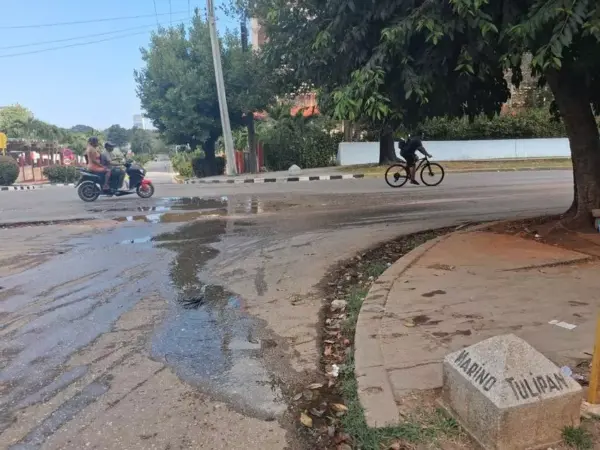
At the market on Tulipán Street several stalls await me, already closed due to the energy crisis. “I’m not coming back tomorrow, we’re in a critical condition,” a vendor shouts into his phone. His stand, which until a few days ago was packed with imported products, now sits bare. People prefer foods that don’t need refrigeration, fearing that the blackouts — which have multiplied in recent days — will continue increasing until the city is left completely in the dark.
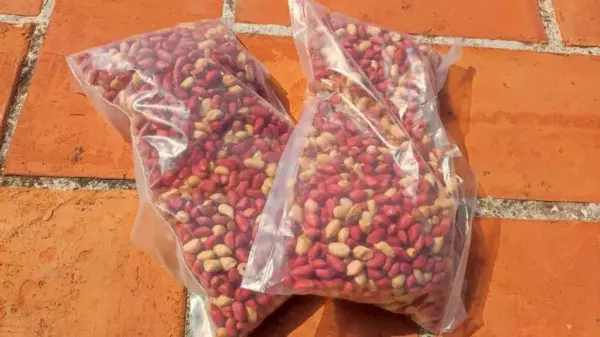
I put two bags of raw peanuts in my sack. They don’t need low temperatures, they’re nutritious, and if the cooking gas service fails it won’t be much of a sacrifice to eat them raw. I skip the eggs, even though I need them. They’re only sold by the carton — 30 units for 3,200 pesos — and I fear they’ll spoil if the outages drag on. I add some onions and a bunch of cilantro. What little I’ve bought costs me more than 4,000 pesos, above an average monthly pension.
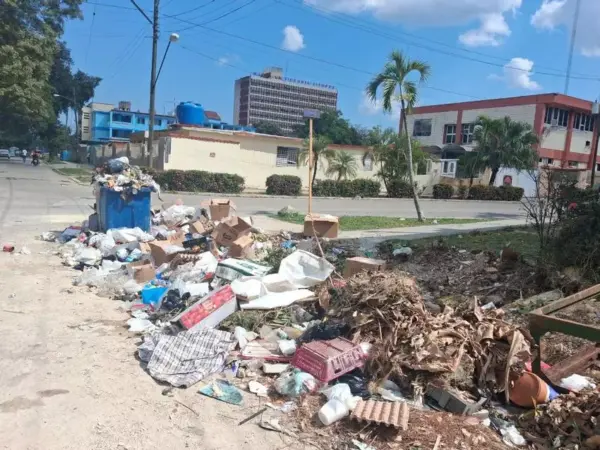
A young man jokes that soon we’ll have to come to the market with a wheelbarrow because the Cuban peso keeps devaluing while prices keep rising. I imagine myself pushing banknotes in one of those improvised carts I used as a child to haul water home in Centro Habana. Life has that way of returning us to a point we thought we had overcome — and doing so in a way that makes us nostalgic for the days when we carried water, not useless papers, toward nearly empty markets.
Throughout the area I walk, it feels as if a hand from the heavens has dumped an enormous garbage bin. To the waste piled on corners — mountains of cardboard, bags, and plastic — are added the scattered refuse everywhere else. I can’t scan a single square meter without seeing filth, breakage, or holes. I feel somewhat broken. My calves ache from climbing up and down 14 floors of stairs in the absence of electricity to run the elevator. I banged my elbow lifting bags of soil to plant spices on my terrace, facing the “zero option,” and at night I sleep little, startled by electricity that comes and goes, producing buzzes, clicks, and shouts from the neighborhood.
Now, outside the market, the rush is obvious. “Get your last garlic here before I leave,” a shirtless man shouts beside a teenage girl. It’s barely nine in the morning, so his threat has nothing to do with market hours. “I’m not coming anymore — take advantage now,” he insists, making clear this is the last day he has transport to reach Estancia Street, riddled with potholes and traditionally lined — if inspectors don’t show up — with stalls selling everything from Chinese balm and disposable razors to liquefied gas cylinders.
But today the film is running even faster. Like those early cinema scenes shot with fewer frames per second — which today look like wind-up dolls moving frantically — my neighbors and I also seem to be “out of revolutions,” never better said. The contrast couldn’t be sharper: above, a tourist-postcard blue sky; below, we move nervously through filth and despair.
A motorbike brushes past me because I’m walking in the street. Sidewalks are devastated, dangerous for ankles. But the driver doesn’t insult me or sarcastically ask if I have “license plates.” A strange mutual understanding — putting oneself in the other’s shoes amid the collapse we’re living — seems to have spread around the market. In my dirty neighborhood, at least for these days, “the noble and the villain, the great man and the worm dance and shake hands,” or, closer to reality: they suffer together and try not to crush one another.
An elderly woman moves close to me while I’m buying some tiny carnations with more leaves than petals. “Give me something to eat,” she says softly. The skin on her face clings so tightly to her skull I can make out every tendon, every muscle beneath. One no longer knows what amount begins to count as decent charity. If I give her 50 pesos, will she feel insulted because it won’t even buy an egg? I wonder. Is 100 still too little for this old woman to eat something? Even generosity in times of monetary chaos is difficult. One never knows whether these useless colored papers that make up our national currency will help or humiliate someone.
There’s also gray dust covering everything. It falls over our heads. It comes from garbage dumps that have been set on fire. If I go out on my balcony, I see them smoking here and there, dotting Havana’s geography. The city smells like a medieval village where flames try to do the job that, in modern times, belongs to municipal services. A neighbor tells me her asthma attacks have multiplied, her eyes constantly water, and she shuts herself in her room under the sheets to see if the stench and smoke won’t reach her.
I quicken my step near the heap of trash closest to our building. Dominating the landscape, a sign over the Ministry of Transportation reads: “Until victory, always.” A young man rummages through the waste. I wait for him to finish so I can take a photo. If poverty once showed itself more starkly among the elderly, now there’s a sector of Cuban children and teenagers whose faces bear the marks of hunger — that extreme thinness and yellowish tone of those who eat only occasional small portions of poor food.
I return home, passing a shop run by a small private business. The power is out. The former garage converted into a small grocery looks like a dark cave. A customer complains he can’t make an electronic payment because there’s no electricity or data connection. The clerk shrugs: “It’s enough that we’re open — tomorrow we don’t even know if we’ll be able to.” A farewell atmosphere hangs over everything. No one knows if the neighborhood store will open next week, if the electric tricycle driver who hauls goods around will manage to charge his battery, if the chronically ill patient nearby will survive the lack of transport to reach an emergency room. We’re all saying goodbye — in fast motion, too.
I reach the base of my concrete block. I joke with a neighbor who says it’s the third time today he’s seen me climbing the stairs. “I’m training for a marathon,” I reply. Yes, I’m preparing for a long-distance race — though for the stretch ahead it takes more inner strength than strong knees. Finally, I reach the top. I look out. Smoke from another garbage fire has risen on the horizon. I think it’s coming from over there — from the neighborhood where I hauled water as a child.
First published in Spanish by 14ymedio and translated and posted in English by Havana Times.