
Chile Goes from Inspiring Change to a Conservative Backlash
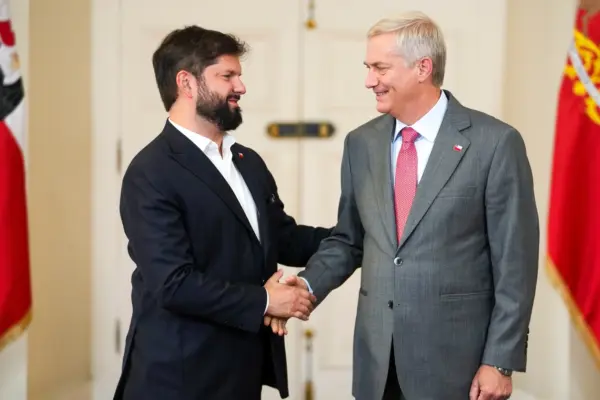
HAVANA TIMES – The recent victory of Jose Antonio Kast in the runoff of the 2025 presidential elections, where he decisively defeated Jeannette Jara, confirms the bleakest scenario many of us feared. We find ourselves in a deeply wounded Chile, where the far right has capitalized on social discontent to take up residence in La Moneda.
For those of us who aspire to greater justice and equality in the country, this result is a devastating blow. It arrives after a failed constituent assembly process, a Gabriel Boric government that did not meet transformative expectations, and the steady strengthening of the far right. This force, as in other parts of the world, has imposed an anti-rights agenda that promotes a minimal neoliberal state, racism against migrants and Indigenous peoples, homophobia and transphobia, denial of the climate crisis, and outright contempt for the demands of the feminist movement.
These elections unfolded in a political climate heavily tilted toward the far right, where repressive security discourses —à la Bukele—, the criminalization of migration —à la Trump—, and the idea that the public sector is inherently corrupt —à la Milei— penetrated deeply into Chilean society. As a result, the idea of an emergency government under José Antonio Kast took strong hold.
However, this climate did not arise out of nowhere; it emerged under conditions of social demobilization and a complete lack of articulation of demands, unlike the years preceding the 2019 social uprising. People embraced narratives that portray crime as out of control, immigration as overflowing, and the economy as a total failure, attributing all the blame to the outgoing government and thus installing the idea that the country is falling apart.
Why did this happen? The shift responds not only to the far right’s ability to connect with the anger of Chileans —who stopped prioritizing inequality and corporate abuse, as they did at the height of the social uprising— but also to the erratic actions of Gabriel Boric’s government, which failed to understand its role during the constituent assembly process and over these four years in the executive.
From the time Boric took office in March 2022 until the plebiscite on a new constitution of September 4 of that year, his government displayed a passive, fearful performance, incapable of generating the political and economic conditions needed to sustain a process that required an executive branch committed to approving the new constitution. I am not talking about electoral interventionism, but rather about placing structural economic reforms at the center—reforms that would decisively improve the lives of Chileans, who were facing growing post-pandemic impoverishment, with unemployment, low wages, and deepening debt.
Instead, Boric opted for neoliberal fiscal responsibility policies, embodied in a finance minister like Mario Marcel, a representative of that left of the 1990s and 2000s from the former Concertación coalition governments. The government subordinated itself to a wealth-concentrating model without the capacity to forge an alternative project that could generate hope.
The worst part was that, after the defeat of the September 4, 2022 plebicite, the government explicitly renounced transformation, prioritizing stabilization and normalization of the country. It gave in to conservative discourse, subordinating itself to the right’s security-focused and anti-immigrant approach, and abandoned the transformative drive we had expected from the outset. For example, it presented itself as the first ecological government, when in practice it merely deepened the prevailing extractivism. This disappointed many of us who supported it and were active in its ranks.
I do not deny that there were noteworthy policies during these years, but at a structural level the government failed and renounced the construction of a transformative and anti-neoliberal narrative—the very narrative that led it to win the presidential election in 2021. In fact, compared to Michelle Bachelet’s last government, which at least established a narrative and implemented profound educational reforms, Boric’s government cannot claim similar advances, reflecting its own incapacity.
As for Jeannette Jara’s campaign, her agenda focused on a moderate program, presenting herself as a center-left candidate in a desperate attempt to capture a broad vote beyond ideologized sectors. I agree with those who criticize her moderation: in a disastrous scenario for transformative projects, her candidacy was confusing, contradictory, and lacked a clear narrative. Despite her personal qualities of charisma, empathy, and an inspiring story of effort, her wavering discourse generated distrust, as it failed to clarify what she truly wanted for the country.
Her alliances were mainly partisan, without strong ties to social society, limiting her reach and positioning her as “more of the same,” part of a closed political elite. She did not establish a transformative narrative out of fear of losing support to the far right—a serious mistake in a context of compulsory voting, where the depoliticized electorate is massive. This contributed to her defeat.
In conclusion, the constitutional reform plebiscite defeat of September 4, 2022 left such a deep trauma on the Chilean left that it not only prevented us from critically examining the experience and rising again, but also denied the possibility of dreaming of a different country. Kast’s victory is the price of that paralysis. We now face a government that will deepen inequalities and violence. It is urgent that, even as we continue to believe in a different country, we reorganize, overcome the traumas, and recover the ability to once again articulate demands of different kinds. Only then can we resist and build alternatives in the face of this setback.
The left ruled Chile for a number of years. So, where is the justice and equality from when you had the opportunity to create it? How did leftist justice and equality work out in your mentor country Cuba?
Chile goes from inspiring change to booting out the Marxist! Hooray