
The Country of the Sigüaraya
By Eduardo N. Cordovi Hernandez
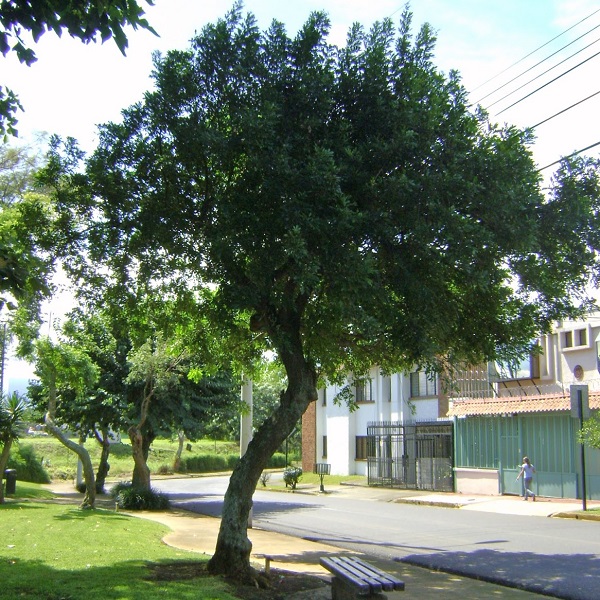
HAVANA TIMES — The sigüaraya is a Cuban tree of exuberant foliage. Botany classifies it as Trichilia havanensis. In Cuban folklore it is attributed to Changó, the orisha who, through syncretism, is identified with Saint Barbara.
The well-known and widely acclaimed “Barbaro del ritmo,” Benny More, made it popular in his song Mata siguaraya, in which he says that “without permission it cannot be cut down” because “it has power.” In parallel and/or afterward, other no less glorious figures contributed to its worldwide diffusion, such as the Venezuelan Oscar D’León and the very Cuban Celia Cruz, among others, making it a recurrent obligatory theme for all those who travel the path of son.
This plant also entered the literary domain in 2017 as the title of a book by the Cuban writer Jamila Medina Ríos: País de la siguaraya.
The fact is that, in one way or another, “this plant” has come to describe, in popular imagination, one of the fundamental characteristics of our geographical domain in the national idiosyncrasy; and so it has been said, I believe since the early days of the nascent republic, that Cuba is “the country of the sigüaraya.” Competing with the royal palm as the nation’s emblematic tree, in order to represent Cuba in all its magnificent and hyperbolic exaggeration of contradictions and absurdity.
And now let us get to the heart of the matter.
I live in Lawton. A neighborhood on the outskirts of Havana that could well be called marginal. But since as far back as I can remember, and from the economic point of view, it was a privileged neighborhood, since it had a growing residential area called Vista Alegre or Alturas de Lawton, apart from many other favorable conditions for the growth and development of small private entrepreneurial capital toward the lower or older zone.
That is, corner stores, sugarcane-juice stands, bakeries, pharmacies, fruit and vegetable stalls, laundries, shoe shiners, clothing stores, bars and cafés, hardware stores, etc. It also had two large cattle slaughterhouses and two bus terminals with several routes to remote places in the capital and beyond, which were centers that offered employment to hundreds of people.
As if that were not enough, there were six movie theaters, one of them a movie-theater stage where international figures performed, such as the Chilean Oswaldo Gomez, known as El Indio Araucano, and the Argentine Luis Aguile, both very well-known singers in the late 1950s throughout the Americas and Spain. And although not exactly in Lawton, but extremely close, there was also the renowned Alí Bar, a small cabaret that competed in fame with the Mecca of “Paradise Under the Stars” that was Tropicana.
Even at the end of the twentieth century, Lawton still maintained a subterranean high concentration of economic power thanks to the illegal cattle-meat trade, the product of corrupt work by the competent authorities; that is, theft under the protection of a certain legality, but which also included the competition of illegal theft by gangs that gave rise to attacks, crimes…
All of which led to the appearance of private gaming rooms, where people played silo, cubilete, or la siete y media with cards, or fañunga with dominoes. Pool tables appeared and I even heard of a house that had a roulette wheel. And people lived their own homegrown gangster movie, with street corner shootings and all.
But the contradictions go in crescendo and the absurdities become ever more fantastic. So disproportionately that today we reach the extreme in which the great hierarchs attempt to lead the people into an extraordinary war. They exhort them to defend, at the price of their lives, “the conquered conquests”—that is: everything that does not exist, although it once did, and everything that under their leadership will not be had again. And when that occurs, anyone says: This is the country of the sigüaraya!