
Housing Crisis in Cuba: Homes That Hold Up Dreams
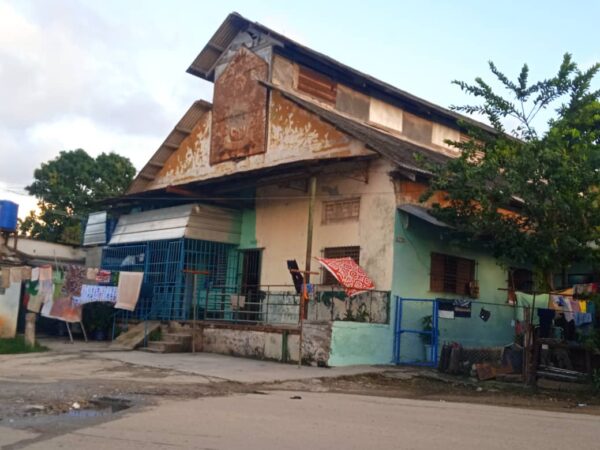
HAVANA TIMES – In Cuba, housing is not just a roof: it is a broken promise, an old wound that cuts across generations. At dawn, when the light reveals cracked façades and balconies held up by improvised props, the housing crisis emerges as one of the country’s deepest and most persistent dramas. It is not a sudden catastrophe, but a slow, silent everyday collapse.
The problem has historical roots. After 1959, the Revolution declared housing a social right. The Urban Reform eliminated private renting and redistributed properties with the promise that no one would be left without a home. For a time, that policy eased inherited inequalities, but it also paralyzed private construction and left the State as almost the sole party responsible for building and maintaining the housing stock. Over the years, a lack of resources, bureaucracy, the aging of cities, and the absence of a solid construction industry accumulated into a deficit that only continued to grow.
Today, thousands of homes are in fair or poor condition; many are at risk of collapse. Family overcrowding has become the norm: three and even four generations sharing the same space, rooms divided by curtains, improvised kitchens, shared bathrooms for several families. The lack of privacy generates tensions, conflicts, and emotional strain that never appear in official statistics.
Faced with the impossibility of accessing legal housing, squatting has proliferated. Entire families settle in abandoned houses, former factories, closed schools, warehouses, and disused hotels. They do not occupy by choice, but out of necessity. They live without property titles, with precarious services, under the constant threat of eviction or structural collapse. Each day is a gamble between staying or having nowhere to go.
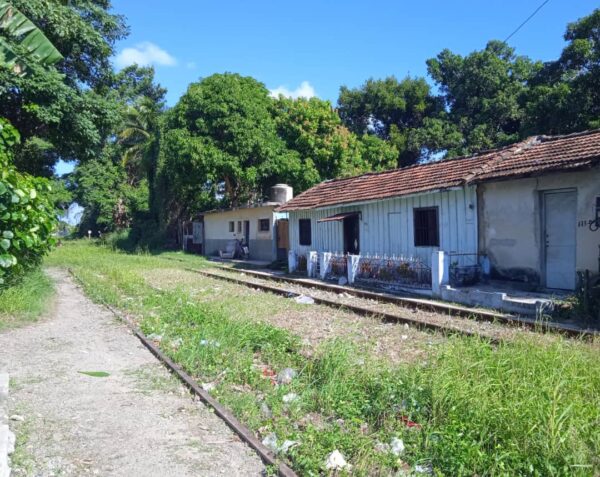
On the outskirts of cities, along railway lines where no train runs anymore, improvised settlements rise up. Houses built from recycled blocks, old wood, and zinc roofs line the tracks. It is a powerful image: homes growing on the edge of a path that no longer leads anywhere. There, children play, families organize themselves, and survival goes on.
The housing crisis also fuels internal migration. From the eastern part of the country, thousands of people move toward Havana and other cities in the west in search of opportunities. They arrive without housing, crowd in with relatives, or end up occupying abandoned spaces. For many, that movement is only a stopover: the lack of housing and of a future ultimately become one of the engines driving the exodus off the island.
The consequences are deep and long-lasting. Living without a dignified home affects physical and mental health, fractures family relationships, and shapes the development of new generations. It is not only about walls that collapse, but about lives sustained under extreme conditions.
Having been visiting Cuba for the last seventeen years I can understand what you are talking about.
I visit with groups of fishermen and realising how lucky we are, I persuade all clients to bring as many “extras” as possible to help the locals in the village that we stay in, as possible.
I wish we could send some of America’s young people to Cuba so they can see what communism and socialism actually looks like.
I left Cuba as a child in February 1961.
Cuba is a complete disaster due to Castro and his supporters. The stories of every communist country are exemplified by those of Venezuela and Cuba.
Communism at it’s finest!!!
I was in Santiago de Cuba in early December 2025. The housing situation is tragic with what looks like make shift homes and homes in disrepair. Hurricane Melissa didn’t help matters, damaged homes remain damaged. One home I saw had a portion of the roof blown off, and no repairs are coming. A church we visited had a small portion of the roof torn off but was repaired thanks to church help and contributions. The Cuban people are lovely and resourceful if given the opportunity to take care of their homes and businesses.
I went to Cuba about 6 yrs ago! It is obvious the decay of housing, specially in Havana and Cienfuego …It is a pity and a shame to let those bldgs deteriorate….
They claim this is “imposed by the US”. Explain how anyone reasons as such. What does the Cuban government do for its most needy citizens and why the government blames a foreign country for issues that go unsolved for decades upon decades.
My wife lives in Pinar Del Rio. There’s no electricity but her family is okay.
Can Cubans squat in abandoned mansions?
Sad situation in the world, homelessness in capitalist New York, and Communist Havana.