
Cuba’s Food Dependence on the USA Grows
With purchases of US $355 million this year
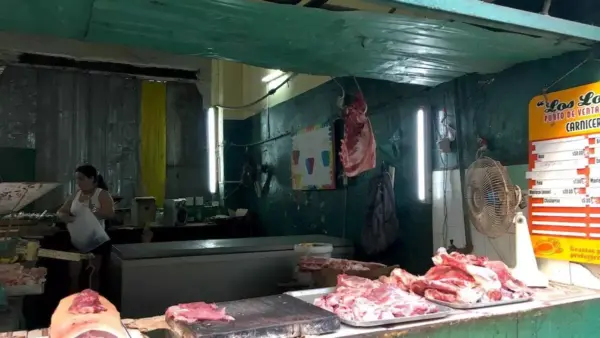
Imports of pork, sugar, coffee, grains and animal feed reach record highs despite advance payment required.
HAVANA TIMES – Food sovereignty and the US embargo, mantras repeated daily by Cuban authorities, have been further undermined this year. During the first nine months of 2025, Cuba imported $355 million worth of agricultural products from the US, 15% more than during the same period last year, according to figures from the US Department of Agriculture.
One of the products that saw the largest price increase was pork. Between January and September, the island purchased $33.6 million worth of this commodity from its neighbor, more than double the amount during the same period in 2014, when it spent $16.3 million.
The increase in pork imports from the US comes amid a crisis in the island’s agricultural sector. Last year, the country produced only 9,000 tons, almost half of the 16,500 tons produced two years prior, and 95.5% less than in 2018, when the sector reached 200,000 tons. According to farmers, these poor figures are due, in part, to a lack of animal feed, as well as the difficulty in finding labor.
Cuba’s dependence on the US market is hitting hard for products that were once flagships of the country’s national production. Sugar, of which Cuba was once the world’s leading producer, is now imported. This year, the island spent $14.9 million on sugar from the US, while in 2024 it spent $11.1 million.
[Editor’s note: Food and medicine sales from the US to Cuba were exempted from the US embargo since 2001, however credit is not allowed.]
Traditionally, Cuba consumed 700,000 tons of sugar and exported the rest, but with current production levels, the situation has changed dramatically: now it is forced to import much of the sugar it needs for its population and is unable to fulfill its export contracts. And there is an even more serious symptom: since at least 2020, every sugar harvest on the island has been ranked as the worst in the last 100 years.
Coffee imports also increased, another sector in decline. Imports from the United States rose 32%, from $8.4 million in 2024 to $11 million in the first nine months of this year. This dependence on US coffee sellers is due to the collapse in domestic production, which, according to the National Bureau of Statistics and Information, has fallen 51% in the last five years.
As for the low production in the country, priority is given to selling it abroad, which has left Cubans helpless, since coffee does not reach the bodegas (ration stores). It is sold very expensively in the informal market or is of very poor quality if it can be acquired – with a bad mixture of equal parts coffee and chickpeas.
Tobacco imports from the United States also saw a considerable increase. Cuba purchased $355,000 worth of the leaves, an 83% increase compared to last year’s $194,000. This surge comes after the country experienced a record high in sales of premium tobacco on the international market, although domestic cigarette production is no longer sufficient to meet the demand on the island, unlike in the past.
Another category with increased imports from the United States was grains and animal feed. This year, the figure nearly quadrupled, rising from $6.8 million to $23.8 million. This increase is also a record for the last five years, as imports had fluctuated between $6 million and $9 million since 2020.
Today, Cuba relies on imports for more than 80% of its basic food needs. The country receives rice from Guyana, Vietnam, and China, pasta from Turkey, canned sardines from Venezuela, and grains from Portugal, among other imports.
Translated by Translating Cuba.
The strong. Innovative, hardworking, creative Cubans who are giving their lives to keep Cuba functional are no joke. Unkind comments are lacking compassion for humanity, no matter the state where they reside.
Total blockade of Venezuelan oil! Maybe Trump can bring two regimes at once? Can Cuba afford to purchase enough oil to replace deliveries from Maduro???
So much for the “US embargo”. This confirms that Cuba is bankrupt due to mismanagement, greed and corruption. With each passing day the population gets hungrier, lives with little healthcare and increased diseases, all the while living in the dark due to the power grid’s collapse. And yet the Communist party and military elite live like billionaires. Tragically sad that the average Cuban is a prisoner in their bankrupt homeland.
Truly a joke of a country.