
Denationalized Nicas: “The Criminal Theft of Our Pensions”
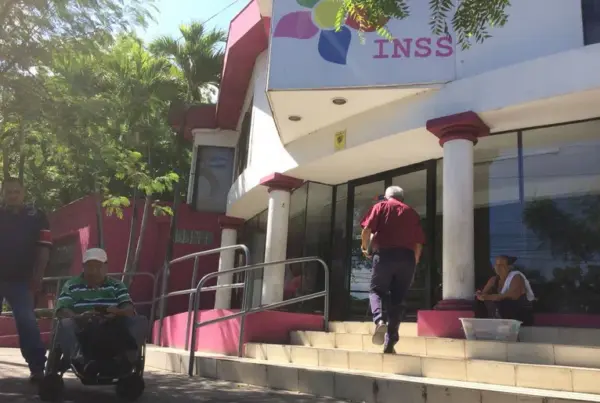
Exiles, who are retirees, denounce the theft of their pensions for three consecutive years and many depend on their children to survive.
By Ivan Olivares (Confidencial)
HAVANA TIMES – Those who suffered the stripping of their nationality, exile, and the confiscation of their assets and their pensions as retirees of the Nicaraguan Social Security Institute (INSS) now often depend on the solidarity of their children to survive.
On February 9 and 15, three consecutive years since the theft of their pensions were marked—an act they describe as “criminal” and “illegal.” Three people denationalized by the regime told CONFIDENCIAL the details of a frustrating legal process that has only found partial relief in the support received from their descendants.
The first affected were the 222 released political prisoners forcibly placed on the so-called “Freedom Flight.” In the early hours of Thursday, February 9, 2023, that number of political prisoners boarded a charter flight that took them from Managua to Washington. Within hours, they were stripped of their nationality—and their pensions. Six days later, on February 15, another group of 94 Nicaraguan citizens received the same treatment. On September 5, 2024, another 135 released political prisoners were added to the list when they were sent to Guatemala.
Economist Enrique Saenz was part of the group of 94.
Of that day Saenz recalls that “when the regime announced the cancellation of nationality for the group of 94 Nicaraguans, it was without any trial. Simply, a man in a robe made an announcement. He said he was reading the sentence of a trial that had never taken place.” Immediately afterward, the INSS board of directors, “without any legal basis,” proceeded to cancel pensions that were already in force and to erase the contribution records of those who had not yet begun receiving one.
Saenz explains that he depended on that pension to survive in exile. For that reason, he believes that taking it away from him—and from many others—undermines their chances of survival. “Whoever receives a pension is someone of advanced age, in a condition of greater physical vulnerability. Exposed to more illnesses and contagion, suffering chronic diseases,” he detailed.
Something similar occurs when evaluating these people’s ability to fend for themselves. He notes that this is an elderly population, with fewer employment opportunities and fewer chances to practice a profession. By nullifying these people’s academic records, “they reinforced that criminal action, because it attacks their survival,” he assessed.
Confiscation came much earlier
The economic limitations of Gerardo’s family did not begin with exile. They actually started almost 20 months earlier, in June 2021, when he was arrested without any trial.
“My wife confirmed to me that when they put me in prison, they automatically took away my pension. They cut it immediately, so this confiscation began much earlier—not from the moment of denationalization. These people respect nothing,” he says.
The initial jubilation over his release in February 2023 was followed by a period of uncertainty when he realized his pension would not be returned. After spending time in the United States, he and his wife chose to settle in a Central American country, where they are closer to their families—and can survive with less money.
He recounts that he once secured a contract to write an academic text on some recent historical processes in the region. When he was paid, he used the money to cover rent. The rest of the time, his children contribute to cover other expenses, starting with a small apartment where the couple lives “with modesty and austerity.”
They also provide help to purchase food and medicine.
An additional strain on this elderly couple’s finances is medical expenses. By way of example, he shares that he frequently must see a cardiologist “because the aftereffects of prison left me ill, but no one covers that.” Worse still, he cannot turn to the public health system of the country where he resides “because now I am Spanish.”
A huge debt
Manuela received a generous pension by Nicaraguan standards—slightly more than 30,000 córdobas at the time. Over these 36 months, more than one million córdobas ($27,000 USD) have been taken by the State. The unusual punishment of seeing that income confiscated caused such anxiety that they explored equally unusual options. She and another group of those affected made a proposal to the Government of Spain, which had protected them by granting nationality.
The proposal was that they be given “a kind of recoverable loan once we managed to get the Nicaraguan State to return our pensions, but it didn’t move forward. It didn’t get past the first step,” she explains. The idea was that the funds provided would be recorded as a debt owed by the Nicaraguan State.
What they were told instead was that the Spanish State has a minimum non-contributory pension of 600 euros per person, granted to those who had not contributed to Spanish Social Security. As new citizens, they had one year to apply for it—provided they lived in Spain.
Most of those who took Spanish nationality—more than a hundred—do not live in Spanish territory, so only some of the Nicaraguans who accepted that offer obtained the minimum pension.
After their right to a nationality was violated, they filed a complaint with the Inter-American Commission on Human Rights. In addition to protesting the denial of that basic human right, they also asked the body to safeguard their right to recover their pensions, verifying that they were retirees and how much they had received.
If for Manuela and her partner it is already a serious problem to claim that right, it is even more so for those who were on the verge of retirement. Because they had not yet been assigned a pension, and had no documentation to support a claim.
Manuela confesses that at present she and her partner survive thanks to their children. Although she never imagined that at this age she would have to look for paid work, she feels that if she lived in the United States at least “I could go clean houses—but here in Costa Rica that’s not realistic.”
First published in Spanish by Confidencial and translated and posted in English by Havana Times.