
Nicaragua: Roberto Samcam, Person of the Year 2025
Killed but not silenced
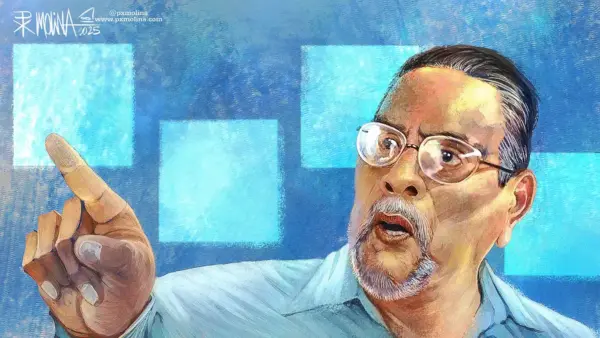
Confidencial names the retired major, originally from Jinotepe and assassinated in Costa Rica, as Person of the Year. His legacy lives on in the demand for justice.
HAVANA TIMES – “The world of intelligence is pretty fucked up. You can’t bring anyone to your house, you can’t tell anyone where you live (…) because the regime infiltrates, intelligence work is highly effective. You have to protect yourself,” warned retired Nicaraguan Army Major Roberto Samcam, nine months before his assassination, during an interview with the program La Mesa Redonda.
Samcam repeated this warning several times in other interviews, denouncing the presence of intelligence cells sent from Managua and operating in Costa Rica out of the Nicaraguan embassy in San José. In 2019, he even reported to the Directorate of Intelligence and Security (DIS) that he was being followed. But he decided not to stay silent and continued speaking out.
On June 18, 2025, in his last interview with the program Café con Voz, he spoke about the country’s future in the event of Daniel Ortega’s death and the dynastic succession by his wife, Rosario Murillo. Less than 24 hours later, he was shot and killed at the door of his home.
Roberto Samcam has been posthumously selected by CONFIDENCIAL’s Editorial Board as Person of the Year 2025, in recognition of his work documenting repression, particularly the Nicaraguan Army’s involvement in the massacre during the 2018 protests. This honor pays tribute to his legacy, which lives on in the demand for justice by Nicaraguans in exile who have been affected by transnational repression.
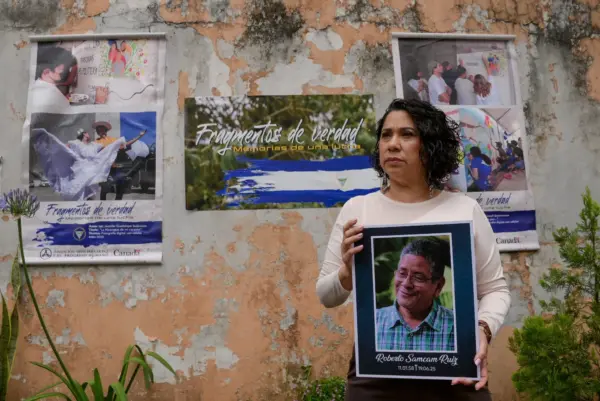
Upon receiving the news, his wife Claudia Vargas expressed gratitude for the tribute to a man who dedicated his final years to denouncing the crimes against humanity committed by Daniel Ortega and Rosario Murillo. For her, the recognition is not just for him: “I accept it on behalf of all the victims of repression, of those killed in Carazo… and of the people who have chosen to continue this struggle from hiding,” she asserts.
The honor is received by his son, Gabriel Samcam, with a mixture of joy and sadness. “With great joy because I think it reflects the spirit, the struggle, the character, and the contributions my father made to our fight to bring democracy to Nicaragua. But at the same time, it saddens me that these circumstances had to happen to reach this moment,” he comments.
The Threats Were Always There
Threats were always present in Samcam’s life. “Roberto, I think that’s why he was overly careful. I never thought something could happen,” confesses Claudia. But Gabriel says he grew up knowing that his father’s life was always at risk. “Even before he had to leave for Costa Rica, we always knew there was danger,” he insists.
He recalls that when his father left the Army and got involved in politics as a candidate for deputy in Carazo, he was attacked with stones during a meeting at the Jinotepe Social Club.
With the start of the 2018 protests, the threats intensified. “My dad told me and my sister many times that if we heard gunfire or machine-gun bursts, we should drop to the ground,” Gabriel recounts. Many times, they didn’t even sleep at home. That’s why the whole family eventually went into exile.
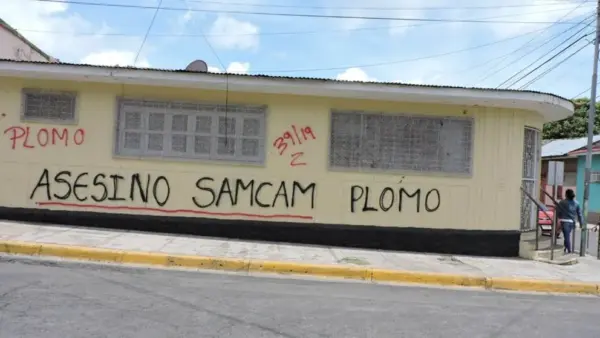
Samcam received multiple warnings, even directly from the Costa Rican government, alerting him to assassination plans since 2018. The family knew his life was in danger, but the threats were always linked to public places or surveillance. “We never thought they would come right to his doorstep,” admits Gabriel.
Claudia confirms that she wasn’t worried about him continuing to speak out. “Roberto, besides, even if I worried, he was going to keep doing it. Roberto had his principles and did what he wanted,” she explains. After attacks on other opposition figures, some relatives told him to calm down. And he would respond: “There is no power in this world, nor anyone who can silence me.”
“This is serious”
Samcam took many security precautions. Although he never spoke of fear, he was extremely careful. He looked for alternate exits wherever he went and distrusted spaces with only one entrance. A homeless person in front of the house for three months made him uneasy. “He’s suspicious,” he would tell Claudia. She would joke: “How can you besuspicious of a homeless person? Do you think someone is going to disguise themselves?”
Once, his wife noticed he was “very nervous” when they went to eat at a restaurant. She told him it would be better to go home and order takeout.
On another occasion, a new neighbor who watched TV at night also unsettled him. He would watch from his window. Claudia tried to lighten the mood with humor: “Do you think he has binoculars and can see you all the way in here, with your curtains closed and everything?” Roberto replied: “This is serious, Claudia. This is serious.”
“I’ll Be Here Waiting for You”
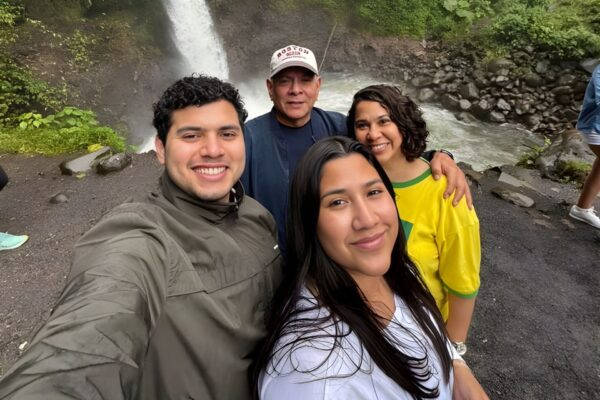
The last days of Roberto Samcam were marked by family closeness. In December 2024, he had visited his son and other relatives in the United States, and afterward spent time with loved ones in Mexico.
“He had been with people we love (…) and that also gives me great satisfaction: knowing that in his final moments he was well connected with love and that he took that memory with him,” Claudia notes.
The last conversation between Claudia and Roberto was ordinary, filled with affection. That morning, he made chilaquiles with a sauce he had learned to prepare in Mexico.
He walked her to the door as he did every day, they shared a kiss, and she said, “See you later.” He replied, “I’ll be here waiting for you,” Claudia recalls emotionally.
His Military Discipline Never Left Him
Roberto Samcam hung his clothes with military precision. Each hanger had to be spaced exactly so that the shirts wouldn’t wrinkle. Even then, he ironed his clothes before wearing them. “I used to say to myself: who am I living with, if people only knew,” Claudia remembers with a small smile, recalling her husband’s quirks.
“He was serious, very responsible, and strict about his things. He had this habit of keeping everything in order, making sure everything was right, making sure everything was super clean,” she mentions.
For her, the same rigor he applied to his shirts was the same he applied to documenting power. She would watch him speaking and verifying information. That’s why his books carried meticulous dates, and his documents followed an order that almost resembled a diary.
His participation in the 2018 protests was done by doing what he knew best, Claudia insists. From the very first day, he denounced the war weapons used against protesters, the Army’s participation in repression, and how people were massacred in the streets.
Gabriel says his father taught him two fundamental values: discipline and honesty. When report cards were handed out at Colegio San José de Jinotepe — confiscated by the regime in August 2025 — Roberto would sit Gabriel down and make him explain every grade. “Whenever complaints came from school, my dad was one of the first people to come to me and make sure I understood what was going on,” he explains.
From Radio to Writing About Politics
After a brief stint in political life, Samcam hosted a radio program in Carazo dedicated to sociopolitical analysis. What bothered him most, Claudia recalls, was injustice and the way political leaders turned their backs on the people.
“He said he was already too old, that politics should be done by young people, that we needed to aim for generational renewal,” his wife explains.
He later began publishing his analyses on social media, and many of his texts appeared on his personal blog and were later compiled into books.
Claudia says she would tease him, pointing out that his discipline reflected the fact that he had “never really left the Army.” “I used to joke with him and say he hadn’t taken off the uniform yet — that he’d put on a guayabera, but in his mind it was still green every time he wore it,” she recalls.
However, Samcam was firmly convinced that the military should disappear from Nicaragua’s future. “In a democratic scenario, I envision a country without an Army; fundamentally, I see a country with strong institutions,” he said in an interview in 2022.
“The armed forces must disappear and be transformed — as in Panama, as in Costa Rica — into a strong police force capable of maintaining public security, safeguarding borders, and combating organized crime, drug trafficking, and the like,” he argued.
For his wife, Samcam’s assassination happened because “he was an important and highly representative figure within the exile community,” and it sends a clear message to the opposition to silence anyone exercising leadership, activism, or public advocacy.
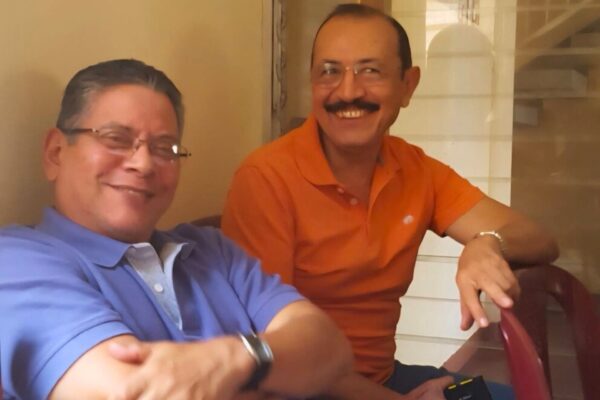
But they did not succeed in silencing him. “His books, his writings, his analyses are still there. Roberto’s courage and bravery—his refusal to be silenced—remain. I believe they have not succeeded in silencing him,” Claudia affirms.
The investigation into his murder remains open in Costa Rica. The Guernica 37 Center is handling the legal side, and the Costa Rican Prosecutor’s Office is investigating, but Claudia is clear: progress is still “insufficient.” “We are talking about a case of extraordinary magnitude. We also need to reach the intellectual perpetrators,” she asserts.
The International Demand for Justice
Samcam’s assassination is still under investigation. Costa Rican authorities have detained a group of three suspects involved in planning the attack, but the material perpetrator—a 20-year-old gunman named Carvajal Martínez—remains at large. Investigations are also ongoing into the intellectual authors of the crime, which has been denounced as a state-terrorism act planned from Nicaragua.
For former Costa Rican president Laura Chinchilla, just as Samcam’s life “was full of meaning, so too has been his passing,” as it has exposed to the international community the transnational repression orchestrated by the Ortega-Murillo regime.
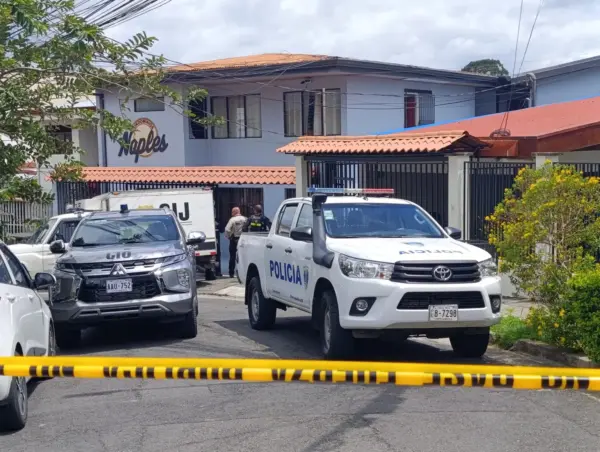
Chinchilla describes him as a brave man committed to democracy and the freedom of Nicaragua “to the point that it cost him his life.”
Antonia Urrejola, former director of the Inter-American Commission on Human Rights (IACHR) and former Chilean foreign minister, notes that Samcam was “a key witness who dismantled, with technical rigor and courage, the regime’s security narrative.”
“From an international perspective, his legacy lies in providing ‘from the inside’ evidence—as a retired major—necessary to document the chain of command and paramilitary structure in Nicaragua,” she adds.
Reed Brody, member of the United Nations Human Rights Experts Group for Nicaragua (GHREN), believes Samcam’s legacy “transcends his own life.”
“As a military officer and retiree who chose to break the silence and denounce abuses of power, he displayed exceptional courage: knowing the system from the inside, he chose to stand with the victims and with the truth, fully aware of the risks,” Brody explains.
Brody argues that the demand for justice for Samcam “is not just an act of memory or a family claim: it is a moral and legal obligation of the international community.”
Meanwhile, Brazilian jurist and former executive secretary of the IACHR, Paulo Abrão, emphasizes that Samcam used his voice “to document patterns of repression, denounce systematic violations, and assert—until the end—that the memory of the crimes is inseparable from the dignity of the Nicaraguan people.”
“The international community must strengthen accountability mechanisms and support organizations and victims who, like Samcam, have paid the highest price for speaking the truth. His legacy demands that there be no impunity and that Nicaragua can reconnect with justice, memory, and democracy,” he insisted.
The Dream of Returning to Jinotepe
Samcam insisted on the dream of returning to his hometown. “For my dad, the dream wasn’t just to come back, but to see Nicaragua as a democracy,” Gabriel says. “That dream is not dead yet, and it’s a dream we also share. Now our dream is also to bring my father’s body back and bury him in Jinotepe,” he adds.
Since the assassination, the family has felt fear. “But at the same time,” his son affirms, “we keep doing what we do. We are not going to hide or stay silent, because that would be giving victory to the regime that tried to silence my father’s voice.”
Today, Claudia has decided to stay in Costa Rica and continue advocacy work at the national and international level. Roberto, she asserts, has become her “new banner,” and she believes “he knows that I am seeking justice, that I will honor his memory, and that I will make his memory prevail.”
“He has become my new shirt… and I’ve always said that the shirts I wear become my skin,” her wife declares.