
Rural Cuba Is Emptying Out
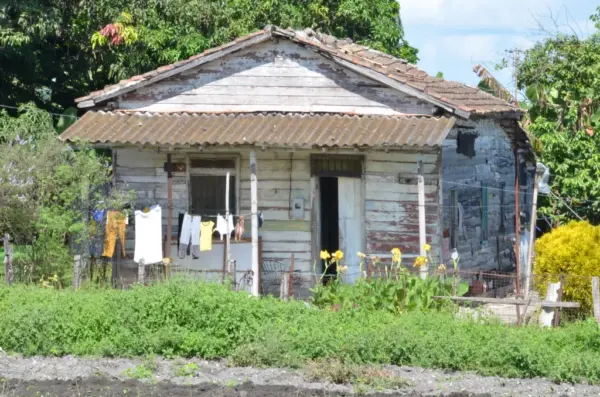
HAVANA TIMES – Little by little, solar panels have taken over the landscape of the small town of Vertientes in Camagüey Province. Many families do not have large systems, but only a couple of panels and a power station to keep their essential appliances running and provide some lighting.
But even that is enough to make a difference in a municipality that, throughout 2025, received no more than four hours of electricity a day on average.
“It’s a tremendous investment, but there’s no other way to live. Not just because of the long hours without power, but because when the electricity does come back it almost always arrives with low voltage and you have to wait for it to stabilize—sometimes more than an hour. If I did the math of how much money we’ve lost from the food that spoiled in the last year because the refrigerator didn’t have time to cool, we’d be shocked. I’m sure it was more than what we spent on the Ecoflow and the panels,” said Milagros Malpica, a resident of the town.
The nearly thousand dollars invested in her small photovoltaic system is an expense that most Cuban families cannot afford. Milagros and her husband were able to do it thanks to profits from the family farm and help from their children living in the United States.
“From Vertientes, the only thing left to do is leave,” says Yariel, a driver who plans to move to the city of Camagüey in 2026 with his wife and children. His plan is to sell the family home and, with that money plus a “vuelto” (additional payment), buy a new house in the provincial capital. Spending money on panels and other improvements for his current home seems to him like a pointless effort to postpone the inevitable. “It’s not just that we have more blackouts. It’s that even for a pediatrician visit or to take the kids for ice cream you have to go to the city of Camagüey.”
So far, all his potential buyers for their house in town are from rural zones. “The countryside is emptying out, everyone wants to come to town. I know of bateyes (small rural communities that used to boast sugar mills) that have gone as long as a week without electricity because their transformer broke.
“When I asked a friend who works for the electric company how this could happen, he explained that priority in repairs goes to circuits with more population and economic activity—which of course are not in the countryside. With all that going on, plus no transportation, no doctors, no jobs… who wouldn’t think about leaving?” Yariel reasoned.
At least once a week Yariel travels to Camagüey for work. Almost every time, his mother-in-law accompanies him to bring back, in the truck he drives, purchases made at private wholesale businesses in the provincial capital. She has a small sales point in her home, and her best customers are residents of communities like Los Ángeles, Jagüey, and Manantiales.
Due to the lack of transportation, in Cuba many people travel by hitchhiking or in improvised vehicles, which tend to have their pickup points on the outskirts of towns. One of these pickup areas operates in front of Yariel’s mother-in-law’s house, giving her a broad and steady clientele.
“With that business you realize how bad things are. All the products she buys in Camagüey she sells more expensive over here, and even then a lot of people buy them to resell in the coutryside,” Yariel explained. “I was stunned the day I found out that the laundry soap she had paid 190 pesos for in Camagüey, and sold at her stand for 240, was going for 350 pesos and more out in the countryside.”
Waiting for “Concrete Actions”
Since the beginning of the century, the Cuban government has spent between 50% and 60% of its annual investment budgets in Havana, even though less than one fifth of the country’s population lives in the capital. Although part of those resources went into hotels and other projects of doubtful usefulness for ordinary citizens, a significant portion did translate into improvements to infrastructure, housing construction, and social projects.
The “capital privilege” is not limited to Havana. According to the National Office of Statistics and Information (ONEI), between 2000 and 2024 the rest of the investment funds were allocated primarily to provincial capitals and to the special municipality of Isla de la Juventud. In these localities, nearly 70% of new projects and construction outside Havana were undertaken. Meanwhile, the rest of the “non-capital” municipalities received barely 30% of the funds.
As a result, each resident of Havana benefited from triple the public investment of their compatriots in provincial capitals, and nine times more than residents of small municipalities, where most of the island’s rural population lives.
Those disparities in the allocation of public resources directly affect the quality of life of rural communities and fuel a migratory hemorrhage that is difficult to contain. Young women are the demographic group that emigrates the most, followed by men under 50 and children, noted a September 2023 study by the Center for Demographic Studies (CEDEM) of the University of Havana, cited on the state television program Cuadrando la caja.
“There are many factors to take into account. There are the difficulties [rural residents] face in marketing their products, the problems with roads and transportation, and those that affect domestic life, such as fuel for cooking. Our latest surveys have also found rising concerns about access to health and education services… There are many causes that influence people’s motivation to abandon rural areas,” explained CEDEM researcher Maria Ofelia Perez on the same program.
September 2023 was precisely one of the likely dates for the national census of population and housing, which should originally have been carried out in late 2022. But the study has been postponed multiple times due to the country’s economic crisis. Its latest scheduled date was set for September of this year.
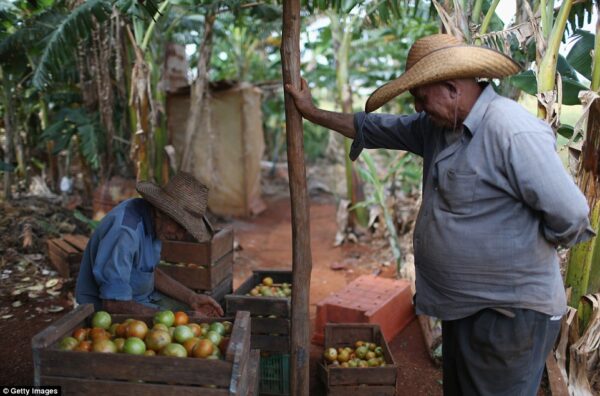
With the census, demographers hope to put concrete numbers to rural depopulation, which is already affecting a wide variety of economic and social spheres. For example, the labor force. Last April, during the provincial assemblies of the National Association of Small Farmers (ANAP), the organization’s president, Felix Duarte Ortega, acknowledged that the average age of the workers and members of the cooperatives hovered around 60; “we must change that with concrete actions,” he emphasized.
But neither ANAP, nor the Ministry of Agriculture, nor the Council of Ministers has presented an effective strategy to address it. In fact, in recent times the state press speaks less and less about the Policy for Attention to Demographic Dynamics, enacted in 2021 with the goal of reversing population decline on the island.
The data confirms its failure: officially, since 2022 Cuba’s population has shrunk by nearly one and a half million people (15% of the total). At the end of 2025, ONEI estimated the “effective population of the country” at 9.6 million inhabitants—and even that figure is likely higher than reality.
The largest population decline is expected to occur in the smallest municipalities, particularly among their rural inhabitants. During the previous intercensal period—from 2002 to 2012—some thirty municipalities in different regions of the country lost between 10 and 25 percent of their population. The only exception in this group was Centro Habana, in the capital, where a resettlement program is underway to alleviate overcrowding. The others were small territories in the interior of the island, heavily dependent on the sugar industry, which had undergone a devastating restructuring during those years.
Fourteen years later, in the midst of the largest migratory wave in Cuban history and an economic crisis that shows no sign of easing, the demographic collapse is expected to be even worse—especially in rural areas and small communities.
I’m a Canadian tourist in Cayo Largo right now. It is absolutely stunning here, but don’t let the scenery fool you. For the ordinary Cubans working here, the struggle is very real despite the brave faces they wear. If you’re coming down, please consider bringing supplies or tipping generously. Let’s help them out where we can!
Cuban-Americans like Marco Rubio are determined to bring Cuba to its knees by maintaining sanctions on needed imports and cutting off oil. They dream of overthrowing the Cuban government and regaining the land and wealth the elite class lost in the Revolution. Cuba has never invaded another country, unlike the U.S. which has played a key role in overthrowing governments around the world that dare direct their resources to improving the lives of their own people. Leave Cuba alone, remove the sanctions, allow for trade with other nations, and they will do just fine. We’re no longer in a unipolar world – the sooner the U.S. accepts that fact, the better for all of us.
The US Is the reason for their blackouts, and the crisis they are going. We shouldn’t be sanctioning them especially if we haven’t with Vietnam and China. Such an evil country we live in to make the Cubans suffer like this.
I believe that article is accurate regarding today’s rural Cuba
We have Canadian friends that go there and certainly don’t think things are “wonderful”. They love and respect the Cuban people and hope that traveling there will help them even if it is in a small way by buying local products and patronizing local shops and restaurants.
I have been to Merea del Portillo, many, many times.
If turists are not interested in the Cuban people and their economical situation, there’s nothing you can do about their narrow mind.
Yes, year after year I see how people are suffering.
I don’t know how to explain the feeling I had, I feel so non existent and terrible to see grown men cry, because on my walk I gave small bags of Tylenol out to them and candy for the children.
And I will keep doing that every time I go to this beautiful place.
I imagine that those folks are going on “curated” trips/tours, and are somewhat insulated from the harsh reality of conditions on the ground for average people (particularly those who have no family or other assistance from outside of Cuba). They need to dig a little deeper, but they most likely will not do so.
I get sick whenever I read from tourists from Canada and Europe about how wonderful things are on the island.