
“Socially-Engaged Tourism” Gains Popularity in Cuba
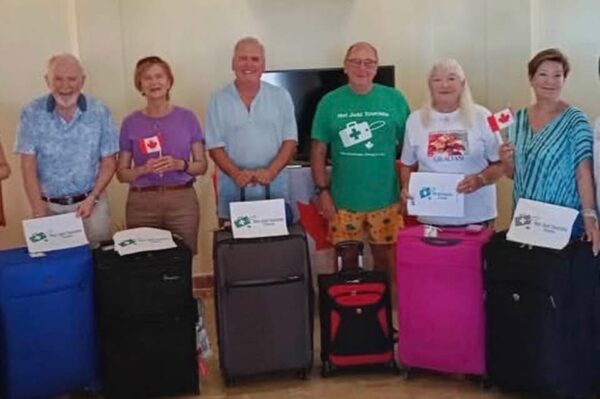
HAVANA TIMES — In March, Lukas Winter will board a flight to Cuba once again to deliver medical supplies. It will be his 50th trip since he first got on a plane bound for the Island in 1997, hoping to make a difference.
And he has succeeded. On his most recent visit alone, between this past December and January, coordinating the efforts of 26 volunteers, he managed to get more than 300 kilograms of assorted medicines to Cubans. They were like water in the desert amid the chikungunya epidemic affecting thousands of people.
Nearly three decades of solidarity work have allowed him to know the Island deeply, especially places not mentioned in travel guides, or that foreign vacationers barely reach beyond a beach or other tourist site. Such is the case of Baracoa, a small city at the easternmost tip — the first founded by the Spanish in Cuba — which combines exceptional natural beauty with geographic isolation (around a thousand kilometers from Havana) and the condition of being one of the poorest regions in the country.
“We’ve spent years assisting families in the city of Baracoa and the surrounding countryside, working with a local group called Baracoa Ayuda de Corazon,” Lukas explained to me via Messenger, already back in his native Germany. At the same time, he also collaborates with the Huellas project, based in Havana, which has long experience assisting vulnerable people.
The donations he regularly brings are provided by a community of more than 30,000 people in solidarity with Cuba, which he coordinates. “Many are fans of the rock band Dritte Wahl, whom I work with. Others of us have joined out of an interest in easing, as much as we can, the situation of the Cuban people. We receive both money and various items. Just these days someone handed me two hospital ventilators. Everything is welcome, because in the end it can make a big difference,” he noted.
Nothing to do with Punta Cana
In recent years, most Cuban-American influencers have become active promoters of the Dominican resort area of Punta Cana. The leitmotif of their campaigns is the tourism packages offered by the government of Santo Domingo to Cubans residing in the United States. These allow them to provide their relatives in Cuba with vacations in Punta Cana hotels, including airfare and visas.
For Cuban Americans, travel to the Dominican Republic has the advantage of allowing them to take relatives — at least for a few days — out of the Island’s difficult daily reality. It also lets them reunite without the risks involved in traveling to their country of origin.
Since the start of Trump’s current presidency, dozens of cases have been reported of Cuban Americans questioned by US authorities upon returning from visits to Cuba. Although so far none has faced major problems, the message to the community is clear: since most Cubans were admitted to the United States on the premise that they suffered political persecution, trips to the country they fled appear contradictory and could justify deportation.
Discouraging émigré travel aims to cut off an important source of income for the government in Havana. Before 2025, Cubans living abroad constituted the second most important tourism market for the Island.
More recently, a rumor circulated intensely claiming that US travelers were being detained at Cuban airports before being sent back to their country. It was false — apparently intended to prevent the presence of US Americans at the Jazz Plaza Festival, held every January. Traditionally, hundreds of US musicians and jazz lovers travel to Havana for the event, taking advantage of the “people-to-people” exchange licenses established during the administrations of George W. Bush.
Foreign tourists who insist on visiting Cuba encounter a very different reality. “The question gets old and tiresome, ‘Is it safe to come?’ This isn’t Disneyland. It’s a beautiful, struggling country, with beautiful, struggling people. This is nothing new. The vast majority of the ‘travelers’ we meet here are the right ones — the ones who never asked, ‘Is it safe to come?’ Long live Cuba!” wrote Gypsy Sailors earlier this month, a resident of the US city of Atlanta.
Her reflection appeared in Cuba Travel Tips, a Facebook group with more than 109,000 members where travelers from around the world exchange information about the Island. Although practical advice predominates — for example about currency exchange or transportation services — posts like Gypsy’s also appear, encouraging people to know the country firsthand, without heeding campaigns or opinion leaders.
A growing number of internet users also promote spending primarily in small private businesses to encourage entrepreneurship, and that foreign vacationers include donations for Island residents in their luggage.
Giang Nam Nguyen is one traveler planning to follow that advice. When he flies to Cuba from Germany in March, his suitcases will also carry several hundred boxes of paracetamol, which he intends to deliver to a hospital. “In addition to the medicines I have many sweets and personal items I want to donate to children and people in need,” he said earlier this month.
Others, like Norwegian Marianne Godstad Eriksen, use their status as residents in Cuba to promote solidarity initiatives. She owns a hostel in the colonial city of Trinidad, where she hosts volunteers free of charge when they arrive to help care for people with disabilities, elderly individuals living alone, and people in poverty.
“We cook for people who can’t afford to buy food. We look after people who have no family and are unable to care for themselves. Now we have more projects underway and need more hands to help the Cuban people,” she wrote in mid-January. Among the hundreds of reactions to her post were many future travelers offering their collaboration to continue such humanitarian work.
More than tourists
Surely, when Not Just Tourists (NJT) shipped its first suitcase of medicines in 1990, its members did not imagine the scale that solidarity movement would reach. That shipment was destined, precisely, for a Cuban hospital.
Today NJT regularly reaches more than 100 countries worldwide, guided by a motto as simple as it is compelling: “Take a suitcase and change a life!”
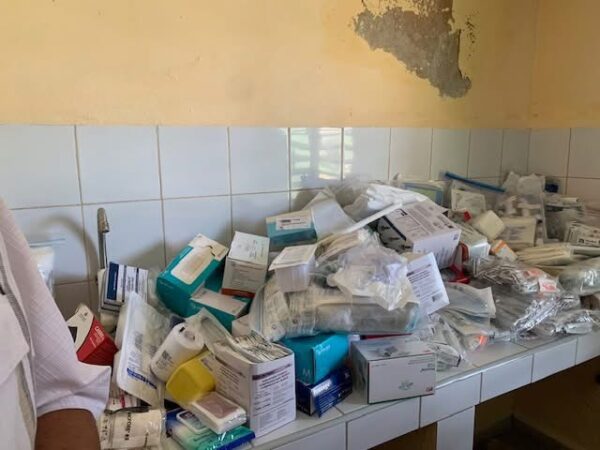
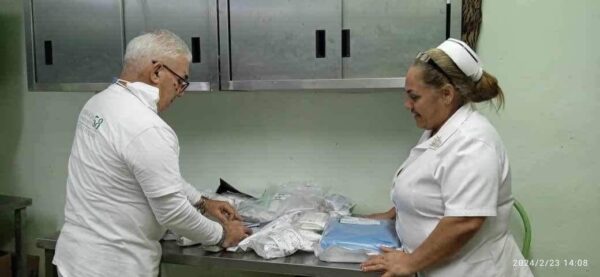
“We usually carry very simple medical supplies — bandages, syringes, intravenous and urinary kits. But they are always highly appreciated by the health centers and patients we deliver them to, who often face challenges accessing them,” Avi D’Souza, director of NJT’s Toronto chapter, told me.
His email response included photos of a delivery carried out recently by traveler Dave Hannon. “NJT greatly facilitated the delivery of supplies to clinics in need in Cuba. It was a wonderful experience for us!” he wrote in thanks.
Sustained by the contributions of thousands of volunteers, with no party or religious affiliations, Not Just Tourists ultimately aims to “connect people and spread love,” D’Souza said. He surely forgot to mention — out of modesty — that in the process they have helped improve the lives of thousands, perhaps millions, of people. Many of them in Cuba. And that through their example, NJT has inspired countless travelers who now arrive at Cuban airports carrying donations in their suitcases for the people who welcome them.