
The Hurricane and the Food Shortage in Eastern Cuba
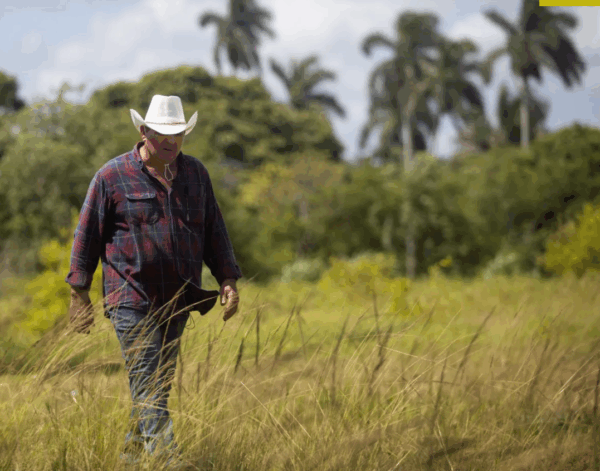
HAVANA TIMES — On October 28, the first secretary of the Communist Party in the province of Granma, Yudelkis Ortiz, acknowledged that the government promise to deliver one pound of rice per consumer before the arrival of Hurricane Melissa would not be fulfilled. But as soon as weather conditions normalized, that food would be distributed, she assured in a post on her social media.
The next day, Melissa devastated eastern Cuba, causing floods that in territories like Granma lasted for more than a week. At one point, nearly a quarter of the province was under water due to the overflowing of the Cauto River, the largest in the country.
In the end, it was not until mid-November that all Granma residents received the promised rice. Although it amounted to barely 460 grams per person, the delivery was essential for thousands of families who had lost everything, including their own rice crops.
In the Cauto plain alone—an area that covers nearly half of Granma’s territory—4,500 hectares of rice ready for harvest were lost, according to estimates from the Ministry of Agriculture published in early November. Thousands of tons of rice already harvested also spoiled during the flooding.
“Most rice growers had just finished cutting or were about to, so probably as much rice was lost in the fields as in private and state storage facilities. And it wasn’t only rice for consumption but, in many cases, also rice intended as seed,” said Juan Miguel, a Granma native living in the city of Camagüey.
About 30 years ago, Juan Miguel migrated from his hometown of Río Cauto to the city of Camagüey, 200 kilometers to the west. He did so for economic reasons. Historically, the eastern provinces have been the most economically depressed in Cuba, with high birth rates and significant migration toward the central and western regions of the island.
“I don’t know why, but it has always been a very poor area. Until a few years ago its only advantage was that rice was relatively easy and cheap to get, but not anymore. Even before the hurricane I had to buy it here in Camagüey and send it by train to my family,” Juan Miguel said.
When it rains, it pours
In 2018, farmers in Granma harvested more than 80,000 tons of rice, enough to cover about 15% of national demand.
That year marked the high point of the Rice Development Program, which—with Vietnamese guidance—had managed to multiply production of the grain, a staple in Cuban diets. The goals were much more ambitious: by the end of this decade, rice plantings were expected to grow to an unprecedented scale. Granma, for example, hoped to harvest 150,000 tons per year from plantations promoted in the Cauto plain.
At that time, local residents enjoyed a brief period of prosperity. Rice not only brought in cash but was also exchanged for other foods and consumer goods. After each visit, Juan Miguel returned to Camagüey carrying one or two sacks, which he later sold for a good profit.
But it was an agricultural model with an insurmountable weakness: its dependence on imported fuel, fertilizer and chemicals—inputs the government stopped buying as soon as the current economic crisis began. Funding allocated to rice agriculture was among the first to be cut when the “Coyuntura” (the 2019 national emergency due to delays in fuel shipments from Venezuela) was declared. Later, the pandemic (from 2020 onward), the Tarea Ordenamiento (the disastrous 2021 currency and pricing reforms), and the Bancarización (the 2023 policy eliminating cash for most transactions) combined to sink the sector even deeper.
In November of last year, Radio Bayamo, the official station in Granma, lamented the situation facing rice agriculture in the province. “Allocations are handed out drop by drop,” one report on the new planting season noted. Forcing the reduction of rice paddies has been for years an incomprehensible decision. Producing a ton of rice in Cuba costs, on average, between half and two-thirds of what it costs to import it. And now there isn’t even the money to import it on the scale needed.
The agricultural crisis can only partly be blamed on a lack of resources. Government mismanagement has also worsened it. The Ordenamiento resforms of 2021, destabilized all exchange rates between the Cuban peso and the dollar (currently there are four different rates), and Bancarización complicated the hiring of labor and other activities because of the shortage of cash.
“The tradition was ‘pay at the field’s edge.’ In other words, the worker was given cash at the end of each workday. There’s no way to do that now, because with ‘bancarización’ cash has disappeared and the only option is transfers. But what farmer is going to accept transfers in the middle of the countryside, with almost no signal, when many don’t even have a phone, and they know digital money won’t be accepted in most businesses? The result: we’re left without workers,” a coffee grower from the foothills of the Sierra Maestra in Yara told me through Messenger. Rice farmers in Río Cauto and Manzanillo, or cattle ranchers from Bayamo and Jiguaní, could raise the same complaint.
By the time Melissa made landfall in the eastern region, Granma—like the rest of Cuban provinces—had experienced years of decline in agricultural production. In Cuba, there’s a saying for situations like this, when misfortunes pile onto already overwhelming conditions: “When it rains, it pours.” In this case, the phrase fits more than well.
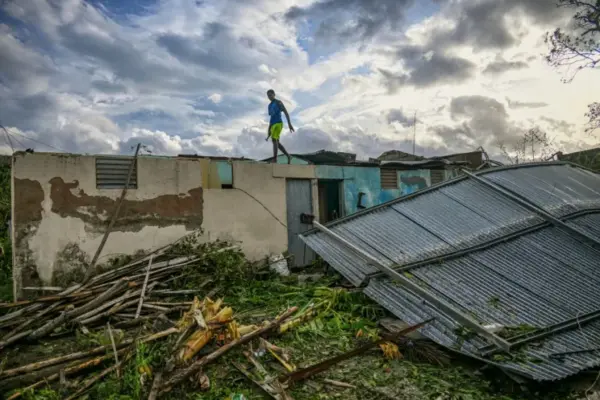
What the hurricane (barely) left behind
A week after the hurricane, a reporter from the neighboring province of Las Tunas visited the Cauto plain, which was still flooded. There he found dramatic stories. One was about a family from Rio Cauto that had evacuated “in stages,” trying to save the 15 cows and calves that made up their entire wealth. First, the mother and young daughter sought refuge, while the father stayed behind with several neighbors to watch over the cattle on high ground they hoped the waters wouldn’t reach. But a couple of days later the flood reached that spot as well, and the man and his companions had to be rescued by helicopter. “Surely, when we go back we’ll have nothing left,” he lamented at the evacuation center where the journalist found him.
Official estimates calculate that some 28,000 head of cattle (17% of Granma’s herd) were lost due to the hurricane. Since most drowned during the week-long overflow of the Cauto River, their meat could not be used. Faced with the floods, most farmers moved their animals and crops to higher ground, but in many cases only half of what was safeguarded was recovered, admitted Iramis Vargas Diaz, deputy representative of the Ministry of Agriculture in the province, in an interview with La Demajagua newspaper.
The full scale of Melissa’s devastation will take time to know, especially in the agricultural sector. Reports presented in early November by the Cuban government and United Nations agencies concluded that the agricultural area damaged by the hurricane in the five eastern provinces ranged between 80,000 and 100,000 hectares.
These statistics have a far more tangible meaning for the thousands of families in Oriente who lost almost everything. For them, a pound of rice can mean the difference between eating and not eating. Their crisis did not begin with the hurricane, nor will it end when the authorities officially declare the “recovery phase” over.