
Travel Company Advises Against Going to Cuba, Read Why
HAVANA TIMES – The global online Travel Company “Travel Off Path” gives extensive reasoning why in general it discourages tourist travel to Cuba except for under certain conditions. We republish their article in full and encourage our readers to chime in with your thoughts.
———
Why You Should Not Visit This One Country In 2026
If there’s one country we at Travel Off Path would tell most leisure travelers to skip in 2026, it’s Cuba.
Not because it isn’t beautiful, or culturally fascinating, or worth caring about. It’s because the basic things you need for a safe, semi-predictable vacation—electricity, water, food, healthcare, and a usable money system—are breaking down at the same time.
From a traveler’s point of view, what’s happening now isn’t a “rough patch.” It’s a systemic crisis.
Tourism numbers are already reflecting that: international arrivals to Cuba have plunged by around 20–30% compared to last year, one of the steepest drops since the pandemic, as visitors from Canada, Europe, and beyond stay away due to blackouts, shortages, and health concerns.
This isn’t about politics or punishing regular Cubans. It’s a consumer-protection warning for our readers who just want a relaxing Caribbean break in 2026.
The Grid Is Crumbling, And It Hits Tourists Directly
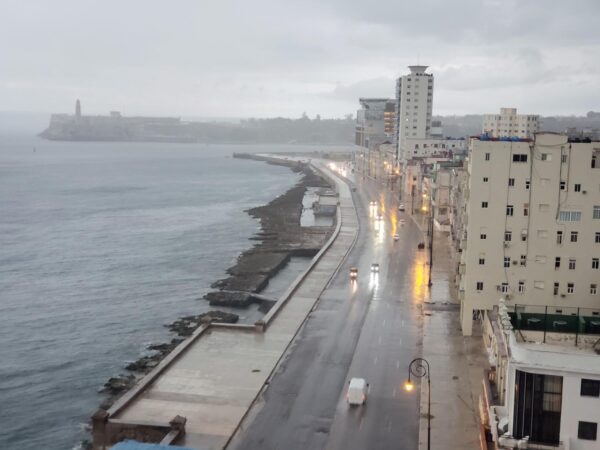
Cuba’s power situation has gone from annoying to trip-breaking.
The island has suffered repeated nationwide grid collapses over the past year, plunging cities like Havana into darkness for hours at a time. Even when the whole system doesn’t go down, authorities have acknowledged large chunks of the country facing long daily power cuts because there simply isn’t enough fuel or functioning capacity to meet demand.
In theory, big resorts can ride out blackouts on generators. In practice, fuel is scarce, maintenance is difficult, and even high-end properties have reported reduced services during extended outages.
For most of our readers, that’s a hard pass, especially when other Caribbean spots still offer 24/7 power and cold A/C as standard.
When The Power Goes, So Do Water, Food, And Basic Healthcare
The power crisis cascades into everything else you care about on vacation.
- Water: No electricity means water pumps don’t work consistently. Local reports describe neighborhoods going hours or days with little or no tap water, while hotels and guesthouses struggle to keep tanks filled and sanitation systems running.
- Food: Cuba has been facing severe shortages of basic goods—think rice, cooking oil, and fresh produce—for months. International coverage notes that even in major tourist areas, stores have empty shelves and restaurants are regularly hit by supply problems, with hotel occupancy and visitor numbers plunging as a result.
Then there’s health.
Cuba is currently dealing with overlapping outbreaks of mosquito-borne diseases, including dengue, chikungunya, and a newer arrival, Oropouche virus. The first Oropouche outbreak was confirmed in mid-2024, and health agencies have documented both local transmission and cases in travelers returning from Cuba.
For most healthy people, these illnesses are survivable but miserable—fever, joint pain, headaches—and they’re much harder to manage in a system where:
- Hospitals lack basic supplies and medicines, and
- Blackouts disrupt everything from refrigeration to diagnostics.
If your dream trip is “lie by the pool, eat well, sleep well, and not think about logistics,” Cuba in 2026 is moving in the opposite direction.
The Money System Is Chaotic and Stacked Against Visitors
Even if you’re okay with rough conditions, the money situation alone can make a Cuban vacation a headache in 2026.
Cuba runs on two very different exchange rates:
- An official rate of around 120 pesos to the U.S. dollar, and
- An informal street rate that has surged far higher—recent reporting has put it well above 300 pesos and, at times, even over 400.
If you’re paying at official rates—whether for hotels, taxis, or government-run services—you’re effectively paying two to three times what locals pay in the informal market. That’s a recipe for feeling ripped off, even when nobody is technically “scamming” you.
On top of that, U.S. credit and debit cards generally do not work in Cuba, and official guidance still urges Americans to bring enough physical cash for their entire stay.
So your options look like this:
- Carry a thick stack of cash for a week or two (and worry about losing it),
- Navigate a confusing black-market money scene, or
- Massively overpay at official rates.
None of that screams “stress-free winter getaway.”
From Hustle To Desperation
Like many developing destinations, Cuba has always had a “hustle” culture around tourists—selling cigars, classic-car tours, souvenirs, private rooms. Normally, that’s part of the charm.
But when basic food, fuel, and medicine are scarce, the tone shifts.
Independent analyses and foreign travel advisories have flagged a significant rise in violent crime, including robbery and assault, as the wider economic crisis deepens. A recent U.S. Embassy security alert—something we at Travel Off Path have already covered in detail—explicitly warns visitors to exercise increased caution due to shortages, outages, and rising crime in tourist areas.
One local guide summed it up to us bluntly:
“People aren’t hustling for extra money anymore. They’re asking for food, soap, anything. When the lights go out, it gets tense fast.”
That doesn’t mean every traveler will have a bad or unsafe trip. But the margin for error is thinner, and the vibe is very different from the laid-back, music-in-the-plaza Cuba you might be picturing.
The Ethical Question: Are Tourists Helping or Making It Worse?
There’s also a moral side many of our readers are asking about.
A huge share of Cuba’s formal tourism industry—big hotels, resorts, gas stations, and foreign-currency stores—is controlled by GAESA, a powerful military-run conglomerate that dominates some of the island’s most profitable sectors.
In simple terms, that means:
- Much of what you spend on hotels and official transport flows to state and military-linked companies,
- While regular Cubans often still struggle to access food, fuel, and medicine, even as tourists consume those same scarce resources.
Many well-intentioned travelers like the idea that “tourism supports locals.” In Cuba right now, it’s more complicated. You may end up competing with locals for basics while your money props up a system that hasn’t shielded them from the worst of the crisis.
That’s why some travelers and Cuba experts are starting to describe non-essential leisure trips as a form of disaster tourism—showing up for the aesthetic while daily life on the ground is in emergency mode.
Who Might Still Consider Going
To be fair, not everyone should cancel.
If you:
- Have family or close friends in Cuba you’re visiting,
- Are traveling with an organized humanitarian, academic, or religious group, or
- Are a very experienced traveler who understands the risks and is comfortable with severe disruptions,
Then a trip might still make sense—especially if your goal is support and solidarity, not a perfect beach vacation.
But even then, you’ll want to:
- Follow the latest US government travel information for Cuba,
- Read up on current health risks and vaccine/precaution recommendations from official sources, and
- Pack essentials you might normally skip (medications, serious insect repellent, backup power, water purification options).
And remember, for many US Americans, there’s a separate legal wrinkle: new US policy has already banned straightforward vacation trips to Cuba for five years, a story we’ve previously broken down at length for our readers.
I had a ticket to Cuba but all my Cuban friends told me not to come now. So I stay at home. Epidemic situation is so bad that I am not ready to take serious risk.
Thanks for a truthful report meant as a warning to potential travelers. My preference on a vacation is to enjoy not suffering. Previous commentary shown above supporting travel to Cuba is written for pure political support and not responsive to the issues enumerated in the article. Any logical human would pay to spend leisure time with comfort, well fed and reasonably secure. Cuba has only steadily change for worse. One commentator above suggests praying for the hopeless Cuban people Seems that blaming others is the 66 year old excuse You choose one of the two
How can they open locked suit cases at the airport without breaking the locks or the combination? Sounds like your locks were not correctly locked?
.
I would agree that things are not good but i would not trust any info from a,US based source. Havana is hardest hit but i have friends who just returned from Veradero area and had no issues
I would like to give most of these writers of the comments before me, a little history about Cuba, but : I have an entry restriction, don’t know for how long. Yes, Cuba had problems before the revolution, but their GDP was better than some European countries, and there was corruption like there is now, also prostitution like there is now, drugs was also there and criminal entities control a segment of the economy, I am parsing my comments, there was also racism like now, but : more pervasive. Then someone decided, a segment of country that they were not getting enough of the benefits and decided to change the system. But : when you decide to change, it is to make life better for the masses for all the masses, not just a few, education, health care no more private beaches or clubs , a misnomer ,you take action to make life better not worse, where people have the ability to control their own destinies.” I weep for Cuba ” because it is a country i love and its people, I also pray for Cuba, not hope , because , hope is invisible, and is not part of my vocabulary, It is a ” Palabra” I never use, I am from a religious family and they always mention pray, even though at times i am not in agreement , but i respect their faith. ” Que Dios proteja a Cuba y a su pueblo “
Just visited on a ‘cultural’ tour from US in October with my 86 yr old mother. We never felt unsafe and had freedom to walk around on our free time. The US could help the situation by lifting restrictions on buying rum and cigars, and by letting Americans go as ‘tourists’ like other countries are able to do. We did experience a few blackouts, and no water at one of our stops but I felt like that was part of the ‘real’ experience of being there …
Geopolitics brought Cuba to it knees, every country and it leaders must have it right to decided on their political paths for development, why should there be fair trade among countries through out the world regardless their political pursuant, the capitalist countries are the causes why most small countries with socialist policies failed, large countries like Brazil , China , India and Russia cannot be challenged because they produce enough to satisfy their needs and quality products to the export markets at a lower prices, there is a dying needs for a new world order to bring about equal opportunities for under developed and developing nations so that everyone can live comfortably with out threats ,sanctions and embargo.
Lift the unilateral cocercive meaures imposed by the United States and see what happens. There was a glimpse of what could be expected when Obama eased them a bit in 2015. Don’t wring your hands and say ‘so sad’ — we are also responsible if we do not take action to stop the intentional harm being done to the Cuban people. If your neighbor was being beaten in the street by a bully, would you not DO SOMETHING? Or would you tsk, tsk and find some way to blame the victim?
Watch this new short documentary, complete with the letters from European suppliers explaining. Harsh US sanctions push Cuba’s healthcare system to breaking point | People & Power Documentary https://youtu.be/2nZv-zuPyIY
US citizens/resident and people just passing through are prohibited by US law from vacationing in Cuba. To go to Cuba you must declare one of 12 general licensed categories or get a license from Treasury and/or Commerce Departments. This article is an example of the US media war wrapped in “travel advice.” Writers and publications actually get paid with US tax dollars to write pieces similar to this.
If you decide not to go at least donate the cost of your trip to Pan American Medical Association or Global Health Partners
Soy un “Amigo de Cuba” desde Canada. 30 trips there since about 1999 or 2000. Organizing large groups, or with family or my friend or solo. yes, at AI’s sometimes; other times, renting a car and getting lost. Staying in Casas, picking up hitchhikers, from Baracoa to Vinales. Bringing supplies to hospitals and schools. Have made real friends over the years. Some have since left the Island, others say they will never leave even if they could. My Spanish is passable (except when stopped by traffic police for some minor infraction). I have NEVER had a negative experience anywhere, any time. And I wander around where tourists never go.
My eldest daughter spent so much time there, that when she gave birth this year, she named her daughter Havana. Why? “I vacationed there, got engaged in Cuba, married, and pregnant in Cuba.”
At 72, I want to go back and wander around again. But I would not be comfortable, even in Casas, as I would be taking while others have so little. So, I await….. Damn American policy keeping them poor, when they pose NO risk to the USA, compared to some countries that the USA trades with.
I’ve been to Cuba this past August, 2025. I went to Cayo Coco with my family and we had a great time. Yes, electricity did run out once in the 7 days we stayed, it was not a big deal. I would disagree with the premise to not go. If you want to see the very best beaches in the world and that is the most important thing then don’t let the rest of the comments discourage you. Cuban people are amazing and their resorts are much better than in general due to the beauty of the Cuban nature. Viva Cuba.
I have been visiting since 2000 and since the end of the pandemic and every year after things have gotten worse every year.The year they opened up after the pandemic Havana was half full and by 8:30 -9:00 pm the streets were dead even Obispo was never the same, communism and all of its failures are now on display for the world as there are no more saviors for the island, no more USSR,n o more Venezuela, no more Brazil, no more Bolivia and China doesn’t seem to be all that interested in trying to save the island, Habana Vieja and Centro are full of garbage, rats and roaches like never before. It’s only going to get worse…
So, so sad that this is the present situation in Cuba. It requires someone at the very top to take decisive action if the present situation is to stop and improve. Time to take stock and ask themselves “What do I want? A bankrupt economy*No Tourism in the very near future?* or shall I take a hit and reinvest some of the many millions that I and my government have stolen from the people over the years?* after all a dead economy is no good to anyone is it? I would suggest a change of policy and start to help the people of Cuba and not just the military? start by mending fences with other countries for a start, after all a dead and bankrupt economy/country is no good to anyone! The time to act is now and not tomorrow? Consult the people and listen to their everyday basic concerns , you might just learn something. I travelled to Cuba with my wife and friends years ago, and it was great, however now at the ripe old age of 76 we both could not risk travelling to Cuba again, well not with the present situation, so please do something and help the people, but most importantly help the country to survive and prosper in the future
DISASTROUS REPORT ………………………………
Last time I arrived at Jose Marti I got my suitcases stolen from. 1,5hour wait to get them. I guess they needed time to get through all the luggage. Must be theft on a commercial scale at the airport and with the approval of the managers/directors. Best part is that I had locks on the suitcases. Locks that had to be opened and locks that were put back on in the same spot where I purposely left them. So when I did get my luggage everything looked legit. Noticed only at the hotel. Bed blanket I brought for a friend gone. My shorts gone (lol). Pair of shoes. And my winter jacket!! When I flew back I was pretty cold without it. They did not steal everything because I could notice them empty – light weight. For a tourist in Cuba you have to be ready to be scammed and stolen from the moment you get off the plane. First theft from your suitcases. Second from the taxi driver as he “doesn’t have change”. And that is just the beginning. I wrote another summary of my experience in your previous tourism article couple of days ago.
Nothing much different than 25 years ago when my wife & I spent 4 months there other than getting worse, especially the blackouts. We feel sorry for the wonderful people continuing to try to survive a very corrupt government on the equivalent of about $20 per month-yes I said PER MONTH. Help, world somehow help these poor folks.
As much as I support Mr.Trump,, IMO,, still sanctioning Cuba since the 60’s is a bit harsh ,T’was Kennedy that started and hanging on forever it seems,, Cuba is already an asset for America as they have a contract with Cuba, for oiling purposes only,, Alfred E. Newman [AKA BUSH JUNIOR] unstilled GITMPO and CUBA still get the money from an early contract with USA in the early 1900’s but never cashed any checks still coming in as I read Cuba’s history.Cuba is a great country that was contaminated with BOOZE, DRUGS AND HOOKERS before FIDEL took it over for the people and that upset the big Oil Magnates that used Cuba as a pleasure island,Russia helped and left and now rumors China is moving in as I’ve seen Chinese cars in Cuba. CANADA can’t help unless directed by the WEF .I’m considered a world traveller and I consider Cuba as my HOME after being there 20 plus times and seen great progress,, and now THIS .. SO SAD.