
Elections this Sunday, February 1, in Costa Rica
Polling projects Laura Fernandez victory in the first round

Ronald Alfaro, political analyst: President Chaves’ popularity has mobilized “a new anti-status quo political identity against PLN, PUSC, and PAC”.
By Carlos F. Chamorro (Confidencial)
HAVANA TIMES – A first-round victory by the governing party’s candidate Laura Fernández—boosted by the popularity of outgoing President Rodrigo Chaves—on Sunday, February 1, 2026, could generate “a new political scenario in the country, in which a new anti-status quo political identity emerges against PLN, PUSC, and PAC (the parties that have governed the country over the last 70 years),” says political analyst Ronald Alfaro, director of CIEP-UCR, whose latest poll places Fernández at 40% voting intention.
“It is the most likely scenario,” Alfaro told the program Esta Semana, broadcast on CONFIDENCIAL’s YouTube channel due to television censorship in Nicaragua. However, “given the survey’s margin of error, Fernández could obtain between 37% and 43%, and the final result will also depend on turnout and abstention” at the polls, he noted.
Alfaro also highlighted the advantage held by the Pueblo Soberano Party in the legislative contest: 29% versus 9% for National Liberation (PLN), with 46% undecided. “It is real that we may be witnessing a realignment of Costa Rica’s political system, a transformation of the party system. How far-reaching or how deep that realignment will be, we’ll see on February 1, but we are on the threshold of that kind of scenario,” noted the director of the University of Costa Rica’s Center for Political Research and Studies.
According to the latest poll by the CIEP-UCR, conducted in mid-January, voting intention for the governing party’s candidate Laura Fernández rose to 40%, putting her on the verge of a first-round win. Undecided voters fell to 32%, while the opposition candidate with the highest support, Alvaro Ramos of PLN, registered a distant 8%. Is the path clear for a first-round win for President Chaves’s candidate?
When we collected survey data two weeks before the election, the most probable outcome was a first-round victory for the governing party. Of course, in politics even events with high probability may not materialize, because conditions or circumstances can change.
That also means there is a smaller probability of a second round, as has been the case in the last three elections. It depends on turnout and abstention: if participation rises, the threshold to reach 40% becomes higher, requiring more votes; if participation is lower, the required number of votes drops. The governing party’s rise has come mainly from undecided voters who have shifted to supporting the president.
According to your research, do these formerly undecided voters who have decreased as a share of the electorate have a defined political leaning? Are they more pro-government or more pro-opposition?
Socio-demographically these voters are more women than men, younger—under 34—living in provinces outside the Central Valley, such as Limon and Guanacaste, and parts of Alajuela. Politically, they rate President Chaves’s administration as average—neither good nor bad—and they also believe the election is still undecided, despite the strong governing-party support.
The governing party’s campaign slogan is somewhat unusual for Latin America—“If you want change, vote for continuity.” What explains the party’s success? Is it Laura Fernández’s merit, or a transfer of popularity from President Chaves?
It’s very atypical. If someone wants continuity, they don’t want change; if they want change, they don’t want continuity. It’s a big paradox, yet the governing party has managed to merge those two dimensions. The explanation is that the governing party has managed to mobilize a very important segment of the electorate: those who are anti-Liberation (PLN) and anti-PAC, the two parties that have governed since 2010. That sector of the electorate has the governing party on its side, which provides a large support base.
Costa Rica is experiencing the construction of a new political identity distinct from PLN, PUSC, and PAC. That identity is carving out space and trying to displace the traditional political parties—especially the PLN and the sector that supported PAC in 2014 and 2018.
The governing party’s candidate Laura Fernandez has avoided participating in most debates. How is the governing party presenting its proposals, and what solutions do its pro-government voters expect from a movement that is receiving the highest political support?
Yes, Fernandez has participated very little and has had less exposure. That’s part of the strategy: to communicate her initiatives in a simple way. The president’s protagonism has also been unusual in Costa Rican history. Presidents traditionally lowered their microphone volume during elections and withdrew from the political scene, but President Chaves continues playing a major role, and that clearly helps transfer presidential popularity into votes.
Opposition candidates argue that continuity is harmful and associate continuity with authoritarianism. But what does the electorate think? Is it seen as a real danger, is it irrelevant, or is the opposition failing to communicate?
The opposition’s difficulty is that, because it is divided and fragmented, everyone wants to deliver that message, but without unity it’s not easy for the message to resonate.
Despite limited debate participation and a very simple narrative—“we want change”—the governing party feeds off public resentment toward the status quo in Costa Rican politics: anti-PLN, anti-PAC, anti-PUSC, and even anti-Broad Front. All of them are wrapped into that dynamic.
In the past, when a dominant political force—such as National Liberation or later the Social Christian Unity Party—faced a unified coalition, as in 1966 or 1978, Liberation lost. Now we have a political force with major support; confronting it divided is not an effective strategy, either logistically or narratively.
For part of the electorate there is concern, anxiety, or fear, but that is not the segment that is giving the most support to the governing candidate.
The poll registers the opposition’s voting intention: Álvaro Ramos of PLN at 8%; Claudia Dobles of Agenda Ciudadana at 5%; Ariel Robles of Broad Front at 5%; Jose Aguilar Berrocal of Avanza at 4%; Fabricio Alvarado of Nueva República at 4%; and the rest below that. If you add them all together, they still fall short of Laura Fernandez.
Yes, exactly. It is simple math. Not only is Laura Fernández leading the vote intention, but the other candidacies combined do not match her support. That gives her a comfortable advantage.
What we know is that this advantage comes mainly from converting undecided voters into supporters of Fernandez. Meanwhile, what the opposition manages to take away from the governing party is relatively small. Fernandez is right at 40%, and with the margin of error she could be at 43% or 37%. Those three percentage points introduce some remaining uncertainty.
President Rodrigo Chaves has acted as a kind of chief campaign strategist, urging citizens to vote for his party in the Legislative Assembly to secure a qualified majority and change Costa Rica’s political system—the Constitutional Court, the Comptroller’s Office, and the Supreme Court. Today PPS has 29% support, 46% are undecided, PLN has 9%, and Broad Front slightly less. Could Chaves win a legislative majority?
At this moment it is certainly a high probability. It has yet to be confirmed because there is a large share of undecided voters, and territorial support will matter a lot. In Costa Rica, legislators are elected by province, and some provinces elect more deputies—for example, San Jose, with the largest voter roll, elects 19 deputies—about one-third of the Assembly. But the landscape clearly favors the governing party, consistent with President Chaves’s strategy of building a political movement capable of sustaining the government and constructing an anti-status quo political identity. It is real that we may be witnessing a realignment of Costa Rica’s political system, a transformation of the party system. How deep that transformation will be we’ll know on February 1, but we are close to that scenario.
What does this election tell us about Costa Rican political culture? President Chaves’ style—confrontational, blunt, some say even belligerent, rude, populist—is seen as a virtue by some and rejected by others, but it seems to be taking hold as part of that political culture.
Yes, and this is also partly a reflection of global trends. Some of the international political phenomena we see also have an echo in Costa Rica. There is a political identity trying to force its way forward, displacing the dominant forces in Costa Rican politics.
This also happened in the past when PAC entered the political scene and displaced other parties. The question now is how the pieces will fall in this realignment, how support will be redistributed and how the political landscape will change. But there are undoubtedly changes in political culture and voting preferences. For example, the fact that National Liberation has such low support is another step in the long weakening of a historic party.
Is the hegemonic positioning of the governing party unprecedented in Costa Rican politics, or have there been similar moments in the past?
In Costa Rican history the only comparable case is National Liberation, which was a hegemonic party in the 1950s, 1960s, and 1970s. When Liberation lost, it was because the opposition unified. Not by chance the party that defeated it in 1966 was called National Unification; the coalition that defeated it in 1978 was called Unidad (Unity), later renamed the Social Christian Unity Party. PAC also won in 2014. When the opposition unites, it is more competitive against a dominant party.
This election is taking place during the second year of Donald Trump’s presidency in the United States, and analysts speak of a rightward shift in Latin America. Is there direct external influence in this election? For example, could the recent visit of Nayib Bukele, or Trump, or another foreign figure have an impact?
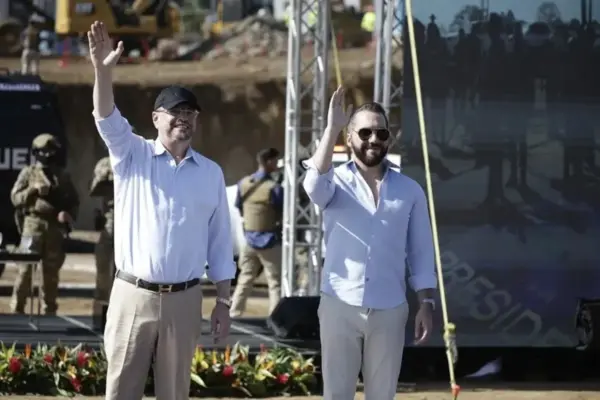
The influence has been indirect. In the case of the United States, there has been greater closeness with the US government. The Salvadoran president’s visit also took place just weeks before the election; one cannot ignore the elephant in the room. The governing party’s strong support reinforces that—especially among undecided voters.
Migration—in particular Nicaraguan migration—and relations with Nicaragua: have they been important campaign issues?
No, and they haven’t been in other campaigns either. There is continuity in not using migration as a mobilizing issue. Research shows Costa Ricans have a fairly positive perception of migrants.
If you had to summarize, what is at stake for Costa Ricans in this election? What is the key factor?
We are facing a scenario that could reconfigure Costa Rica’s political system, potentially a scenario of deep transformation. How deep will depend on February 1.
For a long time analysts said the party system moved from bipartisan to fragmented or multiparty. But now we are on the threshold of another shift. In which direction and to what depth will depend on the results.
It is as if the country were entering the 21st century politically, with a scenario very different from that of the Second Republic’s founding (1949), and from the first 25 years of this century. The sign I would put on it today is the construction of a new identity that challenges the status quo of the last 75 years: PLN, PUSC, PAC.
First published in Spanish by Confidencial and translated and posted in English by Havana Times.