
Lessons from Venezuela for Nicaragua
“legitimate leadership is needed”
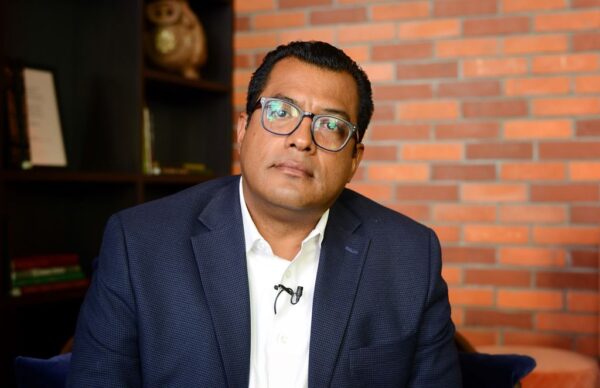
Felix Maradiaga: “we shouldn’t place all our hope in solutions that come from outside; we have to organize an internal force of resistance”.
By Carlos F. Chamorro (Confidencial)
HAVANA TIMES – Nicaraguan politician Felix Maradiaga believes that the most important lesson from the global impact of the Nobel Peace Prize awarded to María Corina Machado is “the construction of legitimate leadership, recognized through the massive participation of Venezuelans, which has persuaded the international community to take political risks to support the transition to democracy in Venezuela.”
The coordinator of the Ruta por el Cambio party highlighted that opposition leader Maria Corina Machado and Venezuela’s president-elect, Edmundo Gonzalez, are calling on European governments and the United States to support a democratic transition in Venezuela. At the same time, he acknowledged that the government of Donald Trump operates in an environment of “uncertainty, which can be a strategic advantage, but also a great disappointment.”
“We cannot place all our hope in the idea that change and solutions will come from outside,” Maradiaga said, referring to the Nicaraguan opposition, “because the United States administration, like any other major geopolitical force, will act according to its own interests, those of the United States. Our part is to organize ourselves, present a strategy (of resistance), and work together, which is what we have been doing very intensively.”
In an interview on Esta Semana, broadcast on CONFIDENCIAL’s YouTube channel due to television censorship in Nicaragua, Maradiaga—a former presidential pre-candidate and former political prisoner—analyzed the strategies of “unity in action” of the Nicaraguan opposition, while the dynastic succession of Rosario Murillo generates an erosion of her legitimacy within the party structure of the Sandinista National Liberation Front.
The Nobel Peace Prize awarded to María Corina Machado has had great international resonance, and in particular for the Venezuelan people. What impact does it have in Cuba and Nicaragua? What does it mean for the democratic opposition in Nicaragua?
Félix Maradiaga: It represents a change in the geopolitical model, in how Europe and the United States view transition processes. Maria Corina Machado had faced many antibodies from the Nordic political establishment, which insisted on negotiating with Maduro. Maria Corina was not part of many of the negotiation efforts; in fact, she strongly criticized them, both the Barbados talks and the Norway process. This prize recognizes that the path that was previously considered the most disruptive, the most radical, is the one with the greatest political backing. And the message for countries like Cuba, Venezuela, and Nicaragua is to learn from the lessons of Venezuela.
In Venezuela’s case, the existence of legitimate leadership, recognized through massive participation by Venezuelans, is an element from which those of us making these efforts in Nicaragua and Cuba should learn. Without legitimacy, without unity, without coordination, it is very difficult to persuade the international community to take political risks to bring about a transition to democracy.
Some sectors, even in Norway, critical of the awarding of this Nobel Prize, point out that it is contradictory to invoke peace in Venezuela when the United States is threatening Nicolas Maduro’s dictatorship with war.
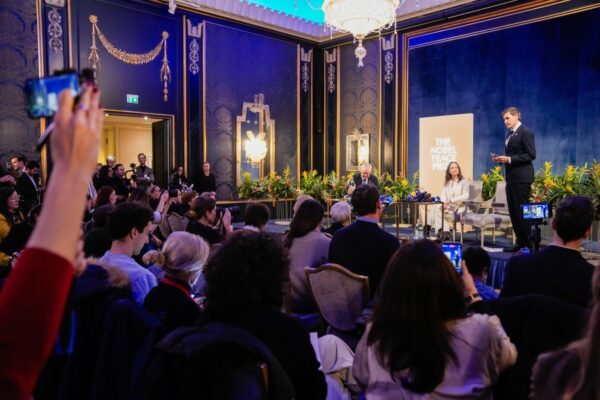
Indeed, and it was evident politically. Traditionally, the Nobel Institute establishes a march (in Oslo) that is organized with local institutions, but this did not happen; it had to be organized by Venezuelans themselves along with the diaspora. There were even snubs toward María Corina from some traditional institutions, upset that the prize was awarded to a person who has defined herself as a capitalist, who has spoken about the free market, and who has shown alignment with President Trump’s position. However, the support not only from civil society, from Venezuelans, but also from the global democratic ecosystem toward María Corina clearly indicates that she has strong legitimacy in the proposal for change that she and the (elected) president Edmundo González have put forward.
What is the next step for the Venezuelan opposition to enforce the results of the elections of July 28 last year, when Edmundo González overwhelmingly won the election and Nicolás Maduro later stole it?
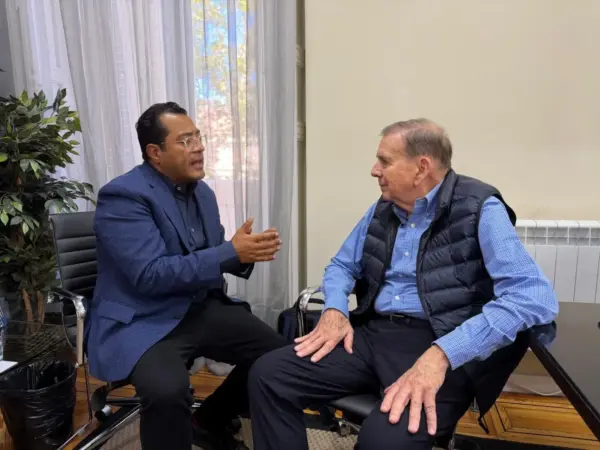
President-elect Edmundo González and his team gave us a very detailed presentation of the next steps, which involve establishing—not a government in exile—but a political work infrastructure at a higher level with European authorities, who are the ones showing the greatest resistance. Maria Corina left Oslo to begin a tour of Europe to try to persuade European governments that they should support the alternative for change, and to declare Nicolás Maduro’s regime a criminal regime, not treat it as a traditional autocracy.
What lessons does this process leave for the democratic opposition in Nicaragua?
Once opposition forces from around the world are forced into exile and their elections are stolen, they tend to fracture. But what Venezuela has concretely shown with Maria Corina Machado, who was very critical of models of unity through closed-door negotiations, is that the assembly-style unity is unity born from citizen participation, where it is the citizenry that determines who their leaders are.
In Nicaragua, the primaries that were supposed to take place were thwarted. The Nicaraguan opposition reached an agreement in February 2021, when the main pre-candidates signed an agreement never to run separately in two ballot slots, and later the regime sabotaged that process. But the reality is that none of us with a more public leadership have the necessary legitimacy. Who elected us? Who chose us? What political weight do we have?
That problem must be resolved, through a consultation model, it is necessary to determine who proposes what—not from the perspective of individual or personal sympathies, but from the different projects for the country—and also to know the weight of representation each has. Closed-door negotiation processes do not give people confidence, nor do they give the international community confidence to endorse any mechanism of democratic transition if it does not come from leadership that has sufficient strength and legitimacy. That has to be resolved.
In Nicaragua there is currently no pre-electoral situation, and at this celebration in Oslo you have been participating as coordinator of this international liberal network and of the party Ruta por el Cambio, alongside Juan Sebastián Chamorro, who is coordinator of another liberal party, CxL, in exile. Is there competition for political leadership, as some sectors criticize?
Absolutely not. Juan Sebastián’s role here in Oslo was extremely valuable. At an event of this magnitude, it is not possible for a single voice to cover all the different parallel meetings. We saw two Nicaraguans working with the same message; I think we coordinated very well.
It is completely normal for there to be representation from different organizations. People from Venezuela came to Oslo from different organizations, all convened by Maria Corina Machado’s leadership to celebrate the Venezuelan people, but they came representing their own organizations—Antonio Ledezma, David Smolansky, Leopoldo Lopez, Voluntad Popular, Vente Venezuela. It is normal to see Juan Sebastián Chamorro representing Citizens for Liberty or, in my case, representing the Liberal Network of Latin America. These are complementary efforts, not competition and much less rivalry; I see coordination.
But do the different opposition platforms that exist in Nicaragua in exile, with some support networks inside Nicaragua, have a strategy—either separately or a joint strategy of action—to confront the police state in Nicaragua?
Unity must be in action. We must humbly acknowledge that processes like the Blue and White National Unity were attempted, Monteverde was attempted, the National Coalition was attempted. We have to move to a stage in which organizations can strengthen themselves internally, because to have unity you first need internal strength.
We have a strategy of decentralized resistance using cutting-edge, encrypted technology, employing digital protection mechanisms to organize the few people who are carrying out silent resistance work, because we do not want to expose anyone. We are not at a stage of mass resistance, but rather of leadership building, and I know that other organizations are doing something similar. Unity must be in action. It would be criminal to go to elections under the current conditions but given the current geopolitical situation it is important to accelerate the pace.
Meanwhile, in this year 2025, which is about to end in Nicaragua, the dynastic succession of power by Rosario Murillo has been consolidated, and a more intense purge has been unleashed in different sectors of the regime itself, generating much discontent, but there is a perceived vacuum of political action on the part of the opposition.
The regime has no legitimacy, not even within its own party structure. There is a battle between the faction of Rosario Murillo and historic Sandinismo, and for that reason it is very important that any opposition action invite public servants—those who at some point voted for Sandinismo—to see that the opposition is willing to offer a ladder to the nurse, the ambulance driver, the citizen who voted for the Front (Sandinista) but never stained their hands with blood.
For that reason, the most effective proposals are those that manage to generate hope for an alternative, a counter-power, and there are organizations that have that vision. The message that I heard in Oslo, for example, from Juan Sebastián Chamorro in many meetings, was the same one we are giving from Ruta por el Cambio, and I believe there are other organizations that have that vision. We must offer hope that there is a way out and that this way out is possible.
Returning to the Nobel Prize awarded to María Corina Machado and to the crisis in Venezuela, which seems to be on the brink of war, what outcome is foreseen in Venezuela?
I would not dare make any speculation. We had a meeting here with the Cuban delegation led by Rosa María Paya, with Edmundo Gonzalez, to present a joint plan under various scenarios. There are some things I cannot comment on publicly, for obvious reasons, but I can openly say that there is a lot of uncertainty.
The style of the current administration in the United States is to act with uncertainty, which can be a strategic advantage but could also be a great disappointment. We cannot place all our hope in solutions coming from outside, because the current US administration, like any other major geopolitical force, will act according to its own interests—the interests of the United States. We cannot trust that change will come exclusively from outside; our part is to organize ourselves, present a strategy, and work together, which is what we have been doing very intensively.
But up to now, the Nicaraguan opposition seems to be focused exclusively on international lobbying, betting fundamentally on the influence of governments like that of the United States in the crisis.
I respectfully disagree. I cannot speak for other colleagues who do admirable work. In the case of the group I have coordinated, the five pillars of our strategy are: the international component, the umbilical cord with internal resistance, international sanctions, human rights, and the creation of an alternative of power. And of those five points, the umbilical cord is the work with silent internal cells.
Many people say, “it is irresponsible to talk about internal resistance in Nicaragua,” and yet the people who are carrying out that silent resistance have begged us: “stop saying that there is no resistance in Nicaragua, because of course there is.”
We have focused quite a lot on that; it is the greatest focus of attention. But for reasons of security and protection, we cannot talk about that preparation. There is preparation so that, at the first window of opportunity, those networks—which are not only ours; there are other organizations doing it through other mechanisms—can be ready.
First published in Spanish by Confidencial and translated and posted in English by Havana Times.